Latest Posts
View the latest posts in an easy-to-read list format, with filtering options.
View the latest posts in an easy-to-read list format, with filtering options.
Multi-part posts on a particular topic, grouped together in "series" pages.
Look through our blog archive by year / month, or in a massive title list.
10/20/2026 - Ezekiel 3:12-15 says, 12 Then the Spirit lifted me up, and I heard a great rumbling sound behind m... Read More

10/19/2026 - https://www.youtube.com/watch?v=ToksxXw0e_Q... Read More
10/19/2026 - When God told the prophet to eat the scroll (the word of God) in Ezekiel 3:1-3, its sweetness does... Read More
Read over 100 books written by Dr. Jones, available to read for free online. Several of the books have also been translated into different languages, and are also available to read for free. The only time you pay is when you purchase a physical version of a book.
View Full Book List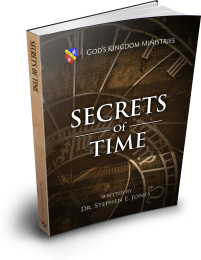
Read a variety of tracts that condense a topic into a short, single page format. These tracts can be read for free online, or physical copies can be purchased in bundles. If you are subscribed to the FFI Newsletter, you will receive new tracts when they are released.
View Full Tract List
James 3:6, 8 says,
6 And the tongue is a fire, the very world of iniquity; the tongue is set among our members as that which defiles the entire body, and sets on fire the course of our life, and is set on fire by hell [hades]… 8 But no one can tame the tongue; it is a restless evil and full of deadly poison.
In biblical thought, the tongue was a metaphor used to describe a sword. Speaking of evildoers, Psalm 57:4 says,
4 My soul is among lions... whose teeth are spears and arrows, and their tongue a sharp sword.
The tongue is pictured as an offensive weapon capable of inflicting wounds. Psalm 64:3 says,
3 Who have sharpened their tongue like a sword. They aimed bitter speech as their arrow.
Prov. 12:18 shows that the tongue can be used either to wound or to heal:
18 There is one who speaks rashly like the thrusts of a sword, but the tongue of the wise brings healing.
The Hebrew mindset did not sharply separate words from actions. A false witness could destroy a man's life as effectively as a spear. Hence, the Ninth Commandment was not viewed as a minor offense. False testimony was a form of assault and treated accordingly.
The imagery takes a positive turn in Isaiah's Messianic prophecies.
Isaiah 49:2 says,
2 He has made My mouth like a sharp sword.
This is one of the clearest messianic texts. The Servant does not conquer by military force but by words formed by His tongue. His mouth is His sword. This becomes the foundation for John's imagery in Revelation.
God judges by speaking. Eph. 6:17 says,
17 …The sword of the Spirit, which is the word of God.
Paul explicitly identifies the sword as God's word. It comes from His mouth, not His hand.
The Hebrew word פֶּה (peh, sometimes pî in construct form) is usually translated “mouth,” but its meaning is much broader than the English word. Like many Hebrew terms, it has both a literal and metaphorical range that reveals how the Hebrews viewed speech, authority, and expression.
At its most basic level, peh is the physical mouth. So we read in Prov. 10:31,
31 The mouth of the righteous flows with wisdom.
Often peh means not the physical mouth but the words spoken by it. Gen. 45:21 says, “...according to the command [“mouth”] of Pharaoh.”
(al-pi Pharaoh)
The “mouth” means the spoken command. In Num. 3:16 we read, “Moses numbered them according to the word [“mouth”] of the Lord.”
Thus peh often means decree, command, instruction, or testimony. To act “according to the mouth of the Lord” means to act according to His spoken word. Because kings ruled by spoken decree, the mouth became a symbol of authority. So Deut. 17:6 says, “On the evidence [“mouth”] of two or three witnesses...”
The Hebrew worldview viewed words as powerful acts. God creates by speaking. Gen. 1:3 says, “Then God said...” and it came into being. The divine mouth brings creation into existence. Psalm 33:6 says,
6 By the word[dabar]of the Lord the heavens were made, and by the breath of His mouth all their host.
Speech is creative power. The psalmist pictures creation coming forth from God's mouth. The heavens were made by God's Word (dabar), God's Breath/Spirit (ruach), and God's Mouth (peh). All three are intimately connected.
What Psalm 33 attributes to the spoken Word of Yahweh, John attributes to Christ in John 1:3,
3 All things came into being through Him.
This echoes Psalm 33:6 remarkably closely. The verse naturally contains Yahweh (the Speaker), His Word, and His Breath/Spirit. 2 Peter 3:5 echoes this:
[1] By the word of God the heavens existed long ago and the earth was formed out of water and by water.
The word of God brings things into existence.
Hebrews 4:12 says,
12 For the word of God is living and active and sharper than any two-edged sword, and piercing as far as the division of soul and spirit, of both joints and marrow, and able to judge the thoughts and intentions of the heart.
The divine word penetrates where no physical weapon can reach. It divides soul and spirit, as well as thoughts and intentions. Many scholars believe the author may be drawing upon sacrificial imagery. When an animal was sacrificed, the priest opened it up and inspected its inward parts. Nothing remained hidden.
The knife revealed what was inside.
In that sense, joints and marrow represent the innermost physical parts, while thoughts and intentions represent the innermost spiritual parts. As the priest's knife exposes the hidden interior of the sacrifice, so the Word of God exposes the hidden motives of the heart.
This interpretation fits very well with the transition from Heb. 4:12-14, where Christ is immediately introduced as the great High Priest. Throughout Hebrews, the author contrasts external religion versus inward reality, ritual versus heart obedience, and outward cleansing versus conscience cleansing.
The Word of God functions like a priestly blade, cutting through all external appearances and laying open the innermost reality of the one being examined before God. This fits particularly well in a book whose central theme is Christ's priesthood and the superiority of His sacrifice.
When a crime had been committed, the public was to be notified that any witness to the crime must step forward and give his testimony relevant to that case. Lev. 5:1 says,
1 Now if a person sins after he hears a public adjuration to testify when he is a witness, whether he has seen or otherwise known, if he does not tell it, then he will bear his guilt.
In other words, if a witness to a crime sins by failing to give testimony in court, “then he will bear his guilt.” This applied not only to earthly courts in Israel but also to the divine court at the great White Throne judgment, where there will be nothing hidden. Matt. 10:26 says,
26 Therefore do not fear them [false accusers], for there is nothing concealed that will not be revealed, or hidden that will not be known.
Paul affirms this in Rom. 14:12, speaking of the judgment seat of Christ:
12 So then each one of us will give an account of himself to God.
At the final judgment, that sword reveals the true nature of every heart, so that nothing remains hidden before the Judge of all the earth.
Even as the priestly sword cut open the sacrifice to inspect and expose its inward parts, so also does the sword of the Lord expose all the hidden thoughts and motives for every sinful act. The law of public adjuration is a command by earthly courts (whether obeyed or not), but it is a promise of God that will surely be fulfilled in the divine court.
So Paul says in Rom. 2:16,
16 on the day when, according to my gospel, God will judge the secrets of men through Christ Jesus.
Not merely actions, but “secrets” will be judged.
Again, Paul says in 1 Cor. 4:5,
24 He stationed the cherubim and the flaming sword which turned every direction to guard the way to the tree of life.
The flaming sword was there to expose the hearts of men and prevented anyone with wrong motives from eating of the Tree of Life. The Hebrew mind associated fire with divine presence, purification, judgment, and the law itself.
So we read in Deut. 33:2,
2 From His right hand went a fiery law [esh dath, “fire-law” or (KJV) “fiery law”] for them.
God's word is both light and fire. It brings to light all hidden things of the heart and also is a purifying fire. Jer. 23:29 says,
29 “Is not My word like fire?” declares the Lord.
The fiery sword is a fitting symbol for the Word of God. Earthly kingdoms rely upon iron swords and spears. Christ's Kingdom advances by the sword of His mouth. When Christ appears in Revelation, He does not come wielding a Roman gladius. He comes speaking the divine word. His judgments expose every lie, overthrow every false kingdom, and bring all things into subjection to the truth.
Rev. 1:16 says of Christ,
16 In His right hand He held seven stars [the Pleiades, the seven sisters, or churches], and out of His mouth came a sharp two-edged sword.
The sword originates from His mouth, not His hand. This immediately identifies it as the power of His speech, His word, His verdict. Rev. 2:12 says,
12 The One who has the sharp two-edged sword says this...
Rev. 2:16 continues,
16 Therefore repent; or else I am coming to you quickly, and I will make war against them with the sword of My mouth.
Notice that Christ wages war by speaking. The issue in Pergamum is false teaching and compromise. The remedy is not physical force but the word of discernment that exposes the truth. Falsehood is not eliminated by physical war. Wars are fought to subject one carnal view upon another without changing anyone’s heart.
Rev. 19:15 says,
15 From His mouth comes a sharp sword, so that with it He may strike down the nations.
Is this to be interpreted as a destruction of nations? That might be the case if the fiery sword were carnal, or if it were used in an Old Covenant context. However, under the New Covenant, victories are won by speaking truth, not by destroying others.
Hence, one cannot use the example of Joshua’s conquest of Canaan to justify the genocide of modern Palestinians. Zionists today live (as best they can) by an Old Covenant application of the law, whereas Jesus showed a better way. The word coming from the mouth of Christ does not kill the people or destroy the nations; it gives light in the darkness, exposing lies that men have assumed are truth.
Psalm 2:8 says,
8 Ask of Me, and I will surely give the nations as Your inheritance.
Under the Old Covenant, nations were conquered by military force and made to pay annual tribute. But under the New Covenant, we are given authority to bless all nations and all families of the earth, according to the Abrahamic blessing (Gen. 12:3; Acts 3:25, 26). The nations are our inheritance—not to enslave the people, but to lead them into truth by speaking the truth in love (Eph. 4:15).
Rev. 19:21 says,
21 And the rest were killed with the sword which came from the mouth of Him who sat on the horse.
Again, no physical weapon is described. The nations are overcome by His judicial decree. There are two ways to die. The first is by natural mortality; the second is to put to death the “old man” of flesh and to become new creatures through Christ’s resurrection. So Paul says in Rom. 6:3, 4,
3 Or do you not know that all of us who have been baptized into Christ Jesus have been baptized into His death? 4 Therefore we have been buried with Him through baptism into death, so that as Christ was raised from the dead through the glory of the Father, so we too might walk in newness of life.
This is described more simply in 1 Cor. 15:31, where Paul says, “I die daily.” Was he committing suicide every day? Of course not. He sought the word of God daily in order to put away the natural (soulish) man from Adam and to take on a new identity as a begotten son of God.
2 Cor. 4:10 says,
10 Always carrying about in the body the dying of Jesus, so that the life of Jesus also may be manifested in our body.
Therefore, just because biblical imagery pictures earthly things does not mean they are to be taken literally with an Old Covenant mindset. If we are now spiritual, Paul says in 1 Cor. 2:15, 16, “we have the mind of Christ.” We think differently. We apply Scripture differently.
One might even say that we experience a better death, along with all of the better things in the book of Hebrews. This better death results in a better life, because immortal life is much better than mortal life.
The Hebrew expression translated “the edge of the sword” is one of the most vivid idioms in Scripture. Literally, it is “the mouth of the sword.”
The phrase is פִּי־חֶּרֶּב (pi cherev), literally, “mouth of the sword.” The noun פֶּה (peh) means “mouth.” Thus when English translations read that “they fell by the edge of the sword,” the Hebrew literally says: “They fell by the mouth of the sword.” Examples:
Gen. 34:26,
[2] They killed Hamor and his son Shechem with the edge [“mouth”] of the sword.
Joshua 6:21,
21 They utterly destroyed everything in the city... with the edge [“mouth”] of the sword.
Judges 1:8,
8 They struck it [the city] with the edge [“mouth”] of the sword.
The expression occurs dozens of times throughout the Old Testament. To the Hebrew mind, many objects possessed a “mouth.” Examples:
• Mouth of a well (Gen. 29:2)
• Mouth of a cave (Josh. 10:18)
• Mouth of a sack (Gen. 42:27)
• Mouth of the earth (Num. 16:32)
The “mouth” was the opening through which something was received or released. A sword likewise “devoured” its victims. 2 Sam. 2:26 asks,
10 The sword will devour and be satiated.
The sword has an appetite. Hence its cutting edge is called its “mouth.” When the 12 spies gave their report in Numbers 13 and 14, ten of them were afraid of the giants and preferred to return to slavery in Egypt. But Joshua said this in 14:9 (KJV),
9 Only rebel not ye against the Lord, neither fear ye the people of the land; for they are bread for us; their defence is departed from them, and the Lord is with us; fear them not.
Throughout the Old Testament:
1. The sword has a mouth (pi cherev).
2. Wicked men have sword-like tongues.
3. The Servant's mouth becomes a sword (Isa. 49:2). Finally, in Revelation:
4. The glorified Christ possesses a sword that literally proceeds from His mouth. That sword is the “sword of the Spirit, which is the word of God” (Eph.6:17).
Thus, the symbolism reaches its climax. The earthly sword kills bodies. The heavenly sword is the Word of God itself, proceeding from Christ to expose every secret, judge every falsehood, and bring all creation into conformity with the truth. This is how God’s purpose for creation is to be fulfilled. It does not end in destruction; it ends with God consuming all things. It ends with all God Particles being restored and aligned with His nature and purpose.
Paul affirms this in Rom. 11:36,
36 For from [“out of”] Him and through Him and to Him are all things. To Him be glory forever. Amen.
The fiery sword of His mouth results in all things being put under the feet (authority) of Christ. All creation will be subject to His fiery law. So Paul tells us in 1 Cor. 15:28,
28 When all things are subjected to Him, then the Son Himself also will be subjected to the One who subjected all things to Him, so that God may be all in all.
This is why Heb. 4:12 and Rev. 19 belong together. The Word of God is the true “mouth-sword”—the divine blade not made with iron that penetrates beyond flesh to the very thoughts and intentions of the heart.
[1] Therefore do not go on passing judgment before the time, but wait until the Lord comes who will both bring to light the things hidden in the darkness and disclose the motives of men's hearts; and then each man's praise will come to him from God.
James tells us that “the tongue is a fire.” It is not only a sword but a fiery sword. After Adam and Eve sinned, God expelled them from the garden. Gen. 3:24 says,
[2] Shall the sword devour forever?
Literally, the sword is pictured as eating people. To conquer is to consume.
Jer. 46:10 says,
The fiery sword of His mouth results in all things being put under the feet (authority) of Christ. All creation will be subject to His fiery law. So Paul tells us in 1 Cor. 15:28,
28 When all things are subjected to Him, then the Son Himself also will be subjected to the One who subjected all things to Him, so that God may be all in all.
This is why Heb. 4:12 and Rev. 19 belong together. The Word of God is the true “mouth-sword”—the divine blade not made with iron that penetrates beyond flesh to the very thoughts and intentions of the heart.
We are only able to do what we do because of your support. If you feel led to support this ministry, we deeply appreciate it