Latest Posts
View the latest posts in an easy-to-read list format, with filtering options.
View the latest posts in an easy-to-read list format, with filtering options.
Multi-part posts on a particular topic, grouped together in "series" pages.
Look through our blog archive by year / month, or in a massive title list.

03/24/2026 - When President Trump backed down from bombing Iran’s nuclear power plant at Bushehr, under t... Read More
03/23/2026 - After asserting that all unbelievers will have to give account of their actions to the Judge at th... Read More

03/23/2026 - Today President Trump announced that the impending US attack on Iran’s power plants has been... Read More
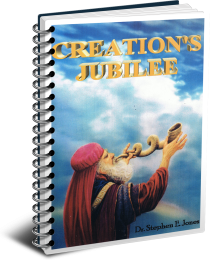
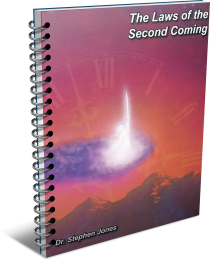
Read over 100 books written by Dr. Jones, available to read for free online. Several of the books have also been translated into different languages, and are also available to read for free. The only time you pay is when you purchase a physical version of a book.
View Full Book List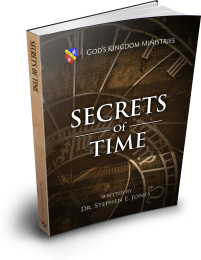
Read a variety of tracts that condense a topic into a short, single page format. These tracts can be read for free online, or physical copies can be purchased in bundles. If you are subscribed to the FFI Newsletter, you will receive new tracts when they are released.
View Full Tract ListWhen Israel left Egypt, the pillar of cloud did not lead them directly to the Promised Land. They were led south to Mount Sinai to be equipped with the Holy Spirit to conquer the land. However, when God invited them to draw near to Him on the fiery mount, the people were too fearful to receive the Holy Spirit at that time. They demanded that Moses go up the Mount to hear God on their behalf. Exodus 20:19, 21 says,
19 Then they said to Moses, “Speak to us yourself and we will listen; but let not God speak to us, or we will die….” 21 So the people stood at a distance, while Moses approached the thick cloud where God was.
This day was celebrated thereafter as the Feast of Weeks, which, many centuries later, was called (in the Greek language) Pentecost. The Israelites missed the opportunity to be Pentecostals, because their fear was stronger than faith. That which the 120 disciples in the Upper Room experienced in the book of Acts might have been experienced by the Israelites in the days of Moses, but this did not happen.
But what if the Israelites had been able to go with Moses up the Mount or at least near it? What if the Israelites had been able to hear what Moses heard? Would not the law have been written on their hearts by hearing His voice? Would they not have received the empowerment to overcome the world by “the Sword of the Spirit, which is the word of God” (Ephesians 6:17)? How would this have affected their conquest of Canaan?
We know, of course, that in the overall plan of God, it was too soon for them to fulfill the feast of Pentecost. After all, though Moses was a great man, he was not Jesus Christ. Christ would need to die as the Passover Lamb before Pentecost could be fulfilled. But in the time of Moses, they were still in a time of types and shadows which prophesied of better things to come.
So also, God instituted the Old Covenant with Israel (Exodus 19:8), which was based on man’s vows and good intentions. Unfortunately for them, they did not receive the ability to fulfill their vows, because their faith was sufficient only to keep the Passover but not Pentecost. In the divine plan, the New Covenant had to be ratified by the blood of Jesus Christ many years later. Only then could the law be written on their hearts (Jeremiah 31:31-33), so that the church in the wilderness (Acts 7:38) could truly know God.
Without hearing the word directly from God, the people lacked this second level of faith. Their faith was in Moses, not in Christ. They claimed that they would listen to Moses, but did they? No, they often wanted to stone him. Their inability to hear God was reflected in their inability to hear Moses whom God had sent.
The same situation occurred in the story of the New Testament. When the religious leaders rejected Jesus as the Christ, they rejected the God who sent Him.
By rejecting the word of God, being convinced that their traditions were the truth, they rejected the Sword of the Spirit and were left only with physical swords to conquer the land of Canaan. But what if they had been armed with the Sword of the Spirit? How would they have conquered Canaan? How long would it have taken?
God led them to Kadesh-barnea, south of Canaan, and Moses sent the twelve spies to spy out the land. The spies returned and gave their report on the 50th Jubilee from Adam. (See Secrets of Time.) This was the Jubilee of Jubilees, and they should have blown the Jubilee trumpet to prepare to enter Canaan five days later on the first day of the feast of Tabernacles. What if this had happened?
In my view they would have conquered the land in a single week, the week of Tabernacles. They would have “overcome the world” (John 16:33) by the word of God—the spiritual sword, rather than by the physical sword. The Israelites would have fulfilled the feast of Tabernacles by receiving their glorified bodies. The Canaanites, corrupt as they were, would have repented at the sight of the manifested sons of God. There would have been no genocide and no ethnic cleansing. The Canaanites would have become Israelites. They would have submitted gladly to the God of love being expressed through the sons of God.
So 1 John 4:16 says,
16 We have come to know and have believed the love which God has for us. God is love, and the one who abides in love abides in God, and God abides in him.
We know that by faith “now we are children of God” (1 John 3:2). However, we are not yet manifested sons of God. All of creation yet awaits this event (Romans 8:19). When it occurs, it will usher in a thousand years of peace that will be the greatest evangelistic era in history. This is the Tabernacles Age, which follows the Pentecostal Age of the church. What we are about to see is what the Israelites might have seen, if they had been able to enter the Kingdom from Kadesh-barnea in the days of Moses.
Unfortunately, few Christians today understand how things have changed. Most never ask the question, “What if?” The failure of ancient Israel and the subsequent wars against the Canaanites have been adopted as the will of God under the New Covenant. But times have changed. Jesus was the Passover Lamb. He ratified the New Covenant by His blood. The 120 disciples were obedient and went up the Mount, so to speak, in the Upper Room, where they heard the voice of God. They experienced Pentecost, breaking the barrier set by the precedent under Moses.
More is expected of us today, especially for Spirit-filled believers and those who have a vision of the feast of Tabernacles. Hence, we have no business casting off the spiritual sword in favor of physical weapons in our conquest of the world. Nonetheless, carnal minds lack Pentecostal and Tabernacles faith and will always be tempted to revert to the Old Covenant model.
When we study types and shadows, especially those that are discussed in the Book of Hebrews, we must take into account the better things that we have been given. Such a study, in fact, is the meat of the word, which we must chew and digest in order to go beyond the milk of the word. We must truly understand a New Covenant way of life in order to avoid repeating the mistakes of Israel in the days of Moses.
The New Covenant presents us with a new way to wield a sword. Old Covenant swords can only kill the flesh, because they are too dull to deal with heart matters. Our New Covenant sword is described in Hebrews 4:12,
12 For the word of God is living and active and sharper than any two-edged sword, and piercing as far as the division of soul and spirit, of both joints and marrow, and able to judge the thoughts and intentions of the heart.
The word of God teaches us to be crucified with Christ and to be “buried with Him through baptism into death” (Romans 6:6). Indeed, this sword kills the flesh, not literally, but in a legal way so as to qualify us to be raised from the dead through Christ’s resurrection. It is not about killing people with a physical sword. The spiritual sword kills in a very different way, and the result is “newness of life.”
By studying the types and shadows and by contrasting these with the better things under the New Covenant, it is clear that when Israel refused the spiritual sword that God offered at Sinai, it ensured that the conquest of Canaan would be a bloody affair. So whose fault was it that the genocide command was given to Joshua? And was genocide really reflective of the heart and mind of God? I do not believe so. Certainly, we today ought not to use their failure to justify genocide today! If we do, we have learned the wrong lesson by looking at Israel’s example.
1 Corinthians 10:5, 6 says,
5 Nevertheless, with most of them [the Israelites] God was not well-pleased; for they were laid low in the wilderness. 6 Now these things happened as examples for us, so that we would not crave evil things as they also craved.
The Old Testament shows the power of God in many places but only shows the love of God more obscurely. His love for other nations is seen only in brief moments when the prophets speak of New Covenant things (Isaiah 56:6-8). It is not until the New Testament that “God is love” is stated directly, simply, and emphatically (1 John 4:16). The unfolding of this revelation of His nature came gradually.
Even God’s judgments come from a heart of love. That is why His judgments are corrective in nature, designed so that “the inhabitants of this world learn righteousness” (Isaiah 26:9). The law itself reflects the impartial nature of God, commanding Israel to love God and their neighbor as themselves. It commands Israel not to oppress foreigners or enslave them (Exodus 22:21), remembering how they themselves were slaves in the land of Egypt (Exodus 23:9). Israel was not to set up a double standard, one for Israelites and another for foreigners (Numbers 15:15, 16).
The law is the expression of God’s nature, later illustrated personally by Jesus Christ. These laws of impartiality and equality show us the will of God. The command to kill all the Canaanites seems contradictory, but when we understand the circumstances behind it and the two swords, we can more easily resolve the contradictions. Only then can we come to know God better.
In part 3 we will see how God’s will was revealed in actual biblical history as it is written.

Dr. Stephen Jones has been writing blog posts since 2005 on a variety of topics from Bible Studies to World News, and he has been writing books since 1992. Dr. Jones' most important writings came after God brought him back into the full-time ministry in 1991. It is here that all his earlier years of searching the Scriptures began to come into clear focus. He combines a knowledge of the Old and New Testaments with a personal revelation of God that began and developed during the "wilderness" period of his life, which he often refers to as God's True Bible College... Read More
We are only able to do what we do because of your support. If you feel led to support this ministry, we deeply appreciate it