Latest Posts
View the latest posts in an easy-to-read list format, with filtering options.
View the latest posts in an easy-to-read list format, with filtering options.
Multi-part posts on a particular topic, grouped together in "series" pages.
Look through our blog archive by year / month, or in a massive title list.

03/24/2026 - When President Trump backed down from bombing Iran’s nuclear power plant at Bushehr, under t... Read More
03/23/2026 - After asserting that all unbelievers will have to give account of their actions to the Judge at th... Read More

03/23/2026 - Today President Trump announced that the impending US attack on Iran’s power plants has been... Read More
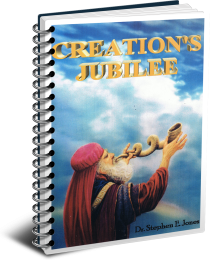
Read over 100 books written by Dr. Jones, available to read for free online. Several of the books have also been translated into different languages, and are also available to read for free. The only time you pay is when you purchase a physical version of a book.
View Full Book List
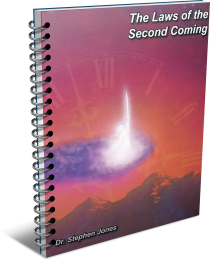
Read a variety of tracts that condense a topic into a short, single page format. These tracts can be read for free online, or physical copies can be purchased in bundles. If you are subscribed to the FFI Newsletter, you will receive new tracts when they are released.
View Full Tract ListAfter receiving provisions and Goliath’s sword from the high priest at Nob, David fled to Gath, one of the five main cities of the Philistines. But when men realized who he was, they reported him to Achish, the king of Gath. David then pretended to be insane, and the king dismissed him as a possible threat.
David then went to the cave of Adullam (1 Samuel 22:1), located about 13 miles southwest of Bethlehem. This was a defensible base with natural concealment and also gave him access to the Elah Valley and a quick escape route into the Judean wilderness. With him were 400 men who were either debtors escaping slavery or others who had fallen out of favor with Saul.
1 Samuel 22:2 says,
2 Everyone who was in distress, and everyone who was in debt, and everyone who was discontented gathered to him; and he became captain over them. Now there were about four hundred men with him.
Prophetically speaking, these were the forerunners of those today who are castoffs from the church system, many of which have been abused by church leaders or excommunicated. I have noticed over the years that a high percentage of believers that follow or support our ministry have been kicked out of their churches. I learned quite early that these people usually had a desire to learn the word, but that they also needed fellowship.
It appears that David’s father and mother were in danger from Saul as well. David appealed to the king of Moab to give them refuge from Saul (1 Samuel 22:3, 4). Verse 5 says,
5 Then he left them with the king of Moab, and they stayed with him all the time that David was in the stronghold [Adullam].
After an indefinite period of time, the prophet Gad told David to leave the cave of Adullam and to “go into the land of Judah. So David departed and went into the forest of Hereth.” (1 Samuel 22:5). This was a dense forest (at that time) southwest of Adullam, making it easier to hide from Saul’s men and from those who might report his whereabouts.
It was while David was in the forest of Hereth that Abiathar, the son of Ahimelech, found him, having escaped the slaughter of his family and the other priests at Nob. Abiathar then informed David of this massacre of the priests (1 Samuel 22:23). Abiathar then functioned as a kind of high priest in David’s band and even carried the ephod with him (1 Samuel 23:6) by which to inquire of the Lord through the Urim and Thummim.
Years later, after Saul died, Abiathar remained as a second high priest, along with Zadok (2 Samuel 8:17; 15:24). It seems that Zadok presided at the tabernacle, while Abiathar presided at the tabernacle of David, where the Ark had been relocated.
David then heard that the Philistines had attacked the town of Keilah to plunder their harvest. Keilah was situated about 8 miles northwest of Hebron, not far from the forest of Hereth. David asked God if he should defend the town or remain hidden in the forest. Abiathar used the ephod to transmit the word of the Lord to him. David attacked the Philistines and defeated them, saving the town and its food supply (1 Samuel 23:5).
David then remained in Keilah for a short time until Saul heard of it and was ready to come with an army to capture David—and destroy the town. After all, David had done what Saul should have done to protect the town. No doubt Saul felt humiliated by this. The men of Keilah would have to deliver David to Saul if they wanted to avoid his wrath. So David left the town, and Saul’s plan to destroy Keilah was abandoned.
David’s company by this time had increased to 600 men (1 Samuel 23:13). Perhaps about 200 of them were from Keilah and were grateful for David’s deliverance. 1 Samuel 23:14 tells us,
14 David stayed in the wilderness in the strongholds and remained in the hill country in the wilderness of Ziph. And Saul sought him every day, but God did not deliver him into his hand.
David moved from Keilah to a forested area (Horesh) in the wilderness of Ziph, which was southeast of Hebron. It seems that David had secretly remained in contact with Jonathan and that this is how Jonathan learned where David had relocated. 1 Samuel 23:16 says,
16 And Jonathan, Saul’s son, arose and went to David at Horesh, and encouraged him in God. 17 Thus he said to him, “Do not be afraid, because the hand of my father will not find you, and you will be king over Israel; and I will be next to you, and Saul my father knows that also.”
Jonathan fully supported David’s calling to replace Saul as the next king of Israel. He intended to unite the two houses in David’s kingdom. We know, of course, that this did not happen. Jonathan was killed in battle along with his father. Today there are many in the church who also support the overcomers, while remaining loyal to the House of Saul.
David and Jonathan then made a second covenant of peace (1 Samuel 23:18). David remained in Ziph until the local people reported his whereabouts to Saul. David did not punish them for doing this, but he and his men went south to “Maon in the Arabah,” the desert west and south of the Dead Sea. Saul pursued David and attempted to surround him. But word then came to Saul that the Philistines had raided Israel and was forced to abandon his pursuit of David.
1 Samuel 23:29 says,
29 David went up from there and stayed in the strongholds of Engedi.
Engedi was an oasis midway along the shore of the Dead Sea in the wilderness of Judah. The name means “spring of the young goat.” After Saul had dealt with the Philistine raiding party, he resumed his pursuit of David with 3,000 troops (1 Samuel 24:2) and soon drew near to Engedi.
Saul camped for the night in a cave, not knowing that David and his men were in the inner recesses of the same cave. While Saul was sleeping, David quietly cut off the edge of Saul’s garment which contained the blue thread commanded in the law (Numbers 15:38, 39). The blue thread represented the law. It was blue because the sky (the heavens) is blue and because “the law is spiritual” (Romans 7:14).
David’s act suggested that Saul despised the law of God and that he was unworthy of wearing this tassel as a testimony of keeping the law. David’s men had encouraged him to kill Saul while he had the opportunity, thinking that God had delivered Saul into his hands for this purpose. But we read in 1 Samuel 24:6, 7,
6 So he said to his men, “Far be it from me because of the Lord that I should do this thing to my lord, the Lord’s anointed, to stretch out my hand against him, since he is the Lord’s anointed.” 7 David persuaded his men with these words and did not allow them to rise up against Saul. And [in the morning] Saul arose, left the cave, and went on his way.
When Saul had gone some distance from the cave, David emerged and shouted to him, telling him that he had refrained from killing him. Look at the edge of your robe, he said, holding up the tassel to prove that he could have killed Saul with his sword (or knife). This was a revelation to Saul, and he said to David in 1 Samuel 24:20, 21,
20 “Now, behold, I know that you will surely be king, and that the kingdom of Israel will be established in your hand. 21 So now swear to me by the Lord that you will not cut off my descendants after me and that you will not destroy my name from my father’s household.”
David complied, and Saul returned to his house, “but David and his men went up to the stronghold.” Apparently, David knew that Saul’s repentance was only temporary, so he remained in hiding.
This incident tells us that the overcomers should not seek to destroy the church, even though the church persecutes them. They should recognize that the church has a legitimate anointing since the day of Pentecost and that the church under Pentecost has been given a set time by God to rule with authority in the earth.
Nonetheless, this does not mean that the overcomers have to remain in submission to men in a denominational church setting.

Dr. Stephen Jones has been writing blog posts since 2005 on a variety of topics from Bible Studies to World News, and he has been writing books since 1992. Dr. Jones' most important writings came after God brought him back into the full-time ministry in 1991. It is here that all his earlier years of searching the Scriptures began to come into clear focus. He combines a knowledge of the Old and New Testaments with a personal revelation of God that began and developed during the "wilderness" period of his life, which he often refers to as God's True Bible College... Read More
We are only able to do what we do because of your support. If you feel led to support this ministry, we deeply appreciate it