Latest Posts
View the latest posts in an easy-to-read list format, with filtering options.
View the latest posts in an easy-to-read list format, with filtering options.
Multi-part posts on a particular topic, grouped together in "series" pages.
Look through our blog archive by year / month, or in a massive title list.

03/24/2026 - When President Trump backed down from bombing Iran’s nuclear power plant at Bushehr, under t... Read More
03/23/2026 - After asserting that all unbelievers will have to give account of their actions to the Judge at th... Read More

03/23/2026 - Today President Trump announced that the impending US attack on Iran’s power plants has been... Read More
Read over 100 books written by Dr. Jones, available to read for free online. Several of the books have also been translated into different languages, and are also available to read for free. The only time you pay is when you purchase a physical version of a book.
View Full Book List
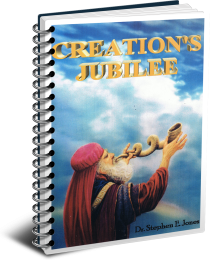

Read a variety of tracts that condense a topic into a short, single page format. These tracts can be read for free online, or physical copies can be purchased in bundles. If you are subscribed to the FFI Newsletter, you will receive new tracts when they are released.
View Full Tract ListWhen Joseph was given his name at birth, the name contained a prophecy that his mother Rachel would have another son. Genesis 30:24 KJV says,
24 And she called his name Joseph, and said, “The Lord shall add to me another son.”
His name is derived from the root יָסַף (yasaf), a verb meaning “to add, increase, do again.” After a long time without bearing any children, she was blessed by God to have a son. Joseph was the beginning, but she looked for more blessing. The added blessing prospered Egypt, making it the breadbasket of the entire region during the time of famine (Genesis 41:57). Because of this, Joseph’s family was also blessed, especially when they moved to the land of Goshen in Egypt.
When Benjamin was born, he added to the family, bringing the total number of sons to twelve. Twelve is the number of divine government. Whereas Joseph added fruitfulness to the family (as Ephraim shows), Benjamin indicates an increase. Benjamin was not only a type of Christ but also a type of the body of Christ.
When Benjamin was born, his mother died in childbirth at Ephrath (“fruitful place”). The rich farmland in the area made it a House of Bread (i.e., “Beth-lehem”). Genesis 35:18, 19 says,
18 It came about as her soul was departing (for she died), that she named him Ben-oni; but his father called him Benjamin. 19 So Rachel died and was buried on the way to Ephrath (that is, Bethlehem).
Ben-oni means “son of my sorrow,” reflecting Rachel’s difficult labor and the fact that she died in childbirth. Benjamin means “son of my right hand.” As a type of Christ, this sets forth the two comings of Christ, first as “a man of sorrows and acquainted with grief” (Isaiah 53:3), and secondly Christ’s ascension to the right hand of the Father (Luke 22:69).
By comparing Benjamin to his brother Joseph, we see that Joseph was a type of Christ, and Benjamin was an “added” type as Joseph’s younger brother, for “He is not ashamed to call them brethren” (Hebrews 2:11). Hence, Benjamin represents the increase of Christ’s fruitfulness. This is the body of Christ that is being formed and perfected by the work of the Holy Spirit.
So also Paul tells us in Galatians 4:19,
19 My children, with whom I am again in labor until Christ is formed in you—
We are bringing forth a spiritual son, which is “Christ in you” (Colossians 1:27). That embryo was begotten by the Spirit, according to the pattern of Jesus’ conception (Matthew 1:18). This is the “new man” that is a “new creature” (2 Corinthians 5:20). This is also the real you, if you have been begotten by the Spirit, for you are no longer the child of your earthly parents.
For this reason, John says, “you have an anointing from the Holy One” (1 John 2:20). Anointed ones are messiahs, or christs, connected to the Head, Jesus Christ. The term Christian means “belonging to Christ.” The term was first applied to believers in Antioch (Acts 11:26). While they used the term in derision in the sense of “little christs,” the believers saw truth in it and thus adopted it for themselves. However, the term does not apply to church members but to those who have been begotten by the Spirit.
Benjamin represents those believers whose identity has been transferred from the old man to the new man. The old man, descended from Adam, was a “living soul” and was therefore soulish (psukikos). The new man, along with Jesus Himself, is “a life-giving spirit” (1 Corinthians 15:45).
The two names apply to us as well as to Jesus Himself. We are all born naturally as souls that were begotten by our earthly fathers, who passed down to us mortality and death. These are Ben-oni, “son of my sorrow,” a reference to Eve giving birth through “sorrow” (Genesis 3:16 KJV). The Hebrew word issabon means “pain, labor, hardship, sorrow.” Perhaps Rachel had Eve in mind when she went through hard labor and died giving birth to her son Ben-oni.
When our old man (soul) dies, the new man remains immortal and continues in a conscious condition, because we have transferred our identity to this new man by faith. This new man is our Benjamin, for we are seated with Christ at the right hand of the Father (Ephesians 2:6).
We see, then, that every true believer goes through two phases of existence. In phase 1 we are mortal souls connected to Adam, who was condemned to death. This mortality was passed down to all thereafter (Romans 5:12). In phase 2 we are begotten from above as new creatures, immortal spirits fathered by “the last Adam,” that is, Jesus Christ (1 Corinthians 15:45).
These are the sons of God, the sons of His right hand, the Benjamins.

Dr. Stephen Jones has been writing blog posts since 2005 on a variety of topics from Bible Studies to World News, and he has been writing books since 1992. Dr. Jones' most important writings came after God brought him back into the full-time ministry in 1991. It is here that all his earlier years of searching the Scriptures began to come into clear focus. He combines a knowledge of the Old and New Testaments with a personal revelation of God that began and developed during the "wilderness" period of his life, which he often refers to as God's True Bible College... Read More
We are only able to do what we do because of your support. If you feel led to support this ministry, we deeply appreciate it