Latest Posts
View the latest posts in an easy-to-read list format, with filtering options.
View the latest posts in an easy-to-read list format, with filtering options.
Multi-part posts on a particular topic, grouped together in "series" pages.
Look through our blog archive by year / month, or in a massive title list.

03/24/2026 - When President Trump backed down from bombing Iran’s nuclear power plant at Bushehr, under t... Read More
03/23/2026 - After asserting that all unbelievers will have to give account of their actions to the Judge at th... Read More

03/23/2026 - Today President Trump announced that the impending US attack on Iran’s power plants has been... Read More
Read over 100 books written by Dr. Jones, available to read for free online. Several of the books have also been translated into different languages, and are also available to read for free. The only time you pay is when you purchase a physical version of a book.
View Full Book List
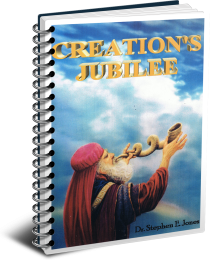

Read a variety of tracts that condense a topic into a short, single page format. These tracts can be read for free online, or physical copies can be purchased in bundles. If you are subscribed to the FFI Newsletter, you will receive new tracts when they are released.
View Full Tract ListJoshua is a type of Christ in His second coming, as He brings us into the Kingdom. Joshua’s name is spelled in different ways in Scripture. Exodus 17:9 is where his name first appears, and it is Yehoshua, “Yahweh is salvation.” The most common shortened form of his name is Yeshua.
It appears also that Joshua’s original name was Hoshea (or Hosea), which appears in Numbers 13:8 KJV and again in verse 16 as Oshea, “Salvation.” So the prophet Hosea was also a type of Christ, primarily to show His calling as the redeemer of Israel (Gomer). Each of the prophetic types of Christ reveal a different aspect of the messianic calling.
In Numbers 13:8 Joshua was called “the son of Nun.” Nun is a Hebrew letter that literally means a swarm of fish, setting forth the idea of teeming with life. Hence, He is the son of resurrection life. In the same verse we see that Joshua was from the tribe of Ephraim, a fact that is often missed by Christians, because Jesus (Yeshua) came from the tribe of Judah. The discrepancy is overcome when we see that Jesus was to come twice—the first time from Judah to claim the throne of David, and the second time from Ephraim to claim the birthright of Joseph.
When Christ came the first time, His throne was usurped by Caiaphas to fulfill the story of Absalom who usurped David’s throne with the help of the betrayer. The dispute over throne rights will not be fully resolved (legally) until the time of Christ’s second coming. That dispute was revealed in Jesus’ parable in Luke 19:12-27.
12 So He said, “a nobleman [Jesus] went to a distant country [ascended to heaven] to receive a kingdom for himself and then return… 14 But his citizens [Jews] hated him and sent a delegation after him, saying, “We do not want this man to reign over us.”
In other words, Caiaphas’ usurpation was only the beginning of a long dispute in the divine court that would have to be resolved before Christ could return to claim His throne. In the interim, God gave the two sides sufficient time to resolve the dispute among themselves out of court. However, the parable itself shows that the dispute will not be resolved out of court. We read in Luke 19:27,
27 But these enemies of mine, who did not want me to reign over them, bring them here and slay them in my presence.
Jesus’ parable shows that those “enemies” will not repent but will be destroyed, along with Jerusalem, as prophesied in Jeremiah 19:10, 11; in Isaiah 29:3, 4 this destruction appears to be nuclear. Luke 19:27 (above) also suggests that God brought the Zionists back to the scene of the crime in order to bring judgment upon them.
The final destruction of Jerusalem is thus timed to coincide with the second coming of “Joshua” when He comes as an Ephraimite and from Joseph (1 Chronicles 5:2), whose robe is dipped in blood (Revelation 19:13).
Notice also how David himself returned to Jerusalem to reclaim His throne from Absalom. In that final battle, Absalom was killed (2 Samuel 19:10). Hence, when we read in Jesus’ parable that His enemies would be slain, it is consistent with the previous pattern of Absalom in the second coming of David.
We see, then, that the great dispute over throne rights is to be resolved at the same time that the dispute over the birthright of Joseph is resolved. This is because the throne rights, given temporarily to Judah, must be reunited with the birthright of Joseph under the headship of the Messiah—Yeshua the son of Nun, of the tribe of Ephraim. Jesus Christ will not inherit a fragmented birthright.
At the time of this writing, we live in the last days of the great dispute. This means we still have opportunity to support the right side and to be on the right side of Kingdom history. We may either support Jesus’ claim to the throne or the side that has rejected Yeshua’s throne rights. We may either support the Zionist claim to the name Israel or to support Yeshua the Ephraimite, to whom was given the birthright and the name given to Jacob by the angel Peniel (Genesis 48:16).
The two big disputes are: (1) who is the rightful king? and (2) who has the right to the name (title) Israel? These are the most fundamental issues before the divine court relevant to the two comings of Christ.
Jericho is known by archeologists to be one of the oldest continually inhabited cities in the world. The overthrow of Jericho itself is a type of the overthrow of Mystery Babylon in the book of Revelation. To bring down the walls of Jericho, God instructed the people to march around the city once a day for six days while blowing trumpets, while the people themselves remained silent. Joshua 6:8 says,
8 And it was so, that when Joshua had spoken to the people, the seven priests carrying the seven trumpets of rams’ horns [yobel, “Jubilee”] before the Lord went forward and blew the trumpets [shofars]; and the ark of the covenant of the Lord followed them.
Seven priests proclaimed the Jubilee, blowing shofars, announcing the arrival of the Ark of the Covenant which followed them. The Ark represented the presence of Christ, which we may interpret prophetically as the second coming (Greek: parousia) of Christ. For six days nothing seemed to change. On the seventh day, however, the people shouted, and the walls of the city fell. Joshua 6:10 says,
10 But Joshua commanded the people, saying, “You shall not shout nor let your voice be heard nor let a word proceed out of your mouth until the day I tell you, ‘Shout!’ Then you shall shout!”
They were to shout only on the seventh day (Joshua 6:4, 5). This pattern has been repeated in the overthrow of Mystery Babylon, where we again see seven trumpets in Revelation 8:2. Again, it is only in the seventh trumpet (Revelation 11:15) that Babylon falls. Of course, John gives us many more details that are omitted in the story of Jericho’s fall.
In order to understand the book of Revelation, we must see that the book is structured around the Hebrew calendar and the feast days. The seven seals come first (Revelation 6:1), representing a seven-year cycle of revelation. Opening the book that was sealed to the prophet in Daniel 12:9 gives us a progressive understanding of the divine plan in prophecy. It represents a Sabbath cycle of seven years.
In the seventh seal, that is, the seventh year, we see seven months, or trumpets. They used to blow a trumpet at the start of each new month when the first crescent moon was sighted.
In the seventh month is a seven-day feast of Tabernacles (Leviticus 23:34). John tells us that in the time of the seventh trumpet (month) are seven bowls of wine that angels pour out as “plagues” upon Babylon (Revelation 15:1). In other words, the feast of Tabernacles prophesies the final harvest of the earth and, in this case, taking Babylon and confiscating its assets.
In Joshua’s battle against Jericho, his instruction was to put all of the gold, silver, bronze, and iron into the treasury of the Lord (Joshua 6:19). It was revealed later to the prophet Daniel that these metals represented the four empires that were to rule prior to the rise of the Kingdom of God (Daniel 2:32, 33, 39, 40). Thus, the overthrow of Jericho and the confiscation of its assets represents the overthrow of Babylon (gold), Persia (silver), Greece (bronze), and Rome (iron).
These metals also represent the citizens of the world who become believers and are turned into citizens of the Kingdom. Hence, they are brought into the treasury of the Lord.
So to summarize, the seven seals are seven years in a Sabbath year cycle. In the seventh year are seven months, each marked by the blowing of trumpets. According to Joshua 6:8, the trumpets proclaim the message of the Jubilee. The start of the seventh month is Rosh Hoshana, the feast of trumpets, and in that month are seven bowls of wine (judgment) poured out upon Babylon, which then collapses fully after the seventh bowl is poured out (Revelation 16:17-21).
So we see how the Hebrew calendar provides us with the basic structure of the book of Revelation. It also provides us with instructions about what we are to watch for as well as the message that we are to proclaim in preparing the way for Christ’s second coming. For a more complete study of the Book of Revelation, see my commentary, The Revelation. You can read it online free of charge or order the 8 books here:
https://godskingdom.org/studies/books/the-revelation-the-complete-set/

Dr. Stephen Jones has been writing blog posts since 2005 on a variety of topics from Bible Studies to World News, and he has been writing books since 1992. Dr. Jones' most important writings came after God brought him back into the full-time ministry in 1991. It is here that all his earlier years of searching the Scriptures began to come into clear focus. He combines a knowledge of the Old and New Testaments with a personal revelation of God that began and developed during the "wilderness" period of his life, which he often refers to as God's True Bible College... Read More
We are only able to do what we do because of your support. If you feel led to support this ministry, we deeply appreciate it