Latest Posts
View the latest posts in an easy-to-read list format, with filtering options.
View the latest posts in an easy-to-read list format, with filtering options.
Multi-part posts on a particular topic, grouped together in "series" pages.
Look through our blog archive by year / month, or in a massive title list.
03/27/2026 - 1 Peter 5:1-4 says, 1 Therefore, I exhort the elders among you, as your fellow elder and witness o... Read More

03/26/2026 - Far from declaring victory, as Donald Trump has done, the Israelis themselves are being a bit more... Read More

03/26/2026 - March 26, 2026 Two more books published in Pakistan Today I talked to Pastor Fiaz. It was 3:00 p.m... Read More
Read over 100 books written by Dr. Jones, available to read for free online. Several of the books have also been translated into different languages, and are also available to read for free. The only time you pay is when you purchase a physical version of a book.
View Full Book List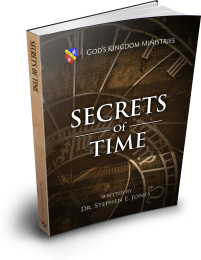
Read a variety of tracts that condense a topic into a short, single page format. These tracts can be read for free online, or physical copies can be purchased in bundles. If you are subscribed to the FFI Newsletter, you will receive new tracts when they are released.
View Full Tract ListIn Ecclesiastes 8:8, 9 Koheleth concludes his observation on authority by naming the absolute limits of power—both human and political.
8 No man has authority to restrain the wind [ruach], or authority over the day of death; and there is no discharge in the time of war, and evil will not deliver those who practice it. 9 All this I have seen and applied my mind to every deed that has been done under the sun wherein a man has exercised authority over another man to his hurt.
Koheleth lists four impossibilities, escalating in gravity: First, man has no control over the wind. Nature remains uncontrollable. Jesus referenced this in John 3:8,
8 The wind blows where it wishes, and you hear the sound of it, but do not know where it comes from and where it is going; so is everyone who is born [begotten] of the Spirit.
The Hebrew word for “wind” is ruach, which also means breath or spirit. Just as no one can control the wind, so also no one can control the Holy Spirit.
Second, man has no control over “the day of death.” Mortality is non-negotiable. Rank, wisdom, and power do not extend life beyond the will of God.
Third, “there is no discharge in the time of war.” Soldiers cannot request to be discharged once the battle has begun. Authority conscripts; individuals are trapped in forces larger than themselves.
Fourth, evil does not rescue its practitioners. Moral compromise does not provide immunity. Wickedness promises survival but ultimately fails.
Together these say: Authority has limited power, and injustice is a false refuge. When men exercise authority (shalit), it is limited because authority is not sovereignty. Authority cannot command nature, postpone death, exit catastrophe, or escape moral consequence. Koheleth strips authority of its illusion of control.
The philosophies of men usually fail to recognize the difference between authority and free will. Man was indeed given authority in Genesis 1:26, when God said, “let them rule.” Yet only God Himself has free will, for His power is unlimited. The idea of man’s free will was conceived when carnal men attempted to absolve God of evil in the world. Yet in doing so, they stripped God of sovereignty and gave it to man.
Their attempt to make man fully responsible for his actions ignores God’s laws establishing responsibility for ownership. These laws are set forth in Exodus 21:28-36 and in Exodus 22:5, 6. With ownership comes responsibility. So also, because God created all things, He also owns all things and is ultimately responsible for all that He owns. If an ox gores his neighbor, the owner cannot simply blame the ox; he is legally responsible to pay for the damages himself. The ox has limited authority to go here or there or to act peaceably or violently. The ox may be executed, but the owner must pay for the damages, because the ox does not own himself and is not sovereign.
Likewise, if a man digs a pit and fails to cover it, and if another man’s ox or donkey falls into it, “the owner of the pit shall make restitution” (Exodus 21:34). And, when building a house, men were required to put a railing around the roof as a safety feature (Deuteronomy 22:8). In those days, the roof was flat to allow people to go upstairs and enjoy the cool of the day. If the owner failed to do this, and if someone accidentally fell from the roof, the owner was held liable.
Koheleth teaches us the principle of limited authority. Man’s will is not without constraints; therefore, it is not truly free. Hence, we ought to shift our thinking from free will to authority, for that is what man has been given. Man is therefore accountable to God for his actions, but in the end, God holds the ultimate responsibility. He had the power to create man without the power to commit sin. He could have covered the pit before Adam fell into it. God could have put an impenetrable fence around the tree of knowledge of good and evil. But He did not do so.
That is why God sent His Son to pay for the sin of the world. It was to fulfill the law of responsibility. The law is an expression of God’s character (Love). He judges man according to his level of limited authority, but He also revealed how He has held Himself responsible to restore all things to Himself in the end. That is the responsibility that comes with sovereignty and ownership.
Ecclesiastes 8:9 provides the ethical verdict: “a man has exercised authority over another man to his hurt.”
Koheleth has observed that authority often injures rather than protects. The use of limited power is frequently abusive, and his subordinates bear the cost.
Koheleth’s argument runs like this: Authority exists and must be navigated (verses 2–5); timing and restraint are necessary (verses 6–7), but authority is limited, mortal, and morally dangerous (verses 8–9). Therefore, wisdom understands that limited authority also limits responsibility. One should respect authority as a divine gift, but one cannot make it equal to God’s sovereignty.
Koheleth affirms three hard truths: (1) God alone is sovereign, (2) Human power is limited and temporary, and (3) injustice is accountable to God.
Ecclesiastes 8:10 says,
10 So then, I have seen the wicked buried, those who used to go in and out from the holy place, and they are soon forgotten in the city where they did thus. This too is futility.
Koheleth describes a bitter irony: wicked priests who minister in the holy place in Jerusalem receive honorable burial; they move comfortably in the temple, but after their death, public memory fades quickly. Religious proximity does not equal righteousness. Public honor does not signal divine approval.
Ecclesiastes 8:11 says,
11 Because the sentence against an evil deed is not executed quickly, therefore the hearts of the sons of men among them are given fully to do evil.
When justice is delayed, evil men are encouraged to do evil, especially when evil men die without being held accountable for their sin. Koheleth is not questioning God’s justice—he is diagnosing human behavior when sin’s consequences are postponed.
In God’s judgment of nations, there is a principle of Cursed Time, a cycle of 414 years (or even multiples of 414). This is actually a grace period, designed to give nations time to repent and to address their wrongdoing. However, men lack understanding and trample upon His grace. Hence, when judgment finally falls upon them, they never make the connection between national collapse and the earlier verdict in the divine court. Only those who believe the prophets may understand. (See my book, Secrets of Time.)
Ecclesiastes 8:12 says,
12 Although a sinner does evil a hundred times and may lengthen his life, still I know that it will be well for those who fear [respect, reverence] God, who fear Him openly.
In times of divine judgment, God knows how to preserve the righteous. When God cursed the ground for Adam’s sake (Genesis 3:17), His verdict was carried out 4 x 414 years later at the time of Noah’s flood (Genesis 5:29). It appears that only Noah himself understood this connection. God preserved Noah and his family during this time of divine judgment on the earth.
Again, we see God’s protection upon Jeremiah when God judged Jerusalem for her sins. Though the king of Judah imprisoned Jeremiah for his prophecies (Jeremiah 37:15), the Babylonians set him free (Jeremiah 39:13, 14). The prophet was obedient to the word of the Lord and had no earthly authority to determine his own fate. But God exercised His sovereign will to protect him.
Ecclesiastes 8:13 says,
13 But it will not be well for the evil man, and he will not lengthen his days like a shadow, because he does not fear God.
Koheleth reaffirms that a moral order exists, injustice does not win forever, and the fear of God is decisive. But notice that he gives no timetable. Justice is certain—but not predictable.
Ecclesiastes 8:14 says,
14 There is futility which is done on the earth, that is, there are righteous men to whom it happens according to the deeds of the wicked. On the other hand, there are evil men to whom it happens according to the deeds of the righteous. I say that this too is futility.
Koheleth names the problem without softening it. Outcomes are reversed, moral logic appears inverted, and the world does not behave “correctly” in the eyes of men. Righteous men like Jeremiah are charged with crimes against the state, while evil men are honored as if they were righteous. “This too is futility,” that is, the situation is not permanent and will not endure, for there is a White Throne judgment coming at the end of the age. Justice is often delayed, and appearances deceive, but true faith survives this apparent contradiction.
Koheleth teaches faith without explanation, fearing God without guarantees, living rightly without visible payoff, and trusting justice without having control over its timing.

Dr. Stephen Jones has been writing blog posts since 2005 on a variety of topics from Bible Studies to World News, and he has been writing books since 1992. Dr. Jones' most important writings came after God brought him back into the full-time ministry in 1991. It is here that all his earlier years of searching the Scriptures began to come into clear focus. He combines a knowledge of the Old and New Testaments with a personal revelation of God that began and developed during the "wilderness" period of his life, which he often refers to as God's True Bible College... Read More
We are only able to do what we do because of your support. If you feel led to support this ministry, we deeply appreciate it