Latest Posts
View the latest posts in an easy-to-read list format, with filtering options.

View the latest posts in an easy-to-read list format, with filtering options.
Multi-part posts on a particular topic, grouped together in "series" pages.
Look through our blog archive by year / month, or in a massive title list.

03/31/2026 - We will leave here tomorrow morning to go to the weekend Passover conference in Chattanooga, TN, a... Read More

03/30/2026 - The latest biblical commentaries Ecclesiastes: The Philosophical Preacher, and Philippians, Philem... Read More

03/30/2026 - ... Read More
Read over 100 books written by Dr. Jones, available to read for free online. Several of the books have also been translated into different languages, and are also available to read for free. The only time you pay is when you purchase a physical version of a book.
View Full Book List
Read a variety of tracts that condense a topic into a short, single page format. These tracts can be read for free online, or physical copies can be purchased in bundles. If you are subscribed to the FFI Newsletter, you will receive new tracts when they are released.
View Full Tract ListEcclesiastes 9:10 says,
10 Whatever your hand finds to do, do it with all your might; for there is no activity or planning or knowledge or wisdom in Sheol where you are going.
Whatever task or project you have in front of you, do it with your full attention. Complete as much as you can while you live. Any unfinished projects at the end of your life will remain unfinished. Why? Because life is finite, not because outcomes are guaranteed. Half-hearted living is not wisdom.
The verse emphasizes the hand. Wisdom is not merely contemplation or philosophy. It is lived, enacted, done. Just because our understanding is limited does not mean we should live a life of paralysis. We cannot fully control outcomes, but we are responsible for effort.
Paul reframes labor theologically in Colossians 3:23, 24,
23 Whatever you do, do your work heartily, as for the Lord rather than for men, 24 knowing that from the Lord you will receive the reward of the inheritance. It is the Lord Christ whom you serve.
Christ is the employer; human masters are secondary; reward comes from God, not the paycheck.
Paul repeats this in Ephesians 6:7, 8,
7 With good will render service, as to the Lord, and not to men, 8 knowing that whatever good thing each one does, this he will receive back from the Lord, whether slave or free.
While Koheleth gives urgency, Paul gives Christ-centered orientation for clarification. He tells us who you are ultimately working for and why wholehearted effort matters even when outcomes are unjust.
Koheleth grounds his exhortation in mortality: “There is no activity or planning or knowledge or wisdom in Sheol.” This is not a denial of resurrection theology; it is a boundary statement. This life is the arena of action. Opportunities are time-bound, ending at the grave. What is not done now will not be done here at all. Yet Paul adds meaning and value to all labor that is done “as to the Lord and not to men.” This is how earthly labor transcends the limitations of mortality.
Koheleth does not deny the resurrection; he insists that this life is the only arena of earthly activity. Sheol (the grave) is not the end of the story. In the oldest book of the Bible, even preceding Moses himself, Job 19:25-27 speaks of the resurrection, saying,
25 As for me, I know that my Redeemer lives, and at the last He will take His stand on the earth. 26 Even after my skin is destroyed, yet from my flesh I shall see God; 27 whom I myself shall behold, and whom my eyes will see and not another…
Later, King David wrote prophetically about himself and Jesus Christ in Psalms 16:10,
10 For You will not abandon my soul to Sheol; nor will You allow Your Holy One to undergo decay.
David did not deny that his soul would go to Sheol. He knew, however, that He would not be abandoned there. In other words, his time in Sheol would be limited. So Peter’s Pentecostal sermon says in Acts 2:29-35,
29 Brethren, I may confidently say to you regarding the patriarch David that he both died and was buried, and his tomb is with us to this day…. 31 He looked ahead and spoke of the resurrection of the Christ, that He was neither abandoned to Hades, nor did His flesh suffer decay. 32 This Jesus God raised up again, to which we are all witnesses… 34 for it was not David who ascended into heaven, but he himself says: “The Lord said to My Lord, ‘Sit at My right hand, 35 until I make Your enemies a footstool for Your feet’.”
The Hebrew word Sheol is rendered in the Greek New Testament as Hades, the place of the dead. However, this Greek word was not to be interpreted according to Greek thought but according to the Hebrew concept of Sheol. Both of these terms are often translated into English as “hell,” which is an Old English word meaning “a covering.” (Hence, a helmet covers the head; also, “helling potatoes” meant putting them into an underground cellar for storage.) The word was later redefined to mean a place of fire and torture, something absent in the Hebrew Sheol.
The soul of both David and Jesus went to Sheol. Neither of them were tortured in fire. To explain this, later theologians came to teach (without biblical proof) that there were two compartments in “hell,” a relatively nice one for believers, and a torture pit for unbelievers.
Scripture tells us that Jesus body went to the tomb (Matthew 27:58-60), His soul went to Hades (Acts 2:27), and His spirit went to God (Luke 23:46). Death is a return, and at death each of our three parts returns to its point of origin to await their reassembly at the resurrection.
Foreseeing the resurrection, Daniel 12:2 describes death and resurrection this way:
2 Many of those who sleep in the dust of the ground will awake, these to everlasting life, but the others to disgrace and everlasting [olam] contempt.
Here, as in many Bible passages, death is sleep in Sheol before awakening in bodily resurrection. It assumes that the soul is the seat of personal identity and consciousness. Paul modifies this later to show that when we are begotten from above, a second being is created called the “new man,” which is a spiritual being, not a soulish being. But this moves beyond Koheleth’s horizon.
Ecclesiastes 9:11 says,
11 I again saw under the sun that the race is not to the swift and the battle is not to the warriors, and neither is bread to the wise nor wealth to the discerning nor favor to men of ability; for time and chance overtake them all.
Koheleth is attacking the belief that the world operates like a moral or mechanical machine, where one can expect to see competence rewarded with victory. Politics often interferes with meritocracy. Wisdom is ignored or rejected by fools who retain power or authority. And in the end, death takes them all equally, “for time and chance overtake them all”—that is, uncontrollable time and unforeseen circumstances are ever present.
In biblical terms, outcomes are governed by God but experienced by humans as contingency. From below, divine Providence feels like chance or randomness. Koheleth does not conclude: stop running; stop fighting; stop thinking. He concludes: don’t trust outcomes; don’t assume that a righteous cause will succeed; and don’t judge failure as incompetence.
Ecclesiastes 9:11 teaches that skill and virtue do not guarantee success, because life unfolds through uncontrollable timing and circumstance, humbling all human confidence in outcomes.
Koheleth presses the argument of 9:11 further. Not only are outcomes uncertain—the moment of crisis itself is unknowable. Ecclesiastes 9:12, 13 says,
12 Moreover, man does not know his time; like fish caught in a treacherous net and birds trapped in a snare, so the sons of men are ensnared at an evil time when it suddenly falls on them. 13 Also this I came to see as wisdom under the sun, and it impressed me.
Mortals are portrayed not as foolish animals, but as creatures subject to forces beyond perception or control. The phrase “an evil time” does not primarily mean wickedness. Here “evil” refers to disaster, catastrophe, or adverse circumstances. In other words, calamity often arrives without announcement, unless it is accompanied by prophetic warnings. But prophets are usually ignored by all except a small remnant.
Koheleth is dismantling presumption and confidence in foresight, but he is not endorsing fatalism. Rather, he is insisting that humility is the only honest posture before time. So also we read in James 4:13-16,
13 Come now, you who say, “Today or tomorrow we will go to such and such a city and spend a year there and engage in business and make a profit.” 14 Yet you do not know what your life will be like tomorrow. You are just a vapor that appears for a little while and then vanishes away. 15 Instead, you ought to say, “If the Lord wills, we will live and also do this or that.” 16 But as it is, you boast in your arrogance; all such boasting is evil.
Verse 12 could lead to despair. So verse 13 insists that wisdom still has value—even if it does not ensure recognition or reward “under the sun.” Planning the future, however, must be with the understanding that the Providence of God probably includes unforeseen circumstances. Mortals cannot foresee calamity or control timing, yet wisdom remains meaningful even in a world governed by suddenness and uncertainty.
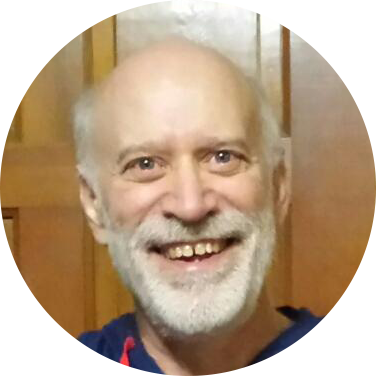
Dr. Stephen Jones has been writing blog posts since 2005 on a variety of topics from Bible Studies to World News, and he has been writing books since 1992. Dr. Jones' most important writings came after God brought him back into the full-time ministry in 1991. It is here that all his earlier years of searching the Scriptures began to come into clear focus. He combines a knowledge of the Old and New Testaments with a personal revelation of God that began and developed during the "wilderness" period of his life, which he often refers to as God's True Bible College... Read More
We are only able to do what we do because of your support. If you feel led to support this ministry, we deeply appreciate it