Latest Posts
View the latest posts in an easy-to-read list format, with filtering options.
View the latest posts in an easy-to-read list format, with filtering options.
Multi-part posts on a particular topic, grouped together in "series" pages.
Look through our blog archive by year / month, or in a massive title list.

03/31/2026 - We will leave here tomorrow morning to go to the weekend Passover conference in Chattanooga, TN, a... Read More

03/30/2026 - The latest biblical commentaries Ecclesiastes: The Philosophical Preacher, and Philippians, Philem... Read More

03/30/2026 - ... Read More
Read over 100 books written by Dr. Jones, available to read for free online. Several of the books have also been translated into different languages, and are also available to read for free. The only time you pay is when you purchase a physical version of a book.
View Full Book List
Read a variety of tracts that condense a topic into a short, single page format. These tracts can be read for free online, or physical copies can be purchased in bundles. If you are subscribed to the FFI Newsletter, you will receive new tracts when they are released.
View Full Tract ListEcclesiastes 11:1 says,
1 Cast your bread on the surface of the waters, for you will find it after many days.
This proverb expresses investment—intentional loss with delayed gain. At face value, the proverb sounds irrational. Bread cast on water seems wasted and unrecoverable. Yet it is really more akin to a risk or gamble, hoping without a guarantee for a greater return after a time.
“Waters” signify separation, uncertainty, and forces beyond one’s control. In commerce, “bread” can stand for grain or goods. Casting it upon the waters suggests overseas trade—sending cargo away by ship with no immediate control and no guarantee of return. When applied to charity, it pictures giving food away without expectation of repayment, trusting that benefit will come later, perhaps indirectly.
In both cases, the action involves risk and delay. This verse marks a shift in tone. Whereas in chapter 10 Koheleth exposed the dangers of folly and poor leadership, here he turns constructive. The world is uncertain, outcomes are delayed, and yet wisdom still acts—not paralyzed by risk. Wisdom relinquishes control long before it ever sees return; hence, it can be an act of faith and courage in the face of limited knowledge and control.
The instruction is not a reckless gamble, but yet it acknowledges the risk of uncertain outcomes. Wisdom does not demand immediate proof of return, but a reasonable expectation of future benefit through patience. This fits the Preacher’s larger theology of time (See 3:1–8). We sow in one season and may reap in another—or another may reap for them.
Acting with wisdom, of course, increases the likelihood of good outcomes in a world that God alone fully governs. Verse 1 tells us: Do not hoard out of fear; act wisely despite uncertainty. This sets the stage for the verses that follow. 11:2 — diversify your investments; 11:3–4 — uncertainty is unavoidable; 11:6 — sow anyway.
Jesus said in Matthew 6:19, 20,
19 Do not store up for yourselves treasures on earth, where moth and rust destroy, and where thieves break in and steal. 20 But store up for yourselves treasures in heaven… 21 for where your treasure is, there your heart will be also.
He was showing us how wealth on earth can be transformed into lasting profit by using it to build the Kingdom of God. When we consider all that we have to be owned by God, making us stewards of God’s wealth, casting bread upon the waters, as led by the Spirit, is an act of faith. Faith is the currency of heaven that outlasts earthly wealth. The heavenly accounting is interpreted in Matthew 19:29,
29 And everyone who has left houses or brothers or sisters or father or mother or children or farms for My name’s sake, will receive many times as much, and will inherit eternal life.
Luke 12:33, 34 adds this:
33 Sell your possessions and give to charity; make yourselves money belts which do not wear out, an unfailing treasure in heaven, where no thief comes near nor moth destroys. 34 For where your treasure is, there your heart will be also.
Luke shows heavenly accounting later in Luke 14:12-14,
12 And He also went on to say to the one who had invited Him, “When you give a luncheon or a dinner, do not invite your friends or your brothers or you relatives or rich neighbors, otherwise they may also invite you in return and that will be your repayment. 13 But when you give a reception, invite the poor, the crippled, the lame, the blind, 14 and you will be blessed, since they do not have the means to repay you; for you will be repaid at the resurrection of the righteous.”
In heavenly accounting, the long-term reward surely comes at the resurrection. So we read Jesus’ words in Revelation 22:12,
12 “Behold, I am coming quickly, and My reward is with Me, to render to every man according to what he has done.”
Koheleth teaches how to live wisely in an uncertain world; Jesus teaches how to live faithfully in a redeemed one.
Koheleth says: Give, even when you cannot see the outcome. Jesus says: Give, because God has already secured the outcome.
Jesus does not cancel or contradict Koheleth; He completes the principle, moving from wisdom under the sun to generosity under heaven.
Ecclesiastes 11:2 says,
2 Divide your portion to seven, or even to eight, for you do not know what misfortune may occur on the earth.
Wisdom does not exhaust everything on one venture. Koheleth assumes planning, not chaos. Generosity and prudence are not adversaries here—they are partners. The numbers are proverbial: seven often signifies completeness or sufficiency; eight in this sense goes beyond completeness—overflow, margin, redundancy. Koheleth is saying: don’t stop at “enough.” Build in an extra spread if possible. Diversify more than seems necessary.
This is classic Koheleth. The future is hidden, disaster is indiscriminate, and control is an illusion. The response to uncertainty is diversification, not paralysis. Koheleth does not say calamity might occur—only that its form and timing are unknown. Wisdom does not predict calamity; it prepares for it. Wisdom prepares by not concentrating everything in one investment “under the sun.”
The only investment that needs no diversification is our overall investment in the Kingdom. Ecclesiastes often exposes the vanity of control. Here Koheleth offers a constructive alternative: Because you cannot control the future, plan for uncertainty.
Ecclesiastes 11:3 says,
3 If the clouds are full, they pour out rain upon the earth; and whether a tree falls toward the south or toward the north, wherever the tree falls, there it lies.
Full clouds must release rain. Accumulation forces discharge. In other words, some processes are beyond human intervention. One cannot prevent the rain by worrying about it, nor create it by overanalyzing it. Wisdom recognizes what is inevitable. This corrects the illusion that careful planning can eliminate all risk.
The second image adds to this. Once a tree falls, its position is fixed. Direction matters but cannot be changed after the fact. You cannot reposition a fallen tree; therefore, act before outcomes are irreversible. This speaks about decisions and events whose outcomes, once manifested, cannot be undone. Delay does not preserve options forever; eventually circumstances settle into reality.
Koheleth subtly warns that indecision does not keep the future open—it may simply let it close on its own. If the clouds are full, rain will come regardless of whether we decide to take cover or to remain outside. God decides about the rain; we prepare through wisdom. Koheleth avoids two errors: Fatalism (“Everything is fixed, so action is pointless”) and the Illusion of free will (“I can control everything if I plan enough”). Wisdom acts before uncertainty becomes inevitability.
Ecclesiastes 11:4 says,
4 He who watches the wind will not sow, and he who looks at the clouds will not reap.
Koheleth exposes a subtle form of folly: waiting for certainty before acting. Watching the wind and looking at clouds are not evil acts; they are reasonable precautions. But Koheleth shows how reasonable caution may become chronic delay. The observer never becomes a sower; the analyst never becomes a reaper. Wisdom requires observation—but not obsession.
Wind always fluctuates; clouds always threaten. If a farmer always waits for perfect conditions, he will plant nothing. Sowing seed is always an investment without a guarantee. The point is universal: life never offers ideal conditions for obedience, generosity, or initiative. Koheleth unmasks the real issue: fear cloaked in the language of wisdom. “I’m just being careful.” “I need more information.” “Now is not the right time.”
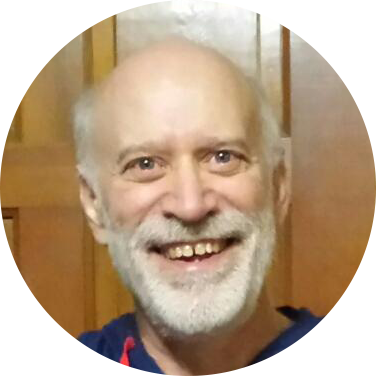
Dr. Stephen Jones has been writing blog posts since 2005 on a variety of topics from Bible Studies to World News, and he has been writing books since 1992. Dr. Jones' most important writings came after God brought him back into the full-time ministry in 1991. It is here that all his earlier years of searching the Scriptures began to come into clear focus. He combines a knowledge of the Old and New Testaments with a personal revelation of God that began and developed during the "wilderness" period of his life, which he often refers to as God's True Bible College... Read More
We are only able to do what we do because of your support. If you feel led to support this ministry, we deeply appreciate it