Latest Posts
View the latest posts in an easy-to-read list format, with filtering options.
View the latest posts in an easy-to-read list format, with filtering options.
Multi-part posts on a particular topic, grouped together in "series" pages.
Look through our blog archive by year / month, or in a massive title list.

03/31/2026 - We will leave here tomorrow morning to go to the weekend Passover conference in Chattanooga, TN, a... Read More

03/30/2026 - The latest biblical commentaries Ecclesiastes: The Philosophical Preacher, and Philippians, Philem... Read More

03/30/2026 - ... Read More
Read over 100 books written by Dr. Jones, available to read for free online. Several of the books have also been translated into different languages, and are also available to read for free. The only time you pay is when you purchase a physical version of a book.
View Full Book List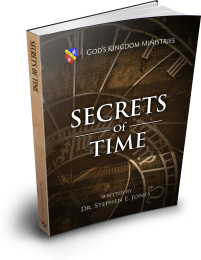


Read a variety of tracts that condense a topic into a short, single page format. These tracts can be read for free online, or physical copies can be purchased in bundles. If you are subscribed to the FFI Newsletter, you will receive new tracts when they are released.
View Full Tract ListThe inner adornment for wives, recommended by Peter, has examples from “the holy women” in Scripture. 1 Peter 3:5, 6 says,
5 For in this way in former times the holy women also, who hoped in God, used to adorn themselves, being submissive to their own husbands; 6 just as Sarah obeyed Abraham, calling him lord [kyrios], and you have become her children if you do what is right without being frightened by any fear.
Their defining characteristic was hope in God. Their submission was not merely social conformity but flowed from trust in God’s providence. This echoes the pattern Peter has emphasized throughout the letter: believers endure difficult circumstances because their hope rests in God (1 Peter 1:3–5).
Thus the focus is not on cultural custom but on faith expressed through character. Peter cites Sarah, the wife of Abraham, as a model. The reference comes from Genesis 18:12, where Sarah refers to Abraham as ’adonî, “my lord.” The point is not the specific word but the attitude of respect and partnership within the marriage.
In the Old Testament ’adonî is commonly used as a respectful address to someone in authority, such as a master, a king, or a husband. See also the example of Rebekah, who addressed Abraham’s servant in Genesis 24:18,
18 She said, “Drink, my lord”; and she quickly lowered her jar to her hand and gave him a drink.
Likewise, Abigail addressed David with the same respect in 1 Samuel 25:24,
24 She fell at his feet and said, “On me alone, my lord, be the blame. And please let your maidservant speak to you, and listen to the words of your maidservant.”
Thus we see that Sarah was just one example of “the holy women” that Peter honored here. Peter uses the Greek word κύριος (kyrios), the standard Greek equivalent of ’adon.
Peter then says, “you have become her children.” This reflects a biblical concept. Those who follow the faith and character of the patriarchs are considered their spiritual descendants. This view was not unique in Christianity. It was part of the Hebrew vocabulary itself that was well-known by all in Judea. In Luke 7:35 Jesus says,
35 Yet wisdom is vindicated by all her children.
Paul says in 1 Thessalonians 5:5,
5 for you are all sons of light and sons of day. We are not of night nor of darkness.
Ephesians 2:2 speaks of “the sons of disobedience.” John 8:44 says, “you are of your father the devil.” He was not speaking of biological descent, as some teach, but of their hearts, manifested by their inclination to do the works of the devil. In other words, sons were said to resemble their fathers. It is said, “he is just like his father,” having inherited the same behavior patterns.
A “son” is someone who shares the nature or conduct of another. This idiom appears throughout the Old and New Testaments.
The sons of God, then, are not those who are descended biologically from Adam, Abraham, or Israel. Deuteronomy 14:1 says, “You are the sons of the Lord your God.” How can this be? Peter explained earlier that one must be begotten by the incorruptible and imperishable seed of the word through our ears (1 Peter 1:23-25).
The most striking example occurs when Jesus addressed Jewish leaders who claimed physical descent from Abraham.
John 8:39-41 says,
39 They answered and said to Him, “Abraham is our father.” Jesus said to them, “If you are Abraham’s children, do the deeds of Abraham. 40 But as it is, you are seeking to kill Me, a man who has told you the truth, which I heard from God; this Abraham did not do. 41 You are doing the deeds of your father…”
Jesus argues that true descent from Abraham is shown by faith and obedience, not genealogy. Hence, the relationship between fathers and children are seen on two levels: biological and behavioral, or fleshly and spiritual. Jesus did not dispute their genealogy. In fact, He acknowledged it earlier in John 8:37 saying, “I know that you are Abraham’s descendants.” But this did not make them Abraham’s children in the sight of God, who values spirit over flesh.
The same idea appears when Paul speaks of believers as children of Abraham by faith, saying in Galatians 3:7,
7 Therefore, be sure that it is those who are of faith who are sons of Abraham.
By God’s standard of measure, faith determines who qualifies as Abraham’s children. Hence, by the same standard, Peter tells the believers that “you have become her children if you do what is right.” Paul adds that Sarah represents the New Covenant (Galatians 4:22-26). So all who have New Covenant faith (in the promise of God) are Sarah’s children. Those whose faith rests in the Old Covenant (which is based on the promises of man) are children of Hagar, the bondwoman.
Thus in Hebrew thinking, spiritual identity is defined by character and behavior, not merely by ancestry.
Peter cites “the holy women” as examples to follow, using Sarah as his primary example. This points to the New Covenant, by which these ex-Israelites of the dispersion had become her children by faith. Peter does not appeal to their genealogy, except incidentally. By telling them that they had “become” her children, Peter implies that in their prior state of unbelief, they were NOT Sarah’s children, regardless of their physical genealogy. In the same vein, prior to their New Covenant relationship with God, they had not been Abraham’s children either.
Legally speaking, they had been disinherited and had been “cut off from among his people” (Leviticus 17:4)—that is, expelled from his tribe and no longer considered to be an Israelite, regardless of his genealogy. The law trumps genealogy. Men could be expelled from the covenant for unrepentant sin, just as foreigners could become Israelites by faith.
1 Peter 3:7 continues,
7 You husbands in the same way, live with your wives in an understanding way, as with someone weaker, since she is a woman; and show her honor as a fellow heir of the grace of life, so that your prayers will not be hindered.
Just as wives should “honor” their husbands, so also should husbands “honor” their wives. This is a mutual responsibility. One of the most basic ways that people fail in this regard is in their tone of voice when they speak with each other. Many years ago, I had a very good boss. He treated his employees very well. However, when he answered the telephone, it always was apparent when his wife was calling him, because his tone of voice immediately changed into a half whine—as if to let her know that he did not appreciate her call.
On the other hand, when my wife called me at work, the boss asked me, “Who was that?” I was not embarrassed to tell him. In fact, I was ecstatic. In discussing this with my wife later, we determined that we would always talk with each other with at least as much respect as with anyone else. That was an important lesson learned early in life.
Scripture teaches us to “love one another” (John 15:12). Love should not go one way only, for that makes life difficult. The principle works in a marriage as well. Love is expressed in many ways, including “honor.” Old Covenant marriage is limited, because it follows the Abram-Hagar pattern of a master-servant relationship. Hagar is a bondwoman, Paul says. To be a good bondwoman is to be obedient. But in a New Covenant marriage, Abraham-Sarah is the pattern. Sarah is a free woman.
But what does it mean to be “free”? Paul alludes to this in Galatians 3:28, saying, “there is neither male nor female; for you are all one in Christ Jesus.” He was not speaking biologically. He was referring to a woman whose husband has adopted the spirit of Jubilee, which is the law establishing true freedom. It is the duty of a husband to set his wife free, so that she is no longer a bondwoman who has no input into household decision-making.
Peter says, “you have become her children if you do what is right without being frightened by any fear.” What does “fear” have to do with the New Covenant? It doesn’t. Fear is associated with the Old Covenant. In Exodus 20:18, 19 the people were too fearful to approach God. That is the primary example. In Romans 8:15 we read, “For you have not received a spirit of slavery leading to fear again.” Fear brings bondage. Fear shows a lack of trust that one is loved. God is great, but God is not love (they say). 1 John 4:18 tells us,
18 There is no fear in love; but perfect love casts out fear, because fear involves punishment, and the one who fears is not perfected in love.
This was Israel’s problem at Mount Sinai. They were afraid of God, because they lacked the revelation that God is love.
Applying this to marriage, if a wife is afraid to approach her husband, it is likely they have an Old Covenant relationship, based on Israel’s pattern at Sinai and rooted in the Old Covenant. Peter makes it clear that it is the husband’s responsibility to relieve his wife’s fears, to be approachable, knowing that he truly loves and honors her and will not punish her for expressing her feelings or viewpoints that he might think are contrary to his own. It may not be fair to put this responsibility upon husbands alone, but the responsibility lies primarily with them.
Peter says to “live with your wives in an understanding way.” There is lot packed into that statement. Every woman wants to be understood. But Peter goes on to explain this further. Husbands are instructed to “show her honor as a fellow heir of the grace of life.” Just as we are fellow heirs with Christ (Romans 8:17), so also are husbands and wives fellow heirs on a family scale.
What responsibilities do we have as fellow heirs with Christ? How does Christ honor His bride? Will we not “reign with Him” (Revelation 20:6)? Will we not “judge the world” (1 Corinthians 6:2)? Will we not “judge angels” (1 Corinthians 6:3)? Because we are in agreement with Him and understand His nature (law), we have a great responsibility in the reconciliation of the world. This pattern should be seen also in our own marriages, as we mature spiritually and come into full agreement with Christ in all matters.
No one is fully mature until the feast of Tabernacles is fulfilled in them, of course. We must mature daily, a little at a time. Until that day, we continue to grow in grace. Yet as we grow, especially when spouses are both believers, there should be evidence of such growth over time. Sadly, this is relatively rare, partly because there is little understanding of the two covenants and how they apply to marriage. It would be nice if one of the apostles had written an entire treatise on New Covenant marriage. But we are only given a few pieces of advice now and then.
Even so, Peter’s instructions to husbands and wives are instructive, if we link them with other pieces of the puzzle scattered throughout the Scriptures.

Dr. Stephen Jones has been writing blog posts since 2005 on a variety of topics from Bible Studies to World News, and he has been writing books since 1992. Dr. Jones' most important writings came after God brought him back into the full-time ministry in 1991. It is here that all his earlier years of searching the Scriptures began to come into clear focus. He combines a knowledge of the Old and New Testaments with a personal revelation of God that began and developed during the "wilderness" period of his life, which he often refers to as God's True Bible College... Read More
We are only able to do what we do because of your support. If you feel led to support this ministry, we deeply appreciate it