Latest Posts
View the latest posts in an easy-to-read list format, with filtering options.
View the latest posts in an easy-to-read list format, with filtering options.
Multi-part posts on a particular topic, grouped together in "series" pages.
Look through our blog archive by year / month, or in a massive title list.
03/19/2026 - Peter’s first letter was addressed to some groups of ex-Israelites whose ancestors had been... Read More
03/18/2026 - 1 Peter 3:18-20 says, 18 … [Jesus] having been put to death in the flesh, but made alive in... Read More
03/17/2026 - 1 Peter 3:13-17 says, 13 Who is there to harm you if you prove zealous for what is good? 14 But ev... Read More
Read over 100 books written by Dr. Jones, available to read for free online. Several of the books have also been translated into different languages, and are also available to read for free. The only time you pay is when you purchase a physical version of a book.
View Full Book List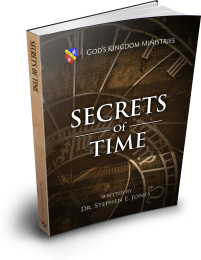
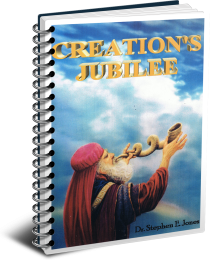


Read a variety of tracts that condense a topic into a short, single page format. These tracts can be read for free online, or physical copies can be purchased in bundles. If you are subscribed to the FFI Newsletter, you will receive new tracts when they are released.
View Full Tract ListPaul’s letter to his friend, Philemon, was written during Paul’s first imprisonment in Rome (61-63 A.D.) while awaiting his hearing before the Emperor Nero. Acts 28:30, 31 says,
30 And he [Paul] stayed two full years in his own rented quarters and was welcoming all who came to him, 31 preaching the kingdom of God and teaching concerning the Lord Jesus Christ with all openness, unhindered.
It was during this time that Paul met Onesimus, a runaway slave from Philemon, in whose house was the Colossian church. There is speculation that Paul met Onesimus in prison and that perhaps they were fellow prisoners for a time. But since Paul was not actually in a Roman prison, this seems unlikely—unless, of course, Paul went to the prison to preach the gospel.
It is more likely that Onesimus was always looking for employment to support himself and so he went from house to house or from business to business looking for work. Whatever the case, he came upon Paul, who shared the gospel of Christ with him. We do not know when Philemon had become a believer. Perhaps Onesimus had already escaped by the time Paul shared the gospel with him. At any rate, there is no evidence that Paul had met Onesimus earlier. In fact, the book of Acts does not even tell us when Paul preached at Colosse or when this church was established.
All we really know is that both Onesimus and Paul knew Philemon, but that their relationships were very different. Philemon was his legal slave master, while Paul transformed him into a slave of Jesus Christ. One might say that Jesus Christ was his Redeemer.
If we might attempt to reconstruct the past from the clues in Paul’s letters, it seems likely that in previous years Philemon was a “normal” slave master and that Onesimus wanted to be free. Some time later, Philemon became a believer through Paul’s preaching, and still later, Onesimus too met the apostle and became a believer.
This change of circumstances paved the way for an entirely new relationship, based on the laws of biblical slavery, redemption, equality, and Jubilee. Paul’s letter, then, becomes a practical application of the law as viewed through New Covenant eyes. As we will see, the New Covenant does not seek to contradict the law or to put it away, but instead it raises the standard of righteousness to new heights. Whereas the Old Covenant requires obedience and behavioral compliance to the law as written, the New Covenant requires a change of heart (nature) so that men come into agreement with the mind of God.
So after asserting that He did not come to abolish the law (Matthew 5:17-10), Jesus added to its requirements in Matthew 5:20,
20 For I say to you that unless your righteousness surpasses that of the scribes and Pharisees, you will not enter the kingdom of heaven.
As we will see by studying Paul’s letter to Philemon, Paul urged his friend to upgrade his legal master-slave relationship with Onesimus through the power of forgiveness and mercy. At the same time, Paul did not nullify the law of slavery, nor did he command Philemon to set his slave free. Instead, he allowed Philemon to manifest the change of heart that his friend had already experienced as a believer in Christ. What we see here is a transformative difference between an Old Covenant relationship and a New Covenant relationship.
Philemon’s name literally means “one who kisses.” It is derived from the Greek word phileo, “brotherly love.” Hence, his name means “Affectionate, loving, or friendly.” Paul treats his name as a manifestation of his calling, appealing to his sense of brotherly love toward Onesimus. He begins by praising Philemon’s love and faith (verses 4–7).
Onesimus’ name means “useful, profitable” (from the Greek word onesimos). A synonym is chrestos (“profitable”), so Paul says in verses 10, 11,
10 I appeal to you for my child, Onesimus, whom I have begotten in my imprisonment, 11 who formerly was useless [achrestos] to you, but now is useful [euchrestos] both to you and to me.
In effect, Paul was saying that both of these men ought to fulfill the meaning of their names in order to show that, as believers, each was “a new creature” (2 Corinthians 5:17) and that “old things passed away; behold, new things have come.”
This letter provides the earliest Christian argument against slavery, not through legal requirement but through the transformation of hearts. It exemplifies the gospel in action — faith working through love (Galatians 5:6). The relationship between Philemon and Onesimus became a model of Christian brotherhood transcending social barriers.
Early church documents tell us that Onesimus later became a bishop in Ephesus. We learn this from a letter written by Ignatius of Antioch, one of the children that Jesus took in His arms in Mark 10:16. He was about three years old at the time. Ignatius died as a martyr under Emperor Trajan—some say in 107 A.D., but more probable in 110. His Letter to the Ephesians, (1:3) says this about Onesimus:
"Seeing then that in God's name I have received your whole multitude in the person of Onesimus, whose love passeth utterance and who is moreover your bishop [in the flesh] — and I pray that ye may love him according to Jesus Christ and that ye all may be like him; for blessed is He that granted unto you according to your deserving to have such a bishop."
https://www.earlychristianwritings.com/text/ignatius-ephesians-lightfoot.html
It is evident from this that Philemon did indeed grant Paul’s request to set Onesimus free and to treat him as an equal brother in Christ. Philemon’s actions thus had a positive impact upon the church—not just any church, but upon one of the leading churches of that time—Ephesus.

Dr. Stephen Jones has been writing blog posts since 2005 on a variety of topics from Bible Studies to World News, and he has been writing books since 1992. Dr. Jones' most important writings came after God brought him back into the full-time ministry in 1991. It is here that all his earlier years of searching the Scriptures began to come into clear focus. He combines a knowledge of the Old and New Testaments with a personal revelation of God that began and developed during the "wilderness" period of his life, which he often refers to as God's True Bible College... Read More
We are only able to do what we do because of your support. If you feel led to support this ministry, we deeply appreciate it