Latest Posts
View the latest posts in an easy-to-read list format, with filtering options.
View the latest posts in an easy-to-read list format, with filtering options.
Multi-part posts on a particular topic, grouped together in "series" pages.
Look through our blog archive by year / month, or in a massive title list.
10/20/2026 - Ezekiel 3:12-15 says, 12 Then the Spirit lifted me up, and I heard a great rumbling sound behind m... Read More

10/19/2026 - https://www.youtube.com/watch?v=ToksxXw0e_Q... Read More
10/19/2026 - When God told the prophet to eat the scroll (the word of God) in Ezekiel 3:1-3, its sweetness does... Read More
Read over 100 books written by Dr. Jones, available to read for free online. Several of the books have also been translated into different languages, and are also available to read for free. The only time you pay is when you purchase a physical version of a book.
View Full Book List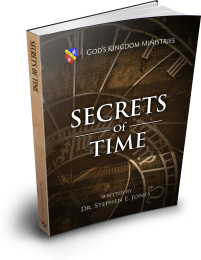
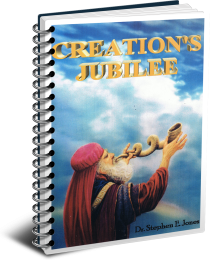


Read a variety of tracts that condense a topic into a short, single page format. These tracts can be read for free online, or physical copies can be purchased in bundles. If you are subscribed to the FFI Newsletter, you will receive new tracts when they are released.
View Full Tract ListThe final verses of 1 Thessalonians 4 comprise one of Paul’s principal passages concerning the resurrection of the dead and the coming (parousia) of Christ. The immediate question is not primarily, “When will Christ return?” but rather, “What happens to believers who die before He comes?” Will they miss out on the blessing of seeing Christ’s return?
Apparently some Thessalonians feared that deceased believers would somehow miss the great event. Paul assures them of exactly the opposite: the dead in Christ actually rise first, so that they may receive the New Covenant inheritance of “the redemption of our body” (Romans 8:23).
1 Thessalonians 4:13 begins,
13 But we do not want you to be uninformed, brethren, about those who are asleep, so that you will not grieve as do the rest who have no hope.
Paul uses sleep as a metaphor for death. The Greek is koimaō, “to sleep,” from which we get the word cemetery through the related Greek koimētērion, literally a “sleeping place.” Jesus used the same imagery concerning Lazarus in John 11:11,
11 Our friend Lazarus has fallen asleep; but I go, so that I may awaken him out of sleep.
The disciples misunderstood Him, so John explains in verse 13, “Now Jesus had spoken of his death.”
Likewise, Daniel 12:2 says, “Many of those who sleep in the dust of the ground will awake...”
Paul's metaphor emphasizes the temporary nature of death in view of resurrection. Sleep anticipates awakening. This does not mean Christians should not grieve. Paul says, “so that you will not grieve as do the rest who have no hope.” The distinction is not between grief and no grief, but between grief with hope and grief without hope.
Christian hope rests upon resurrection.
1 Thessalonians 4:14 says,
14 For if we believe that Jesus died and rose again, even so God will bring with Him those who have fallen asleep in Jesus.
Notice that Paul says believers “sleep,” but Jesus “died.” Christ actually entered death and conquered it. Because He rose, death has become temporary for those who belong to Him. The logic is the same as 1 Corinthians 15:20:
20 But now Christ has been raised from the dead, the first fruits of those who are asleep.
Christ’s resurrection is therefore not merely an isolated miracle. It is “the first fruits,” guaranteeing the harvest that follows. In the law, first fruits were given to God as an offering before the general harvest was permitted (Leviticus 23:14). The first fruits ceremony established the principle that the first portion of the harvest was God’s, and the people’s enjoyment of the harvest followed its presentation to Him.
In other words, the first fruits offering sanctified the harvest. Paul expresses a related principle in Romans 11:16,
16 If the first piece of dough is holy, the [entire] lump is also.
It also shows that God was not merely interested in the tiny first fruits offering; He was expecting a much greater harvest to come afterward. Christ was the first fruits of the church, but in James 1:18 we read,
18 In the exercise of His will [boulētheis] He brought us forth [apokyeō, “to give birth, bring forth, or produce”] by the word of truth, so that we would be a kind of first fruits among His creatures [“creation”].
James places the initiative squarely with God’s will. Therefore, when James calls believers God’s “first fruits,” there is also the idea of consecration. They are brought forth first and especially dedicated to God.
The phrase “His creatures” (autou ktismatōn) is broad. Ktisma means something created, a created thing—in this case, the creation as a whole.
This does not mean James 1:18 by itself proves every detail of how or when the larger harvest is gathered. But the metaphor of first fruits naturally anticipates something beyond the first fruits themselves. Hence, it is incorrect to think that God wants first fruits only. The first fruits offering represents the start of a greater harvest.
The first fruits were therefore not the end of the harvest. They were its beginning and pledge. This makes Paul’s terminology in 1 Corinthians 15:23 especially precise:
23 But each in his own order: Christ the first fruits, after that those who are Christ's at His coming.
Compare Paul's language in Romans 8:19–21, where the creation awaits liberation: “the creation itself also will be set free from its slavery to corruption into the freedom of the glory of the children of God.”
The first fruits (church, believers) therefore stand at the beginning of a much larger divine purpose involving creation. Christ Himself is the First fruits at the primary level. Then those belonging to God may themselves be described as first fruits at a secondary level. We might therefore see an expanding pattern:
Christ → first fruits of the dead (believers)
Believers → first fruits of creation
Creation → the larger harvest
Christ’s presentation on the wave-sheaf offering of barley led naturally to the feast of Pentecost and its wheat offering that represented the believers (church). This, in turn, was the first fruits of an even greater harvest of the feast of Tabernacles, represented by grapes (new wine).
Again, the chaff falls off barley by winnowing (wind blowing); wheat must be threshed to remove the chaff; grapes must be trodden under foot to extract the new wine. Only when all the feasts have been fulfilled will God have both bread and wine for His Communion Table. Only when all things in heaven and in earth and under the earth have been reconciled to Him (Colossians 1:16-20) will God be satisfied.
The Greek aparchē, “first fruits,” identifies Christ as the first portion of the resurrection harvest presented to God—in this case, barley, which ripened at the time of Passover. The grain itself was a natural crop, but it was prophetic of Christ.
This makes the timing of Christ's resurrection particularly meaningful. Jesus was raised during the season of the wave-sheaf offering on the first Sunday after Passover (Leviticus 23:11), and He subsequently presented Himself alive before the Father at the third hour of the day.
The expression in 1 Thessalonians 4:14, “God will bring with Him those who have fallen asleep in Jesus,” must be read together with verses 15 and 16. Paul is not saying merely that disembodied souls accompany Christ while their bodies remain permanently in the grave. His emphasis is precisely upon their resurrection.
The language may also connect with 3:13, “at the coming of our Lord Jesus with all His saints.” and ultimately with Zechariah 14:5,
5 Then the LORD, my God, will come, and all the holy ones with Him!
We must also keep in mind John’s teaching in Revelation 20, where he speaks of two resurrections. The “first resurrection” (Revelation 20:5) is limited to those called to reign with Christ in the Age to come. The general resurrection a thousand years later (Revelation 20:12) leaves no one in the grave. This is the harvest of grapes, and those not found written in the book of life are trodden under foot to eliminate the flesh and extract the new wine.
In other words, the purpose of judgment (“the lake of fire”) is to restore the lawful order and teach sinners the righteous ways of God, “for when the earth experiences Your judgments, the inhabitants of the world learn righteousness” (Isaiah 26:9). It is not to separate ungodly men from God but to separate them from their fleshly ways and teach them righteousness, so that they can qualify as the grape company that provides new wine for God’s Table.
For further information, see my book, The Restoration of All Things.

Dr. Stephen Jones has been writing blog posts since 2005 on a variety of topics from Bible Studies to World News, and he has been writing books since 1992. Dr. Jones' most important writings came after God brought him back into the full-time ministry in 1991. It is here that all his earlier years of searching the Scriptures began to come into clear focus. He combines a knowledge of the Old and New Testaments with a personal revelation of God that began and developed during the "wilderness" period of his life, which he often refers to as God's True Bible College... Read More
We are only able to do what we do because of your support. If you feel led to support this ministry, we deeply appreciate it