Latest Posts
View the latest posts in an easy-to-read list format, with filtering options.
View the latest posts in an easy-to-read list format, with filtering options.
Multi-part posts on a particular topic, grouped together in "series" pages.
Look through our blog archive by year / month, or in a massive title list.

10/21/2026 - I received this email from our ministry representative in Nepal today. Dear Respected Sir and pray... Read More
10/21/2026 - Ezekiel’s call as a watchman is described beginning in Ezekiel 3:18, 19, 18 When I say to th... Read More
10/20/2026 - Ezekiel 3:12-15 says, 12 Then the Spirit lifted me up, and I heard a great rumbling sound behind m... Read More
Read over 100 books written by Dr. Jones, available to read for free online. Several of the books have also been translated into different languages, and are also available to read for free. The only time you pay is when you purchase a physical version of a book.
View Full Book List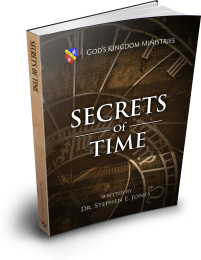
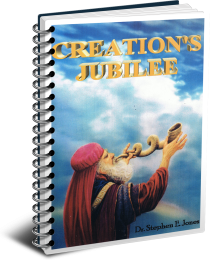
Read a variety of tracts that condense a topic into a short, single page format. These tracts can be read for free online, or physical copies can be purchased in bundles. If you are subscribed to the FFI Newsletter, you will receive new tracts when they are released.
View Full Tract ListIn regard to “the apostasy” in 2 Thessalonians 2:3, Paul was making the point that the day of the Lord would be preceded by this apostasy and the unveiling (“revealing”) of the man of lawlessness.
It appears to me that Paul used the word apostasia prophetically to convey a double meaning. On the surface it refers to those who will cast aside the truth before the day of the Lord arrives. Just under the surface, Paul was suggesting that the bondwoman/Old Covenant/earthly Jerusalem was to be “cast out” (Galatians 4:30) before the day of the Lord arrives.
The link between these, it seems to me, is Galatians 4:22-25, where Paul found it necessary to correct the distorted gospel. In his day, the Judaizers were trying to add Jesus to an Old Covenant order so that they could retain the “chosen” status of biological descendants of Abraham. The problem was so bad that even Peter himself had to be rebuked by Paul (Galatians 2:11, 12).
In essence, Paul’s position was that being “chosen” was not by biology but by faith. The term elect or chosen applies only to the remnant of grace (Romans 11:7) and excluded the vast majority who might claim biological descent from Abraham. For example, Ahab, king of Israel, was not “chosen,” regardless of his genealogy. In fact, he persecuted the chosen ones who, by the way, numbered only 7,000 in the days of Elijah (Romans 11:4).
Hence, Paul taught that the rabbinic teachings were a departure from biblical truth. The temple leaders had cast aside (apostasia) both Moses and Christ Himself. Jesus quoted Isaiah in Matthew 15:8, 9, saying,
8 This people honors Me with their lips, but their heart is far away from Me. 9 But in vain do they worship Me, teaching as doctrines the precepts of men.
This was really the heart of the dispute between Judaism and Christianity. Jesus did not repudiate the law of Moses (Matthew 5:17), but some Jewish Christians later tried to hold on to “the precepts of men,” that is, men’s understanding of the law of Moses. In fact, they mandated that Greek converts be physically circumcised in order to come into a covenant relationship with God. They did not understand that Moses Himself spoke of New Covenant circumcision, which is of the heart and ears (Deuteronomy 10:16; 30:6; Leviticus 26:41; Jeremiah 6:10).
Insofar as Moses was the mediator of the Old Covenant, one ought to replace Moses with Christ. However, insofar as Moses gave the law and was a prophetic type of Christ, one ought to respect Moses. Going from one covenant to another requires some changes in law, which are spelled out in greater detail in the book of Hebrews.
The Jews accused the Christians of forsaking (apostasia) Moses, but both Jesus and Paul accused the Jews of forsaking Moses. Which covenant actually gives respect to Moses? This was the great dispute in the first century.
This dispute finally led to the rejection of Jesus Christ and to Caiaphas usurping His throne, even as Absalom had usurped David’s throne (temporarily) a thousand years earlier. Their apostasia, first embodied by Absalom and later by Caiaphas, was assisted by “the son of destruction,” first Ahithophel and later Judas.
It is bad enough to be crucified by those who hate you; the pain is compounded when a “friend” (Matthew 26:50) assists them as an accessory to the apostasia.
This is a basic outline of the dispute in regard to Christ’s first coming. As I said, it was actually the second iteration of the prophecy—the first being that of Absalom, David, and Ahithophel.
But more recent history shows that we have entered a third round of fulfillment in this story. Darby’s “dispensationalist” teachings in the 1850’s have led to the development of Christian Zionism that is remarkably similar to the Judaizers in Paul’s day. They forsake Moses by putting away the law, while claiming that the coming age will be a Jewish Kingdom with all of the original Old Covenant features and practices—and yet somehow ruled by Jesus, the Mediator of the New Covenant.
Darby taught that the “Age of Grace” would end, that it was essentially a temporary innovation to include non-Jews until the Kingdom would revert back to its original Old Covenant practices. This teaching was/is totally illogical and vastly unbiblical, of course. The blood of Jesus sealed the New Covenant, but will this “grace” really end and be replaced by the original Old Covenant? Is that not a great apostasy?
Paul teaches that this apostasy must arrive before the day of the Lord. The “son of destruction” (prophetic Judas) was to arise again. Paul saw it even in his day, and so he wrote a few epistles to correct the distorted gospel.
The day of the Lord, then, describes divine judgment upon such apostasy. Just as the Judas company has assisted the Caiaphas company in an attempt to retain the jurisdiction of the Old Covenant, so now will God cast out the bondwoman and her son (Galatians 4:30). Hence, when Paul tells us that an apostasia must take place, it has a double meaning: (1) “apostasy” among Jesus friends (Judas) who assist His enemies in resisting and abolishing the New Covenant, and (2) God’s intention to cast out the bondwoman/Old Covenant/earthly Jerusalem in order to establish the New Covenant.
When God casts out the prophetic bondwoman, it will resolve the dispute that has been ongoing for nearly 2,000 years. It is the time when “the Lord said to My Lord, ‘Sit at My right hand, until I make Your enemies a footstool for Your feet’” (Luke 20:42, 43). It is the time described in Jesus’ parable in Luke 19:14,
14 But his citizens hated him and sent a delegation after him, saying, “We do not want this man to reign over us.”
The divine court has considered their case for nearly 2,000 years. Jesus then prophesies how this case will be resolved. Luke 19:27 concludes,
27 But these enemies of mine, who did not want me to reign over them, bring them here [to Jerusalem] and slay them in my presence.
The Zionist movement has brought His “enemies” back to the old land, not to establish an Old Covenant kingdom, but to render His verdict in regard to their forefathers’ appeal.
This will also fulfill Jeremiah’s prophecy about the smashed jar. Jeremiah 19:10, 11 says,
10 Then you are to break the jar in the sight of the men who accompany you, 11 and say to them, “Thus says the Lord of hosts, ‘Just so will I break this people and this city, even as one breaks a potter’s vessel, which cannot again be repaired’…”
Jerusalem has been destroyed more than once, but it has always been “repaired.” Therefore, Jeremiah’s prophecy has yet to be fulfilled in its entirety. I believe it will coincide with the casting out of the bondwoman (Jerusalem). The Old Covenant will never again arise, nor will it ever be the foundation of the Kingdom of God. In other words, Darby was wrong. Dead wrong.
The Apostle Paul was faithful to teach the Galatians and Thessalonians the truth of what would transpire at the end of the age. Let us take Paul’s writings seriously, so that we do not get caught up in the Judas company and be disqualified as he was. Let us instead build the New Covenant Kingdom and place our faith in the blood of Christ, rather than in animal sacrifices. Let us aspire to be part of the Melchizedek Order of priests and reject the claims of the Levitical priesthood. Let us be “living stones” (1 Peter 2:5) in a New Covenant temple (Ephesians 2:20-22) within the New Jerusalem and cease supporting the reconstruction of an earthly temple in the old city.

Dr. Stephen Jones has been writing blog posts since 2005 on a variety of topics from Bible Studies to World News, and he has been writing books since 1992. Dr. Jones' most important writings came after God brought him back into the full-time ministry in 1991. It is here that all his earlier years of searching the Scriptures began to come into clear focus. He combines a knowledge of the Old and New Testaments with a personal revelation of God that began and developed during the "wilderness" period of his life, which he often refers to as God's True Bible College... Read More
We are only able to do what we do because of your support. If you feel led to support this ministry, we deeply appreciate it