Latest Posts
View the latest posts in an easy-to-read list format, with filtering options.
View the latest posts in an easy-to-read list format, with filtering options.
Multi-part posts on a particular topic, grouped together in "series" pages.
Look through our blog archive by year / month, or in a massive title list.

10/21/2026 - I received this email from our ministry representative in Nepal today. Dear Respected Sir and pray... Read More
10/21/2026 - Ezekiel’s call as a watchman is described beginning in Ezekiel 3:18, 19, 18 When I say to th... Read More
10/20/2026 - Ezekiel 3:12-15 says, 12 Then the Spirit lifted me up, and I heard a great rumbling sound behind m... Read More
Read over 100 books written by Dr. Jones, available to read for free online. Several of the books have also been translated into different languages, and are also available to read for free. The only time you pay is when you purchase a physical version of a book.
View Full Book List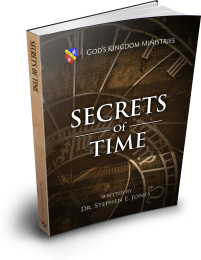
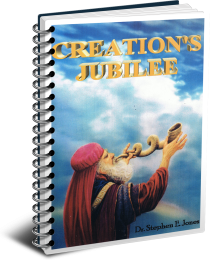
Read a variety of tracts that condense a topic into a short, single page format. These tracts can be read for free online, or physical copies can be purchased in bundles. If you are subscribed to the FFI Newsletter, you will receive new tracts when they are released.
View Full Tract ListJudah’s main calling is set forth in Genesis 49:10, where we see that Jacob gave him the portion of the birthright known as the dominion mandate (“scepter”). This is explained further in 1 Chronicles 5:2, saying, “from him came the leader,” or the “chief ruler” (KJV). In other words, from Judah was to come the kings of Israel, culminating in the Messiah.
A few centuries later, after the tribes of Israel had been governed by their own tribal princes, they demanded a king. God gave them Saul, who was of the tribe of Benjamin. Why? Because Judah was not yet ready (eligible) to produce the promised king. Judah’s unlawful affair with Tamar had produced Pharez, who was to be the heir (Genesis 38:29), but his line was disqualified for ten generations, according to the law in Deuteronomy 23:2.
David was the tenth generation (Ruth 4:18-22). Unfortunately, the people were impatient and demanded a king before Judah could fulfill its calling, so God gave them a Benjamite. After Saul failed to rule in righteousness, David was anointed king, and he then became a primary type of Christ insofar as Judah’s calling was concerned.
A thousand years later, Jesus Christ, who was of the lineage of David (Luke 2:4), finally fulfilled the calling given to Judah. Once Judah’s calling was completed, the rest of the prophecy in Genesis 49:10 was initiated: “The scepter will not depart from Judah… until Shiloh comes, and to Him shall be the obedience of the peoples.”
Shiloh was a messianic title, derived from shalom, “peace, well-being, rest.” The true Holder of the dominion mandate was to be “The peaceful one” or “the bringer of rest.” This transference of dominion is suggested again in that Solomon succeeded David. Solomon’s name too is derived from shalom, making him a type of the Prince of Peace, another messianic title (Isaiah 9:6). This points prophetically to the coming of Shiloh.
Genesis 49:10 essentially tells us that Judah’s claim to the dominion mandate was temporary and that it would be superseded by “Shiloh.” Speaking of the last monarch of Judah and the high priest as well, God gives us more details in Ezekiel 21:26, 27,
26 Thus says the Lord God, “Remove the turban [priestly mitre] and take off the crown; this will no longer be the same. Exalt that which is low and abase that which is high. 27 A ruin, a ruin, a ruin, I will make it. This also will be no more until He comes whose right it is, and I will give it to Him.
Judah’s line of monarchs was to come to an end, being replaced by “that which is low” (i.e., beginning with Babylon’s kings). Likewise, with the destruction of the temple, the high priest too was deprived of his position of power. Because of the sins of Jerusalem, the nation was not to enjoy a continuous monarchy of Judah until the arrival of Shiloh. Judah’s rule was to be interrupted by the rule of foreigners who worshiped other gods—“until Shiloh comes.” Hence, when Jesus was born, the fourth beast empire (Rome) ruled Jerusalem.
From a New Testament perspective, Jesus Christ is Shiloh. Though He came from the tribe of Judah, He would have received the scepter offered to Shiloh, which is actually the scepter over the world as a whole. But the problem was compounded and extended when the Judeans disputed Jesus’ right to rule. In Jesus’ parable dealing with this problem, He said in Luke 19:12, 14,
12 So He said, “A nobleman went to a distant country to receive a kingdom for himself and then return… 14 But his citizens hated him and sent a delegation after him, saying, “We do not want this man to reign over us.”
This is a parable about Christ’s ascension to appeal His case to His heavenly Father. The “citizens” of Judea, represented by their religious leaders, appealed to the divine court as well, saying, “We do not want this man to reign over us.” This dispute is only today being resolved, and its resolution ends with the coming of Shiloh—that is, the second coming of Christ.
The parable ends with Luke 19:27,
27 But these enemies of mine, who did not want me to reign over them, bring them here and slay them in my presence.
This, I believe, describes the third “ruin” of Jerusalem mentioned in Ezekiel 21:27. The first was in 586 B.C. when Babylon destroyed the city. The second was in 70 A.D. when Rome destroyed the city. The third is soon to come and will be so complete that it “cannot be repaired again” (Jeremiah 19:11).
Jerusalem has remained religious but unrepentant for thousands of years. Hence, divine judgment was decreed against the city, depriving them of their own kings from Judah. The succession of beast empires (Daniel 7) has ruled Jerusalem since the days of Nebuchadnezzar. In fact, if the people had submitted to foreign rule, as Jeremiah had instructed them to do (Jeremiah 27:6-8), their lot would have been much easier. They might have prospered under captivity. In fact, theoretically, they might not have rejected the Messiah in His first appearance, and history would now be telling us a very different story.
As it turned out, Jerusalem, the “City of Peace,” became “the bloody city” (Ezekiel 22:2; 24:6, 9), killing the prophets and righteous men and culminating with the Messiah Himself. So we learn from Galatians 4 that there are actually two Jerusalems, one earthly, the other heavenly, each representing a different covenant, and also Abraham's two wives. The bottom line is that the earthly city, like Hagar, was to be “cast out” (Galatians 4:30), so that the heavenly city might rule the world in righteousness through the New Covenant.
Ierushalayim (“Jerusalem”) literally means “two Jerusalems.” The ayim ending makes it a "dual." If we do not distinguish these properly, we run the risk of supporting the claim of Hagar, who disputed with Sarah over the birthright. We then run the risk of supporting the Old Covenant over the New. In fact, that is precisely the problem with Zionism, whether Jewish or Christian. Christians themselves must decide which “mother” to claim as the mother church. Will we return to the old forms of Old Covenant worship, or will we retain a New Covenant view of prophecy and its worship?
When we are called to the divine court and asked to identify ourselves, will we claim to be children of Abraham and Sarah, or Abram and Hagar? Our answer will determine the course of our hearing before the divine court. Regardless of our answer, we will be judged according to our deeds. Which city did we support as the capital of the Kingdom? Did we advocate for the Peaceful City or the Bloody City? Did we advocate for the children of the flesh or the children of promise? Take this seriously while there is still time to repent.
When Israel entered the Promised Land under Joshua, the Ephraimite (Numbers 13:8), the tabernacle was set up at Shiloh (Joshua 18:1). This priestly town was a prophetic type of something greater yet to come. Shiloh was a town in the tribe of Ephraim—not Judah. When the priesthood (under Eli) became corrupted, God removed His presence from there and later moved it to Jerusalem in the tribe of Judah. Psalm 78:50, 60, 67, 68 records this, saying,
59 When God heard [of their idolatry], He was filled with wrath and greatly abhorred Israel; 60 so that He abandoned the dwelling place at Shiloh, the tent which He had pitched among men… 67 He also rejected the tent of Joseph and did not choose the tribe of Ephraim, 68 but chose the tribe of Judah, Mount Zion which He loved.
Nonetheless, Jerusalem and Mount Zion later became just as corrupt as Shiloh had been, so Jeremiah declared that God would forsake Jerusalem as He had earlier forsaken Shiloh (Jeremiah 7:13-15). God is impartial in His judgments. When the temple in Jerusalem became “a den of robbers” (Jeremiah 7:11), God departed from it (Ezekiel 10:4, 18; 11:23).
Centuries later, Jesus accused the temple priests of the same thing (Matthew 21:12, 13), and 40 years later the temple, city, and entire nation was again destroyed. We now await the third destruction—no doubt because of the same corruption and bloodthirsty nature of Jerusalem.
Joseph’s dreams in Genesis 37:5-11 prophesied that his brothers would bow down to him. The brothers were angry and jealous, but their father Jacob “kept the saying in mind” (Genesis 37:11). The brothers soon sold Joseph to slave traders, who took him to Egypt. But eventually, Joseph was elevated to power in Egypt, and when the brothers came to buy grain during a famine, they bowed to Joseph (Genesis 42:6).
Still later, when Jacob was old, he blessed his sons, dividing the provisions of the birthright among them. To Levi went the priesthood; to Judah went the scepter (temporarily), but to Joseph went the rest of the birthright. 1 Chronicles 5:2 says, “the birthright was Joseph’s.”
Splitting the birthright into pieces, of course, was a temporary provision until the Messiah (Shiloh) would come and reunite the pieces back under one Head. Christ’s first coming reunited the priesthood with the scepter under the banner of Judah, under which tribe He was born in Bethlehem. Christ’s second coming will reunite these with the “right of birth” (Sonship; the right to be called “sons of God”).
This is all bound up in the Shiloh prophecy. Judah’s scepter will be subsumed into the scepter of Joseph. Christ comes the second time in a greater manner, no longer identified as the heir of Judah but the heir of Joseph. Judah must bow to Joseph in the end, for that is the prophecy in Genesis 37.
It is for this reason that Christ returns with the identifying marks of Joseph. Hence, “He is clothed with a robe dipped in blood” (Revelation 19:13), because Joseph’s robe had been dipped in blood (Genesis 37:31). Again, to cleanse ex-lepers required two birds. The first was killed, and the second was dipped in the blood of the first bird (Leviticus 14:6) before being released into “the open field” (Leviticus 14:7).
These prophesy of the two comings of Christ. In His first coming, Christ fulfilled the first bird; in His second coming He will fulfill the prophecy of the second bird. Matthew 13:38 says, “the field is the world,” so the second bird prophesied of Christ’s return to the world. That is why He returns with His robe dipped in blood. It is not blood from fighting a war; it is His own blood that was shed in His first coming. That is the prophecy in Leviticus 14.
Therefore, Judah’s scepter over Israel was to be folded into Joseph’s world scepter, for Egypt is a prophetic type of the world. Unless we understand this, our view of the Kingdom will be much more limited.

Dr. Stephen Jones has been writing blog posts since 2005 on a variety of topics from Bible Studies to World News, and he has been writing books since 1992. Dr. Jones' most important writings came after God brought him back into the full-time ministry in 1991. It is here that all his earlier years of searching the Scriptures began to come into clear focus. He combines a knowledge of the Old and New Testaments with a personal revelation of God that began and developed during the "wilderness" period of his life, which he often refers to as God's True Bible College... Read More
We are only able to do what we do because of your support. If you feel led to support this ministry, we deeply appreciate it