Latest Posts
View the latest posts in an easy-to-read list format, with filtering options.
View the latest posts in an easy-to-read list format, with filtering options.
Multi-part posts on a particular topic, grouped together in "series" pages.
Look through our blog archive by year / month, or in a massive title list.
10/12/2026 - Ezekiel 1:13–21 presents God’s throne as living, active, and perfectly governed by His... Read More
10/09/2026 - Israel encampment in the wilderness mirrored Ezekiel’s vision of the four living creatures.... Read More
10/08/2026 - Ezekiel 1:1-3 begins, 1 Now it came about in the thirtieth year, on the fifth day of the fourth mo... Read More
Read over 100 books written by Dr. Jones, available to read for free online. Several of the books have also been translated into different languages, and are also available to read for free. The only time you pay is when you purchase a physical version of a book.
View Full Book List

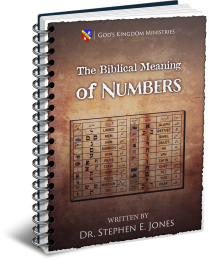

Read a variety of tracts that condense a topic into a short, single page format. These tracts can be read for free online, or physical copies can be purchased in bundles. If you are subscribed to the FFI Newsletter, you will receive new tracts when they are released.
View Full Tract ListPaul’s second letter to the Thessalonians was probably written from Corinth around A.D. 51–52, only a few months after 1 Thessalonians. It is addressed to the same young congregation and names the same three senders. Its main purpose, it seems, was to clarify his teaching on the Day of the Lord.
2 Thessalonians 1:1, 2 gives Paul’s opening address:
1 Paul and Silvanus and Timothy, to the church of the Thessalonians in God our Father and the Lord Jesus Christ. 2 Grace and peace from God the Father and the Lord Jesus Christ.
The Greek word translated “church” is ekklēsia, an assembly called to assemble for a particular purpose. In the Greek Old Testament, it is often used of the congregation of Israel assembled before God. Paul’s language therefore identifies the Thessalonian believers as a covenant assembly.
Their geographical location was Thessalonica, but their spiritual location was “in God our Father and the Lord Jesus Christ.” They lived in a hostile city, yet their true identity and security rested in God. The preposition “in” indicates union, fellowship, and the spiritual sphere in which they lived.
The expression “God our Father” emphasizes their relationship with God through the New Covenant. They had been begotten by the Spirit of God and were therefore His children. God is not presented merely as a distant ruler but as the Father of the household of faith.
Likewise, Paul places “the Lord Jesus Christ” alongside the Father as the One in whom the church exists. This is an important indication of Christ’s divine status and authority.
“Grace” is Greek charis, the favor and kindness of a sovereign God freely extended to His people. Grace is not merely an attitude in God; it is divine favor actively working to transform those who receive it in order to fulfill the terms of the New Covenant. In other words, by grace God writes His law upon their hearts.
“Peace” is eirēnē, corresponding to the Hebrew shalom. It means more than the absence of conflict. It denotes wholeness, reconciliation, order, and well-being. The order is significant: grace precedes peace. God’s grace addresses the cause of mankind’s alienation by changing their nature, producing peace with God and, ultimately, peace within creation.
2 Thessalonians 1:3 continues,
3 We ought always to give thanks to God for you, brethren, as is only fitting, because your faith is greatly enlarged, and the love of each one of you toward one another grows ever greater.
Paul says, “We ought”—Greek opheilomen, “we are obligated” or “we owe it.” Thanksgiving was not merely a polite opening to the letter. Paul regarded gratitude to God according to His law of redemption, where the slave redeemed from Master Sin now owes his debt to the Redeemer that bought his debt note.
In 1 Thessalonians, Paul had expressed concern about their spiritual growth:
“Night and day we keep praying (to)… complete what is lacking in your faith” (1 Thessalonians 3:10). He also prayed:
“May the Lord cause you to increase and abound in love for one another” (1 Thessalonians 3:12).
Second Thessalonians 1:3 shows that these prayers were being answered. Their faith had been “greatly enlarged,” and their love was growing.
“Greatly enlarged” translates hyperauxanō, an unusually strong Greek verb meaning “to increase exceedingly” or “to grow beyond measure.” It occurs only here in the New Testament. Their faith was not merely surviving persecution; it was flourishing through it.
Their love likewise “grows ever greater.” The verb pleonazō means to increase, abound, or become more plentiful. Paul carefully says that this was true of “each one” of them. Their love was not confined to a few prominent members but was spreading throughout the congregation.
Faith describes their relationship with God; love describes their relationship with one another. Genuine spiritual growth requires both. Faith without love may become doctrinal pride, while love without faith lacks a stable foundation in divine truth.
Interestingly, Paul does not mention hope here as he did in 1 Thessalonians 1:3: “Your work of faith and labor of love and steadfastness of hope.” The Thessalonians’ faith and love were plainly increasing, but confusion concerning the day of the Lord may have unsettled their hope. Paul therefore devotes much of this letter to correcting their understanding of Christ’s coming.
2 Thessalonians 2:4 continues,
4 Therefore, we ourselves speak proudly of you among the churches of God for your perseverance and faith in the midst of all your persecutions and afflictions which you endure.
Paul says that “we ourselves” spoke proudly of them. Other churches may already have heard about the Thessalonians, but Paul and his companions personally pointed to them as an example of steadfast faith. This was not carnal boasting in human accomplishment. Paul was boasting about what the grace of God had accomplished in them. As he writes in 2 Corinthians 10:17, “But he who boasts is to boast in the Lord.”
“Perseverance” is Greek hypomonē, literally the capacity and strength to “remain under” a burden. It does not mean passive resignation. It describes steadfast endurance—the refusal to abandon one’s faith or calling when pressure intensifies.
Paul distinguishes between “persecutions” and “afflictions.” Diōgmois, “persecutions,” refers especially to deliberate hostility directed against them because of their faith. Thlipsesin, “afflictions” or “tribulations,” comes from a word suggesting pressure, compression, or distress. Their persecutions were the hostile actions of others; their afflictions were the pressures and sufferings resulting from those actions.
The verb translated “endure” is in the present tense: these difficulties were still continuing. Paul was not congratulating them for surviving a past crisis. They were demonstrating faithfulness while the persecution remained active.
The passage shows that persecution did not destroy their faith; it revealed and strengthened it. Their endurance was evidence that their faith was genuine. As Paul explains in the following verse,
5 This is a plain indication of God’s righteous judgment, so that you will be considered worthy of the kingdom of God, for which indeed you are suffering.
Affliction creates a distinction and separation between the church and the overcomers. It is a refining process. James 1:3 says, “The testing of your faith produces endurance.” Paul says in 2 Timothy 2:11, 12,
11 It is a trustworthy statement: For if we died with Him, we will also live with Him; 12 if we endure, we will also reign with Him. If we deny Him, He also will deny us.
Faith means we have identified with Christ’s death and resurrection and are justified. But endurance is required to “reign with Him.” There are far more believers than those who endure. This has been misunderstood by many Bible teachers in past years, especially in the great controversy between Calvin and Arminius. Arminius taught that men could lose their salvation if they did not endure. Calvin taught that “once saved, always saved.” They did not clearly distinguish between those who were “saved” and those who would “reign.”
The Thessalonians were not saved because they endured persecution. Rather, their endurance manifested the reality of God’s work within them. Their growing faith, increasing love, and patient endurance formed a threefold testimony that the young church was maturing.
Endurance and maturity are qualifications for the first resurrection (Revelation 20:6); faith guarantees life (immortality) in the general resurrection a thousand years later (John 5:28, 29). The Abrahamic Covenant guarantees that all nations will be blessed. Acts 3:25, 26 defines “bless” as “turning every one of you from your wicked ways.” It does NOT mean that anyone will be saved apart from faith in Christ. It means that God has obligated Himself by an oath to turn everyone from their wicked ways through loving discipline and beneficial judgment.
Every knee will bow, and every tongue will profess Christ (Philippians 2:10, 11), so that they may be saved. Nonetheless, if they fail to come to Christ during their lifetime on earth, they will have to undergo divine judgment to teach them the ways of God and to bring them to spiritual maturity. The law of God, however, commands a Jubilee to end all debt after a certain time.
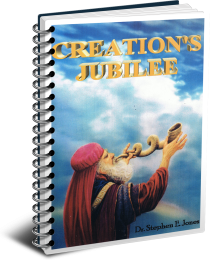
Judgment, then, does not last forever. It is aionian, “pertaining to an age.” It ends with the final Creation Jubilee, so that all things (ta panta, “The All”) may be subjected to the rule of Christ (1 Corinthians 15:27, 28).
Thus, verses 1–4 introduce the central pastoral message of the chapter: present suffering must be viewed in the light of God’s righteous judgment. The persecuted saints had not been forgotten. Their endurance was preparing them for the kingdom, while God would ultimately correct every injustice.

Dr. Stephen Jones has been writing blog posts since 2005 on a variety of topics from Bible Studies to World News, and he has been writing books since 1992. Dr. Jones' most important writings came after God brought him back into the full-time ministry in 1991. It is here that all his earlier years of searching the Scriptures began to come into clear focus. He combines a knowledge of the Old and New Testaments with a personal revelation of God that began and developed during the "wilderness" period of his life, which he often refers to as God's True Bible College... Read More
We are only able to do what we do because of your support. If you feel led to support this ministry, we deeply appreciate it