Latest Posts
View the latest posts in an easy-to-read list format, with filtering options.
View the latest posts in an easy-to-read list format, with filtering options.
Multi-part posts on a particular topic, grouped together in "series" pages.
Look through our blog archive by year / month, or in a massive title list.
10/23/2026 - Ezekiel 4:1–8 presents the coming siege of Jerusalem through a prophetic sign. Having appoin... Read More
10/22/2026 - When a watchman gives warning, he/she should keep in mind the principle in Ephesians 4:15, 15 But... Read More

10/21/2026 - I received this email from our ministry representative in Nepal today. Dear Respected Sir and pray... Read More
Read over 100 books written by Dr. Jones, available to read for free online. Several of the books have also been translated into different languages, and are also available to read for free. The only time you pay is when you purchase a physical version of a book.
View Full Book List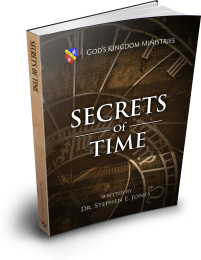
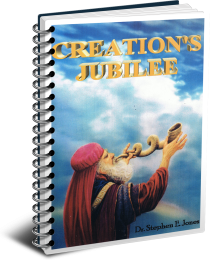

Read a variety of tracts that condense a topic into a short, single page format. These tracts can be read for free online, or physical copies can be purchased in bundles. If you are subscribed to the FFI Newsletter, you will receive new tracts when they are released.
View Full Tract ListWhen the Israelites wanted flesh to eat, God gave them their desire but it made them sick. Psalm 106:15 says,
13 They quickly forgot His works; they did not wait for His counsel, 14 but craved intensely in the wilderness, and tempted God in the desert. 15 So He gave them their request, but sent a wasting disease [razon, “leanness, scantiness, wasting”] among them.
God brought judgment upon them by granting their prayer requests. They should have sought to know the mind of God and then prayed for His perfect will. Yet this is often how men forget His works. They are primarily concerned with their own desires, not realizing that eating “flesh” does not really bring the results that they anticipate. Lord, teach us how to pray!
The carnal condition of the church in the wilderness is the “normal” pattern seen in the church to this day. Many have prayed for the peace of the earthly Jerusalem, rather than the heavenly city, because they are children of the bondwoman and desire flesh to eat. They think that the earthly Jerusalem and the Old Covenant it represents is the solution to today’s problem.
God has indeed answered their prayer for a season, but we are now seeing the genocidal results of answered prayer. Worse yet, the soul of the church has received leanness, a scarcity, a famine of hearing the true word of God (Amos 8:11). This is not a new problem. It is a continuation of a very old problem.
In the days of Samuel, the people desired a king “like all the nations” (1 Samuel 8:5). God gave them their desire. They got their kingdom, ruled by Saul, the Pentecostal king, but it was accompanied by a famine of hearing the word.
Centuries later, in the days of Jeremiah, Jerusalem had again become corrupt, though it remained religious. The people desired carnality and wanted to be ruled by carnally-minded kings like the nations. Finally, God fully answered their prayer by putting them under the rule of King Nebuchadnezzar of Babylon (Jeremiah 27:6), followed by a series of fleshly “beast” empires, as Daniel 7 foretold.
Each fleshly empire was ruled by a different type of man-made government. Babylon was an absolute monarchy; Persia was a constitutional monarchy; Greece was a democracy; Rome was a Republic. These were just different colors of empire, reflecting different philosophies of fleshly government. God thus put various types of “meat” on the people’s menu to make sure that everyone’s prayer was answered in the way he wanted.
The “little horn” (Daniel 7:8 KJV), being an extension of the fourth empire (Rome), turned out to be a religious beast empire of Christian nations. According to the description in Daniel 7:25, it began with the Emperor Justinian, who made “alterations in times and in law.” In 526 A.D. he changed the calendar from AUC (“founding of Rome”) to the Julian calendar whose reference point was the birth of Christ. Then he altered the entire Roman legal system in 529-534 A.D.
The little horn shifted the long captivity from the rule of pagans to the rule of Christian emperors. In this way, God answered the prayers of those who desired to be ruled by fleshly Christian emperors, hoping to get an advantage over the pagan world. This, however, became just another type of “meat” on the fleshly menu.
Justinian’s Corpus Juris Civilis codified late Roman laws that helped create one of feudal society’s foundations in the Middle Ages: a dependent peasantry legally attached to the land. Feudalism governed relationships among kings, lords, and vassals kings through military service, loyalty, and grants of land called fiefs.
Manorialism governed the relationship between a landowner and the peasants working his estate. Justinian’s legislation contributed principally to this serfdom—near slavery.
The Latin word colere meant “to cultivate or inhabit.” Hence, a colonus was a farmer or settler. Coloni is plural, and colonia was a settlement or colony. Originally, a colonus was an independent farmer, but as the Roman Empire developed, the meaning of the word changed. Many formerly independent farmers became coloni—tenant farmers cultivating estates owned by others. They were not originally slaves. They rented land, paid taxes or rent, and theoretically remained free persons. But they were “free” in name only; in practice, they were slaves to the land owned by the nobility.
As time passed, Christian Emperors progressively restricted the coloni’s freedom to leave the estates where they were registered. These policies began long before Justinian, especially under Constantine and the fourth- and fifth-century emperors. Justinian collected and reinforced them in Book 11 of the Codex Justinianus.
One particularly important provision is Codex Justinianus 11.48.19, originally enacted by Emperor Anastasius I, who ruled the Eastern Roman Empire from 491-518 A.D. His legislation concerning the coloni was later incorporated into Justinian’s Codex as Codex Justinianus11.48.19. Thus, Justinian did not originate that particular law; his compilers preserved and formalized an earlier law of Anastasius when producing the Codex in 529 A.D.
The underlying idea is cultivating or inhabiting land. Only later did “colonialism” acquire its modern political meaning: a powerful state occupying, settling, exploiting, or governing another land and its people.
The decisive transition occurred during Portuguese and Spanish expansion in the fifteenth century. Portugal planted settlements on Atlantic islands such as Madeira, the Azores, Cape Verde, and São Tomé. These islands became experimental grounds for the system later exported to the Americas.
During the Renaissance, Europeans recovered and studied Justinian’s Corpus Juris Civilis. Roman concepts of property, conquest, jurisdiction, sovereignty, and settlement supplied lawyers with language for organizing expanding states and overseas possessions.
Renaissance scholars also consciously studied Roman colonization. Their reconstructions of Roman colonies later influenced European discussions of overseas settler colonies.
The dependent Roman coloni became ancestors of European serfs, not overseas colonists. Modern colonialism revived the older Roman meaning of colonus as a settler who cultivated and secured conquered land. It then combined this Roman settlement model with feudal land grants, mercantile capitalism, maritime technology, plantation agriculture, and forced labor.
Meanwhile, Europe saw the rise of Capitalism, which shifted the workplace from serfdom and slavery to the employer-employee system. People with savings could buy and own pieces of a corporation. But corporations must also “grow or die” as they seek profits to satisfy their shareholders. The big corporations grew by colonizing.
The discovery of new lands in the fifteenth century thus began a broader move to colonize Africa and the American hemisphere. They claimed lands that had been the home of indigenous people for thousands of years. To maximize profits, they extracted raw materials with the labor of indigenous slaves.
Meanwhile, the Protestant Reformation, which arose alongside the secular Renaissance, studied the law of God and found in it the basic principles of freedom. They saw that slavery was a judicial process to pay off debt. Some even noted that the law of Jubilee put a limit on slavery. Hence, there also arose an anti-slavery movement.
By the twentieth century, especially after World War 2, colonialism became unpopular. Colonial nations then began to compromise, giving nations “independence” while continuing to claim ownership and control of the governments and economies of those ex-colonies. Today this fakery is called “Neo-Colonialism,” an updated form of the previous form of colonialism. Nonetheless, certain leaders, particularly in Africa, saw through the sham and advocated full independence. Many were assassinated or imprisoned as troublemakers and revolutionaries.
I believe we have now come to the end of the succession of beast empires. Many types of flesh have been served on the menu of history. We have seen how many different forms of government have resulted in new or modified forms of serfdom or slavery. The root problem is that men want flesh to eat while expecting this to feed them spiritually. It has not worked. History proves this.
The good news is that the Kingdom of God is dawning. Therefore, it is time to teach the word of God in order to prepare the pioneers of the coming Age. It is important for them to learn the lessons from the past within the context of Bible prophecy and the judgments of God. The overcomers cannot remain tied to Old Covenant religion. They cannot claim the bondwoman as their spiritual mother without themselves being children of the flesh.
We must break the bonds of the earthly Jerusalem and seek the city that Abraham looked for (Hebrews 11:14-16). In his early years, Abram sought an earthly country; but later, Abraham sought “a better country.” Abram was his fleshly name; Abraham was his spiritual name. Abram brought forth the child of the flesh; Abraham brought forth the child of promise.
The underlying questions are: Whose child are you, Abram or Abraham? Who is your mother, Hagar or Sarah? Are you part of the original problem, or part of the solution? Do you search for freedom in the house of bondage or in the house of the freewoman?

Dr. Stephen Jones has been writing blog posts since 2005 on a variety of topics from Bible Studies to World News, and he has been writing books since 1992. Dr. Jones' most important writings came after God brought him back into the full-time ministry in 1991. It is here that all his earlier years of searching the Scriptures began to come into clear focus. He combines a knowledge of the Old and New Testaments with a personal revelation of God that began and developed during the "wilderness" period of his life, which he often refers to as God's True Bible College... Read More
We are only able to do what we do because of your support. If you feel led to support this ministry, we deeply appreciate it