Latest Posts
View the latest posts in an easy-to-read list format, with filtering options.

View the latest posts in an easy-to-read list format, with filtering options.
Multi-part posts on a particular topic, grouped together in "series" pages.
Look through our blog archive by year / month, or in a massive title list.
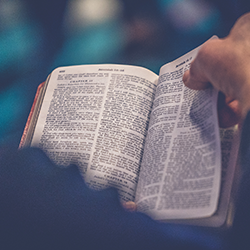
11/05/2026 - Ezekiel 7:5–7 intensifies the announcement of “the end” in verses 1–4. The... Read More
11/04/2026 - Ezekiel 6:11–14 concludes the prophecy against Israel’s idolatrous sanctuaries by show... Read More

11/03/2026 - Hello everyone, We are currently experiencing some notification issues that we are ironing out, ho... Read More
Read over 100 books written by Dr. Jones, available to read for free online. Several of the books have also been translated into different languages, and are also available to read for free. The only time you pay is when you purchase a physical version of a book.
View Full Book List
Read a variety of tracts that condense a topic into a short, single page format. These tracts can be read for free online, or physical copies can be purchased in bundles. If you are subscribed to the FFI Newsletter, you will receive new tracts when they are released.
View Full Tract ListEzekiel 7:5–7 intensifies the announcement of “the end” in verses 1–4. The short, repeated declarations convey urgency. The approaching Babylonian judgment would bring the existing order in Jerusalem and Judah to its appointed conclusion:
5 Thus says the Lord God, “A disaster, unique disaster, behold it is coming! 6 Your doom is coming; the end has come! It has awakened against you; behold, it has come! 7 Your doom has come to you, O inhabitant of the land. The time has come, the day is near—tumult rather than joyful shouting on the mountains.”
The NASB’s “unique disaster” describes a calamity of extraordinary magnitude. The Hebrew expression is literally something like “a disaster, one disaster.” Translations differ in how they convey its force; some render it “disaster after disaster.” The emphasis is on the overwhelming catastrophe approaching the nation.
The word translated “disaster” is ra‘ah, which can mean either moral evil or the calamity that befalls someone. Here it refers to calamity as a result of moral evil. The connection with the preceding verses is judicial. The people’s evil conduct would return upon them in the form of disastrous consequences.
The destruction would reach the institutions around which their national life revolved—monarchy, temple, city, and possession of the land. These gifts from God could not provide immunity while the people rejected the responsibilities accompanying them.
Ezekiel personifies the end as something that awakens and rises against the people. There is a striking Hebrew sound-play between haqqets, “the end,” and heqits, “it has awakened.” The sound reinforces the announcement: the end has awakened. What had seemed distant or inactive was now moving toward fulfillment. God’s patience may have encouraged the assumption that judgment would never arrive.
Later, Ezekiel 12:22 records the proverb that the days kept passing while prophetic visions came to nothing. God answers that attitude by declaring that His word would be fulfilled without further postponement (12:23–28).
A comparable principle appears in 2 Peter 2:3, where Peter says that the judgment of false teachers is active and “their destruction is not asleep.” In both passages, delay gives no assurance that accountability has disappeared. The repeated language of arrival presents the approaching event with certainty. Ezekiel is announcing that the sentence has reached the stage of execution.
The Hebrew word translated “doom,” tsephirah, is difficult, and its precise meaning here is uncertain. The KJV renders it “morning,” while many modern translations use “doom.” Consequently, “morning” should not become the foundation for an interpretation of this verse as the dawn of blessing. The context clearly concerns approaching judgment.
“The time” and “the day” identify the approaching occasion when God would act. This resembles Amos 5:18–20, where those expecting the day of the Lord to secure their triumph are warned that it would bring darkness upon them. Covenant people must themselves answer to the covenant’s Judge.
The closing contrast is between tumult and joyful shouting on the mountains. Following the NASB’s wording, the hills that had echoed with celebration would resound with the confusion and terror of invasion. In light of chapter 6, this may include celebrations at the idolatrous high places, though the wording need not be restricted to religious festivities. The Hebrew of this final clause is also difficult, so its details warrant caution.
The passage shows the point at which accumulated rebellion ripens into historical judgment. God had already promised survivors in Ezekiel 6:8–10, and He would later promise restoration to the repentant remnant. The collapse of their false security would serve His continuing purpose of bringing His remnant people to recognize Him.
Ezekiel 7:8, 9 identifies God as the Judge behind the approaching calamity. Babylon would carry out the invasion, but the judgment would fulfill God’s sentence against the people’s persistent rebellion.
8 “Now I will shortly pour out My wrath on you and spend My anger against you; judge you according to your works and bring on you all your abominations. 9 My eye will show no pity, nor will I spare. I will repay you according to your ways, while your abominations are in your midst; then you will know that I, the Lord, do the smiting.”
The word “shortly” (verse 8) intensifies the urgency of the preceding announcement. The end had “awakened” against them (verse 6), and the time for executing the sentence was fast approaching. His anger expresses His settled opposition to the idolatry, violence, and injustice they continued to practice.
The image of pouring out wrath presents judgment as something accumulated and now released. Yet God immediately explains its judicial basis: He will judge them according to their ways. This is based on the “eye for eye” law in Exodus 21:24 as well as the law of equal weights and measures in Leviticus 19:36. The judgment is absolutely proportional to the crime.
The statement that He would bring their abominations upon them means that their conduct would return upon their own heads in its consequences. Their idols could not protect them, and their violence would culminate in a violent overthrow. This illustrates the principle that a person reaps what he sows (Galatians 6:7).
The language of spending or exhausting His anger also portrays this judgment as reaching its appointed completion. It does not, by itself, promise restoration to every person judged. The completion of a sentence and participation in the promised inheritance are distinct matters.
God’s refusal to spare them means that pity would no longer postpone the announced sentence. Their continuing abominations remained in their midst; the grounds for judgment had not been removed. This recalls Deuteronomy 13:6–9, where Israel was commanded not to let personal affection or pity shield someone enticing others into idolatry. The principle concerns impartial justice. Covenant membership and close relationships cannot exempt wrongdoing from judgment. God now applies that principle to the covenant nation itself.
The repetition of judgment “according to your ways” emphasizes impartial, equal accountability. Their descent from Abraham, possession of the temple, and residence in Jerusalem could not substitute for faith and obedience.
The closing declaration adds something striking to Ezekiel’s familiar recognition formula: “Then you will know that I, the LORD, do the smiting.” They would have to recognize God’s sovereign hand in the disaster. Treating it merely as Babylonian aggression would leave its covenant meaning unexplained. The conqueror was accountable for its own conduct, but its military success did not mean that Babylon’s gods had defeated the Lord.
This compelled recognition should also be distinguished from receiving the inheritance. Acknowledging God through judgment does not itself establish that someone belongs to the remnant of grace. Romans 11:5–7 locates the promise in that remnant, while Galatians 4:28–30 identifies the heirs as children of promise and excludes the bondwoman’s household from inheriting alongside them.
Accordingly, these verses announce the judgment of the rebellious order without guaranteeing its later reinstatement. Restoration into the inheritance comes through Christ and the New Covenant—the promise carried by Sarah’s children.
Ezekiel 7:10–12 portrays Judah’s wickedness and its judgment as growth reaching maturity. Pride has blossomed, violence has developed into a rod, and the approaching catastrophe will overturn the people’s wealth, status, and ordinary business.
10 “Behold, the day! Behold, it is coming! Your doom has gone forth, the rod has budded, arrogance has blossomed. 11 Violence has grown into a rod of wickedness. None of them shall remain, none of their people, none of their wealth, nor anything eminent among them. 12 The time has come, the day has arrived. Let not the buyer rejoice nor the seller mourn; for wrath is against all their multitude.”
Ezekiel describes the rod as budding and arrogance as blossoming. These images ordinarily suggest springtime and new life, but here they describe the growth of something destructive. Wickedness has reached maturity, and its consequences are ready to appear. Another way of putting it is that their cup of iniquity was now full and overflowing (Genesis 15:16).
The “rod” admits two related interpretations. It can represent the instrument of punishment—Babylon, comparable to Assyria as the rod of God’s anger in Isaiah 10:5. Yet verse 11 connects the rod directly with violence and wickedness, suggesting that Judah’s own corruption has developed into the instrument of its undoing. These ideas can work together: the people’s violence brings upon them the violence of conquest.
There may also be an ironic contrast with Aaron’s rod in Numbers 17:8. Aaron’s rod budded, blossomed, and produced almonds as God’s confirmation of his appointed priesthood. Here, budding accompanies arrogance and judgment.
Violence reveals the practical fruit of the nation’s rebellion. The problem extended beyond false worship to oppression and bloodshed. Ezekiel 7:23 will explicitly connect the coming captivity with bloody crimes and a city filled with violence. The picture illustrates the principle already stated in verses 8 and 9: God judges them according to their ways. Their wrongdoing has grown strong enough to destroy the society that cultivated it.
The latter part of verse 11 is difficult Hebrew, and translations vary. Following the NASB, the sweep of judgment includes the people, their wealth, and their eminence. Numbers, riches, and social standing would provide no protection. The language describes the devastation of the established order.
The warning exposes the fragility of ownership when the entire national order is collapsing. A profitable purchase could not secure the purchaser’s future, and a completed sale could not remove the seller from the reach of judgment.
There is a useful parallel in 1 Corinthians 7:29–31, where Paul urges believers to hold purchases and worldly affairs with an awareness that the present form of the world is passing away. Possessions have a legitimate use, but they cannot bear the weight of ultimate security.
Ezekiel’s immediate message concerns the approaching Babylonian overthrow. Its enduring lesson is that prosperity cannot establish God’s approval, and property cannot preserve an order whose injustice has ripened for judgment.

Dr. Stephen Jones has been writing blog posts since 2005 on a variety of topics from Bible Studies to World News, and he has been writing books since 1992. Dr. Jones' most important writings came after God brought him back into the full-time ministry in 1991. It is here that all his earlier years of searching the Scriptures began to come into clear focus. He combines a knowledge of the Old and New Testaments with a personal revelation of God that began and developed during the "wilderness" period of his life, which he often refers to as God's True Bible College... Read More
We are only able to do what we do because of your support. If you feel led to support this ministry, we deeply appreciate it