Latest Posts
View the latest posts in an easy-to-read list format, with filtering options.

View the latest posts in an easy-to-read list format, with filtering options.
Multi-part posts on a particular topic, grouped together in "series" pages.
Look through our blog archive by year / month, or in a massive title list.
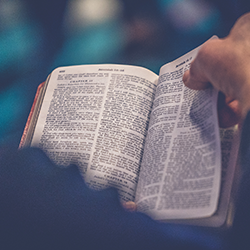
11/16/2026 - Ezekiel 9:8-11 says, 8 As they were striking the people and I alone was left, I fell on my face an... Read More

11/13/2026 - Martin Armstrong is one of the most knowledgeable and respected forecasters in the world. I have l... Read More

11/13/2026 - I received this email today from Pastor Fiaz… Dear Dr. Stephen E. Jones, Greetings to you i... Read More
Read over 100 books written by Dr. Jones, available to read for free online. Several of the books have also been translated into different languages, and are also available to read for free. The only time you pay is when you purchase a physical version of a book.
View Full Book List

Read a variety of tracts that condense a topic into a short, single page format. These tracts can be read for free online, or physical copies can be purchased in bundles. If you are subscribed to the FFI Newsletter, you will receive new tracts when they are released.
View Full Tract ListEzekiel 9:8-11 says,
8 As they were striking the people and I alone was left, I fell on my face and cried out saying, “Alas, Lord God! Are You destroying the whole remnant of Israel by pouring out Your wrath on Jerusalem?” 9 Then He said to me, “The iniquity of the house of Israel and Judah is very, very great, and the land is full of perversion; for they say, ‘The Lord has forsaken the land, and the Lord does not see!’ 10 But as for Me, My eye will have no pity nor will I spare, but I will bring their conduct upon their heads.” 11 Then behold, the man clothed in linen at whose loins was the writing case reported, saying, “I have done just as You have commanded me.”
When Ezekiel sees the judgment being carried out, his question is whether anyone will be left. Even after seeing what the elders did in the temple, Ezekiel intercedes for the people. His question recalls Abraham’s appeal over Sodom in Genesis 18:23–25. It also anticipates Ezekiel 11:13, where the death of Pelatiah prompts him to ask again whether God will bring the remnant to an end. Ezekiel knows that Jerusalem is guilty.
God answers by naming bloodshed in the land and injustice in the city. The indictment is clarified in greater detail from Jeremiah 18:11 through chapter 19, including human sacrifice in the valley of Ben-hinnom. God’s charges against the city has moved from what Ezekiel saw in the temple to what people did to one another throughout Judah. The excuse is the same one the elders gave in the darkened chamber (8:12). They say that the Lord has forsaken the land and does not see.
God answers their claim in two ways. He describes the very things they thought escaped His notice, and He says He will “bring their conduct upon their heads” (9:10). The judgment, based on the law of equal weights and measures, brings home to them the consequences of their own deeds.
The final word belongs to the man in linen, who reports, “I have done just as You have commanded me.” His assignment was to mark those who sighed and groaned over Jerusalem’s abominations (9:4). Since the others were forbidden to touch anyone bearing that mark (9:6), his report gives an indirect answer to Ezekiel’s plea. The city comes under judgment, and God has already distinguished those who are to be spared within it.
That distinction matters when Scripture speaks of the remnant. Ezekiel fears for what is left of Israel, while the vision directs his attention to the people God Himself identifies within Jerusalem. Paul makes a related distinction in Romans 11:1–7, where the continuing promise is carried by a remnant chosen by grace. Here the mark shows that God knows His own even as judgment begins at His sanctuary.
Ezekiel 10:1 says,
1 Then I looked, and behold, in the expanse that was over the heads of the cherubim something like a sapphire stone, in appearance resembling a throne, appeared above them.
Ezekiel looks up and sees above the cherubim something “like a sapphire stone, in appearance resembling a throne.” The arrangement is the same as in Ezekiel 1:22–26. The living creatures are below, the expanse stretches above their heads, and the throne is above the expanse. What Ezekiel first saw by the Chebar he now sees at the temple in Jerusalem. Later he explicitly identifies the cherubim as the living creatures from that first vision (10:20).
The sapphire imagery also recalls Exodus 24:9–10, describing Moses’ fifth trip up the Mount, which also correlates with the fifth miracle-sign that Jesus performed in the gospel of John when He walked on the water (in John 6:19). Matthew 14:26-32 records the same incident with more details, telling us that Peter went out to meet Him, walking on the water. Ezekiel writes,
9 Then Moses went up with Aaron, Nadab and Abihu, and seventy of the elders of Israel; 10 and they saw the God of Israel; and under His feet there appeared to be a pavement of sapphire, as clear as the sky itself.
At Sinai, Moses and the elders of Israel saw beneath God’s feet something like a pavement of sapphire, clear as the sky. In Ezekiel, the sapphire-like appearance is associated with the throne above the expanse. Both visions use the brilliance of blue stone and blue sky to describe what the witnesses saw in God’s presence. Blue speaks of the law in Numbers 15:38, 39, specifically the spiritual aspect of the law. Hence, Paul says, “the law is spiritual” (Romans 7:14).
There is a difference in emphasis between the two throne visions. In Ezekiel 1:26, the prophet describes a humanlike figure above the throne. In 10:1, he draws attention to the throne itself. The following verses show why that matters. From this scene comes the command to the man in linen to take coals from among the cherubim and scatter them over Jerusalem (10:2). The man who had just marked those to be spared now receives a second commission concerning the city itself.
The throne also prepares us for the departure of the glory. In 10:18–19 the glory leaves the temple threshold, takes its place above the cherubim, and moves with them to the east gate. God can leave His sanctuary without relinquishing His throne. The temple is under judgment, and the One whose glory had filled it remains sovereign over what happens to it.
Ezekiel 10:2 says,
2 And He spoke to the man clothed in linen and said, “Enter between the whirling wheels under the cherubim and fill your hands with coals of fire from between the cherubim and scatter them over the city.” And he entered in my sight.
God tells the man clothed in linen to go between the wheels beneath the cherubim, fill his hands with “coals of fire,” and “scatter them over the city.” This is the same man who marked the foreheads of those who grieved over Jerusalem’s abominations (9:4). The order matters. God identifies those who are to be spared before He gives the command concerning the city as a whole. The same messenger carries out both commissions.
The coals come from among the cherubim. In Ezekiel 1:13, the prophet had already seen fire moving among the living creatures beneath the throne. Now that fire is put to use. Verse 7 makes the transfer explicit. One of the cherubim takes fire from among them and places it in the linen-clad man’s hands. The vision thus traces the judgment back to God’s throne. When the Babylonians later burn the temple and the houses of Jerusalem (2 Kings 25:8–9), the historical account tells us who set the fires, while Ezekiel’s vision shows who pronounced judgment on the city.
A comparison with Isaiah 6:5–7 brings out the purpose of the coals here. In Isaiah, a seraph takes a coal from the altar and touches the prophet’s lips, removing his guilt. In Ezekiel, a cherub takes fire from among the cherubim and gives it to the man in linen to scatter over Jerusalem. In both visions the fire comes from the presence of the Holy One, because “God is a consuming fire” (Deuteronomy 4:24). In Isaiah it cleanses the man who confesses his uncleanness. In Ezekiel it signifies judgment on a city that has defiled the sanctuary and filled the land with violence (8:17).
Revelation 8:3–5 offers a close parallel. An angel fills a censer with fire from the heavenly altar and throws it to the earth. In both visions the fire is cast down from God’s presence, portraying earthly judgment as the execution of a decision made in heaven. Men often believe that these divine judgments originate with the men and nations whom God uses to accomplish His will. Scripture, however, gives us the divine perspective.
Ezekiel 10:3, 4 says,
3 Now the cherubim were standing on the right side of the temple when the man entered, and the cloud filled the inner court. 4 Then the glory of the Lord went from the cherub to the threshold of the temple, and the temple was filled with the cloud and the court was filled with the brightness of the glory of the Lord.
As the man in linen enters, the cloud fills the inner court. This places the cherubim beside the temple and sets the scene for the man’s commission to receive fire from among them. The cloud recalls 1 Kings 8:10, 11, when the glory of the Lord filled Solomon’s temple at its dedication. The same presence that once filled the house at its dedication is now seen at the beginning of its departure.
The glory rises from “the cherub” to the threshold, repeating the movement described in Ezekiel 9:3. There Ezekiel’s attention was on the command to mark those who mourned Jerusalem’s abominations. Here he describes what the movement looked like. The cloud fills the temple, and the brightness of the glory fills the court. The threshold is a stopping point. The glory has moved to the entrance, and in verses 18 and 19 it will leave the threshold, take its place above the cherubim, and move with them to the east gate.
Ezekiel 10:5, 6 says,
5 Moreover, the sound of the wings of the cherubim was heard as far as the outer court, like the voice of God Almighty when He speaks. 6 It came about when He commanded the man clothed in linen, saying, “Take fire from between the whirling wheels, from between the cherubim,” he entered and stood beside a wheel.
The sound of the cherubim’s wings reaches as far as the outer court, “like the voice of God Almighty when He speaks.” This recalls Ezekiel 1:24, where the sound of the wings is compared both to abundant waters and to the voice of the Almighty. At the Chebar, that sound accompanied Ezekiel’s first sight of the throne. Here it carries beyond the inner court as the glory prepares to leave the sanctuary.
The command first given in verse 2 is repeated, and the man in linen goes in and stands beside a wheel. Verse 7 completes the action:
7 Then the cherub stretched out his hand from between the cherubim to the fire which was between the cherubim, took some and put it into the hands of the one clothed in linen, who took it and went out.
A cherub reaches into the fire and puts it into the man’s hands. This authorizes him to act. The sequence traces the fire destined for Jerusalem back to the space beneath God’s throne.
In chapter 9 the man in linen went ahead of the others to mark those who would be spared. Here he waits beside the wheel to receive the fire. In both scenes he acts under orders, and the order of events matters. The marking of the remnant is complete before he receives the fire for the city.

Dr. Stephen Jones has been writing blog posts since 2005 on a variety of topics from Bible Studies to World News, and he has been writing books since 1992. Dr. Jones' most important writings came after God brought him back into the full-time ministry in 1991. It is here that all his earlier years of searching the Scriptures began to come into clear focus. He combines a knowledge of the Old and New Testaments with a personal revelation of God that began and developed during the "wilderness" period of his life, which he often refers to as God's True Bible College... Read More
We are only able to do what we do because of your support. If you feel led to support this ministry, we deeply appreciate it