Latest Posts
View the latest posts in an easy-to-read list format, with filtering options.
View the latest posts in an easy-to-read list format, with filtering options.
Multi-part posts on a particular topic, grouped together in "series" pages.
Look through our blog archive by year / month, or in a massive title list.
10/09/2026 - Israel encampment in the wilderness mirrored Ezekiel’s vision of the four living creatures.... Read More
10/08/2026 - Ezekiel 1:1-3 begins, 1 Now it came about in the thirtieth year, on the fifth day of the fourth mo... Read More
10/07/2026 - Ezekiel is a book of judgment, restoration, and the glory of God. It explains why Jerusalem was be... Read More
Read over 100 books written by Dr. Jones, available to read for free online. Several of the books have also been translated into different languages, and are also available to read for free. The only time you pay is when you purchase a physical version of a book.
View Full Book List
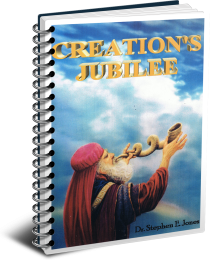
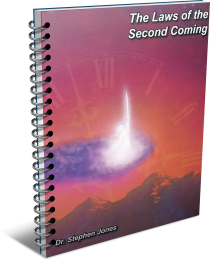
Read a variety of tracts that condense a topic into a short, single page format. These tracts can be read for free online, or physical copies can be purchased in bundles. If you are subscribed to the FFI Newsletter, you will receive new tracts when they are released.
View Full Tract ListWhen the Bible speaks of nations, it speaks about groups, not necessarily about individuals. Prophecy about specific nations does not mean that every individual within his nation is included in the scope of the prophecy.
We see this, perhaps, most clearly in the prophecies regarding Israel. Although Israel was mostly idolatrous, there was a remnant of grace that was exceptional and not included in the prophetic condemnation of the nation itself. Paul tells us in Romans 11:1-7 that these exceptional Israelites were chosen and actually carried the promises of God, while the others did not.
By extension, in every nation God has a remnant of grace, a cross-section representing the nation itself. These are forerunners, or first fruits, which God has chosen by His own sovereign will. By the law of first fruits, they sanctify the whole. Romans 11:16 puts it this way:
16 If the first piece of dough is holy, the lump is also; and if the root is holy, the branches are too.
This is a direct reference to Numbers 15:20, 21,
20 Of the first of your dough you shall lift up a cake as an offering; as the offering of the threshing floor, so you shall lift it up. 21 From the first of your dough you shall give to the Lord an offering throughout your generations.
Nonetheless, individuals (i.e., “branches”) can be broken off and cast aside without destroying the sanctity and continuity of the tree itself that is still an offshoot of the holy “root.” Paul’s point is that the majority of the branches of Judah had been pruned from the tree, but the remaining branches—the remnant of grace—remained attached to it, deriving their sustenance from “the Root of David” (Revelation 5:5).
Hence, the original remnant of grace did not replace the branches; they were branches from the beginning. In later years, other branches were “grafted in among them” (Romans 11:17) as the number of Kingdom citizens expanded. Replacement Theology is a misunderstanding of this principle of first fruits and the remnant of grace.
When Babylon took control of Jerusalem, King Nebuchadnezzar took some of the nobles of Judah and trained them in the language and culture of Babylon so that they could be liaisons between the Babylonian government and the Judahites themselves (Daniel 1:3-6). These included Daniel and his three friends (vs. 6). Their role was similar to the remnant of grace in God’s government in that they were given authority and responsibility for their brethren.
After 70 years, the Persians took over, and Darius the Mede reorganized the kingdom into 120 satraps (Daniel 6:1, 2). He appointed three governors, each (presumably) over 40 satraps, and made Daniel the lead governor, planning, in fact, “to appoint him over the entire kingdom” (Daniel 6:3). Political opposition brought him into the lion’s den, where God delivered him.
The point is that Darius the Mede, on behalf of the Persian empire, functioned under the authority of King Cyrus, the “messiah” (Isaiah 45:1). He put Daniel in authority over Cyrus’ kingdom, making Daniel a type of the remnant of grace (overcomers) in Christ’s Kingdom.
This is now the pattern that is emerging on a greater scale in the earth. Babylon, Persia, Greece, Rome, and the Little Horn (Daniel 7) have now gone full circle, completing their authorized time to rule the earth, and we are now starting the cycle again on a Kingdom level. Persia itself, led by King Cyrus, was to play a dual prophetic role—first as the second beast, that is, the “bear” (Daniel 7:5), and later as the “messiah” (Isaiah 45:1).
Hence, modern Mystery Babylon is being overcome by “the kings from the east” (Revelation 16:12), even as King Cyrus and King Darius conquered Babylon in 537 B.C. The book of Revelation makes it clear that the original conquest of Babylon was to be repeated in the future, and the pattern was to be similar, as we see it unfolding today with the war with Iran (Persia). Iran, along with Russia and China, are overthrowing the Babylonian “New World Order.” The collapse of the world system is described in Revelation 17 and 18 as a collapse of world trade, and this is manifesting largely in terms of blockades collapsing the world’s energy supply routes.
In Daniel 4 we read how King Nebuchadnezzar of Babylon was forced to submit to the God of Daniel after spending “seven times” as a madman. We read his testimony in Daniel 4:34, 35,
34 But at the end of that period, I, Nebuchadnezzar, raised my eyes toward heaven and my reason returned to me, and I blessed the Most High and praised and honored Him who lives forever; For His dominion is an everlasting dominion, and His kingdom endures from generation to generation. 35 All the inhabitants of the earth are accounted as nothing. But He does according to His will in the host of heaven and among the inhabitants of the earth; and no one can ward off His hand or say to Him, “What have you done?”
The king says further in Daniel 4:37,
37 Now I, Nebuchadnezzar, praise, exalt and honor the King of heaven, for all His works are true and His ways just, and He is able to humble those who walk in pride.
Here the king recognized the sovereignty of the King of Kings ruling from the heavens, and in this official document, obtained by Daniel, Babylon recognized God’s right to rule Babylon—and, by extension, the whole world.
After the Persians took Babylon, they too came to the place where they recognized the God of Daniel as the one true God. In Daniel 6 we read how King Darius was tricked into signing a law forbidding anyone to make a petition to any man or god for a period of 30 days. Daniel continued to pray daily and did not try to hide his practice. The king was then forced by his own law to cast Daniel to the lion’s den, because in Persia’s constitutional monarchy, the king was bound by his own law that could not be changed or amended (Daniel 6:15).
Daniel survived the lion’s den, and the next morning, Darius made another decree according to the law that could not be changed or amended. Daniel 6:26 and 27 says,
26 I make a decree that in all the dominion of my kingdom men are to fear and tremble before the God of Daniel; For He is the living God and enduring forever, and His kingdom is one which will not be destroyed, and His dominion will be forever. 27 He delivers and rescues and performs signs and wonders in heaven and on earth, who has also delivered Daniel from the power of the lions.
This decree, like the previous one, was signed into law by the law which could not be changed or set aside. It still holds power to this day. Iran will inevitably “fear and tremble before the God of Daniel.” That does not mean Iran will collapse; it means (as we interpret it) that Iran will become a nation under Christ, who is the God of Daniel. Iran has a glorious future.
Scripture is silent about how the other beast nations (Greece and Rome) also recognized the God of Daniel, each in turn. Nonetheless, those who have read history know their stories. Alexander the Great, ruler of the Greek empire, walked into Jerusalem in 334 B.C. and recognized the high priest from an earlier dream. He then instructed the priests to offer up a sacrifice to God on his behalf, according to the law of God.
Josephus writes in Antiquities of the Jews, Book XI, chapter 8 (section 5) that after Alexander took Gaza, he came toward Jerusalem. The high priest Jaddua went out to meet him in priestly garments, accompanied by priests and people dressed in white. Alexander then entered Jerusalem. Josephus says:
“And when he went up into the temple, he offered sacrifice to God, according to the high priest’s direction, and magnificently treated both the high priest and the priests.”
He continues by saying that the Book of Daniel was shown to Alexander, particularly the prophecy about a Greek king overthrowing Persia:
“…the Book of Daniel was showed him, wherein Daniel declared that one of the Greeks should destroy the empire of the Persians…”
A few centuries later, pagan Rome conquered the Greek empire, but eventually, it too became a Christian empire. This began with Constantine’s Edict of Milan in 313 A.D., granting toleration to Christians, and culminated with Emperor Theodosius’ Edict of Thessalonica in 380, which read, in part:
“It is Our desire that all the various nations… should continue to profess that religion which was delivered to the Romans by the divine Apostle Peter…”
In this way, the four beast empires of Daniel 7 all finally submitted to the God of heaven at some point in their histories. None of their decrees were perfect or enduring, of course, and many choose to focus on those fallacies. Nonetheless, God proved His point in each case and was content to await the time of the end to see the world fully submitted to Jesus Christ.

Dr. Stephen Jones has been writing blog posts since 2005 on a variety of topics from Bible Studies to World News, and he has been writing books since 1992. Dr. Jones' most important writings came after God brought him back into the full-time ministry in 1991. It is here that all his earlier years of searching the Scriptures began to come into clear focus. He combines a knowledge of the Old and New Testaments with a personal revelation of God that began and developed during the "wilderness" period of his life, which he often refers to as God's True Bible College... Read More
We are only able to do what we do because of your support. If you feel led to support this ministry, we deeply appreciate it