Latest Posts
View the latest posts in an easy-to-read list format, with filtering options.
View the latest posts in an easy-to-read list format, with filtering options.
Multi-part posts on a particular topic, grouped together in "series" pages.
Look through our blog archive by year / month, or in a massive title list.
10/09/2026 - Israel encampment in the wilderness mirrored Ezekiel’s vision of the four living creatures.... Read More
10/08/2026 - Ezekiel 1:1-3 begins, 1 Now it came about in the thirtieth year, on the fifth day of the fourth mo... Read More
10/07/2026 - Ezekiel is a book of judgment, restoration, and the glory of God. It explains why Jerusalem was be... Read More
Read over 100 books written by Dr. Jones, available to read for free online. Several of the books have also been translated into different languages, and are also available to read for free. The only time you pay is when you purchase a physical version of a book.
View Full Book List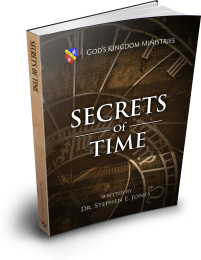
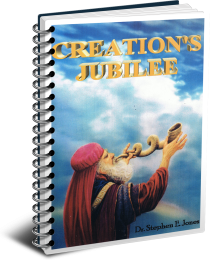
Read a variety of tracts that condense a topic into a short, single page format. These tracts can be read for free online, or physical copies can be purchased in bundles. If you are subscribed to the FFI Newsletter, you will receive new tracts when they are released.
View Full Tract ListThroughout the past, many have claimed to believe in Bible prophecy without actually understanding it. Without understanding prophecy, they often fail to conform to the divine plan revealed by such prophecy. Many, thinking that they are submitting to God’s will, have actually opposed it, often with disastrous results. This underscores the importance of understanding the sure word of prophecy.
When God stripped Judah of the dominion mandate, giving it instead to King Nebuchadnezzar of Babylon, the leaders of Judah could not believe God would ever do such a thing. For this reason, they treated the prophet Jeremiah as a traitor instead of complying with the word of the Lord. Yet God told Jeremiah to put a yoke on his neck and to tell King Zedekiah in Jeremiah 27:5-8,
5 “I have made the earth, the men and the beasts which are on the face of the earth by My great power and by My outstretched arm, and I will give it to the one who is pleasing in My sight. 6 Now I have given all of these lands into the hand of Nebuchadnezzar king of Babylon, My servant, and I have given him also the wild animals of the field to serve him. 7 All the nations shall serve him and his son and his grandson until the time of his own land comes; then many nations and great kings will make him their servant. 8 It will be, that the nation or the kingdom which will not serve him, Nebuchadnezzar king of Babylon, and which will not put its neck under the yoke of the king of Babylon, I will punish that nation with the sword, with famine and with pestilence,” declares the Lord, “until I have destroyed it by his hand.”
The leaders of Judah thought that the dominion mandate was theirs to keep forever on account of Jacob’s blessing in Genesis 49:10 and on account of their genealogy tracing back to Judah himself. They did not understand the sovereignty of God, nor did they believe that the Creator had the right to give the dominion to whoever He desired.
The law of inheritance gave the firstborn certain rights so that he could not be disinherited arbitrarily. However, if the firstborn proved to be dishonorable and disobedient, he could be disinherited lawfully—as we see in the case of Reuben in 1 Chronicles 5:1, 2. Judah, too, became disobedient. God did not immediately disinherit Judah but gave him nearly three centuries to repent and to become an honorable son. When they refused consistently, God pronounced judgment against Judah and stripped the nation of the dominion mandate, giving it instead to the king of Babylon.
There were two kinds of people among the people of Judah. Some were genuine believers; others were not. Some believed the word of the Lord; the majority did not. The prophet distinguished them in Jeremiah 24:1, 2,
1 … the Lord showed me: behold, two baskets of figs set before the temple of the Lord! 2 One basket had very good figs, like first ripe figs, and the other basket had very bad figs which could not be eaten due to rottenness.
The law commanded the people to bring a basket of first fruits to God, and so it appears that two men had complied with this law on the day of this revelation. Deuteronomy 26:1-3,
1 Then it shall be, when you enter the land which the Lord your God gives you as an inheritance, and you possess it and live in it, 2 that you shall take some of the first of all the produce of the ground which you bring in from your land that the Lord your God gives you, and you shall put it in a basket and go to the place where the Lord your God chooses to establish His name. 3 You shall go to the priest who is in office at that time and say to him, “I declare this day to the Lord my God that I have entered the land which the Lord swore to our fathers to give us.”
Jeremiah himself was a priest, so presumably he was the priest that was approached by the two men each holding a basket of first ripe figs. They were to recount to the priest how God had delivered them from Egypt and had planted them in the land of Canaan. Deuteronomy 26:9, 10 tells us what they were to say when offering the basket of figs to the priest:
9 “and He has brought us to this place and has given us this land, a land flowing with milk and honey. 10 Now behold, I have brought the first of the produce of the ground which You, O Lord, have given me.” And you shall set it down before the Lord your God, and worship before the Lord your God.
The law of first fruits acknowledges that God is the true Owner of the land and that the people were mere stewards of the land, subject to His laws. To violate this law of first fruits was to cease worshiping Him. It was to usurp the land as if the stewards were the true landowners. Hence, God chose this particular method of revelation to show Jeremiah that God was about to transfer the stewardship over the land from Judah to the king of Babylon.
The two baskets of figs obviously came from two different people and two different trees. Their first fruits offerings each exposed the condition of their heart. Jeremiah 24:5-7 tells us about those whose hearts were right before God:
5 Thus says the Lord God of Israel, “Like these good figs, so I will regard as good the captives of Judah, whom I have sent out of this place into the land of the Chaldeans. 6 For I will set My eyes on them for good, and I will bring them again to this land, and I will build them up and not overthrow them, and I will plant them and not pluck them up. 7 I will give them a heart to know Me, for I am the Lord; and they will be My people, and I will be their God, for they will return to Me with their whole heart.”
The company of good figs could not avoid captivity, but they could be divinely protected while in captivity. They also represented those who “will return to Me with their whole heart.” After 70 years of captivity in Babylon, it is doubtful that any of them actually returned to the old land under Zerubbabel, but that was not the real promise given to them. The promise was that they would return to God.
Moreover, these good figs “will be My people, and I will be their God.” Conversely, those who were of the rotten figs were NOT designated as “My people,” regardless of their genealogy.
We are reminded of a similar statement that God made after the Israelites had wandered in the wilderness for 40 years. When they finally came to the Jordan River and were ready to cross into the Promised Land, God made a second covenant with them (Deuteronomy 29:1), telling them in Deuteronomy 29:12, 13,
12 that you may enter into the covenant with the Lord your God, and into His oath which the Lord your God is making with you today, 13 in order that He may establish you today as His people and that He may be your God…
This implies that in spite of their covenant in Exodus 19:8 forty years earlier, they were still NOT His people. It would take more than their vow of obedience to make them His people. So again, in the days of Jeremiah, God was still looking to make them His people. But as we know from Romans 11:1-7, only the remnant of grace was actually His people. The rest were disqualified for their lack of faith.
In the time of Jeremiah, the basket of good figs indicated the presence of a remnant of grace, to whom was given the promise that they “will be My people.”
Jeremiah 24:8-10 speaks about the basket of bad figs, saying,
8 But like the bad figs which cannot be eaten due to rottenness—indeed, thus says the Lord—so I will abandon Zedekiah king of Judah and his officials, and the remnant of Jerusalem who remain in this land and the ones who dwell in the land of Egypt. 9 I will make them a terror and an evil for all the kingdoms of the earth, as a reproach and a proverb, a taunt and a curse in all places where I will scatter them. 10 I will send the sword, the famine and the pestilence upon them until they are destroyed from the land which I gave to them and their forefathers.
Nothing is here to indicate that these “bad figs” are God’s people, or that they will be blessed in their unbelief, or that they will escape being “destroyed from the land which I gave to them and their forefathers.” Just because God gave the land to their forefathers was no guarantee that they would escape the coming destruction. The problem was that the rotten figs manifested the condition of their hearts from God’s point of view.
Essentially, the rotten figs represented those who refused to submit to Nebuchadnezzar, “My servant,” to whom God had entrusted the dominion mandate. By rejecting the decision of the great Judge in the divine court, they were placed under the death penalty (Deuteronomy 17:12). Their genealogy did not exempt them from the law or its penalty. They decided to fight the Babylonian army, and so the city and the temple were destroyed.

Dr. Stephen Jones has been writing blog posts since 2005 on a variety of topics from Bible Studies to World News, and he has been writing books since 1992. Dr. Jones' most important writings came after God brought him back into the full-time ministry in 1991. It is here that all his earlier years of searching the Scriptures began to come into clear focus. He combines a knowledge of the Old and New Testaments with a personal revelation of God that began and developed during the "wilderness" period of his life, which he often refers to as God's True Bible College... Read More
We are only able to do what we do because of your support. If you feel led to support this ministry, we deeply appreciate it