Latest Posts
View the latest posts in an easy-to-read list format, with filtering options.
View the latest posts in an easy-to-read list format, with filtering options.
Multi-part posts on a particular topic, grouped together in "series" pages.
Look through our blog archive by year / month, or in a massive title list.
10/09/2026 - Israel encampment in the wilderness mirrored Ezekiel’s vision of the four living creatures.... Read More
10/08/2026 - Ezekiel 1:1-3 begins, 1 Now it came about in the thirtieth year, on the fifth day of the fourth mo... Read More
10/07/2026 - Ezekiel is a book of judgment, restoration, and the glory of God. It explains why Jerusalem was be... Read More
Read over 100 books written by Dr. Jones, available to read for free online. Several of the books have also been translated into different languages, and are also available to read for free. The only time you pay is when you purchase a physical version of a book.
View Full Book List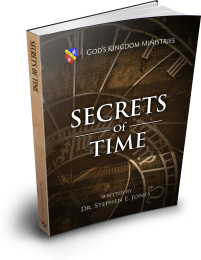
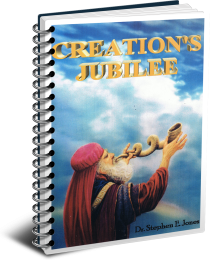

Read a variety of tracts that condense a topic into a short, single page format. These tracts can be read for free online, or physical copies can be purchased in bundles. If you are subscribed to the FFI Newsletter, you will receive new tracts when they are released.
View Full Tract ListGod issued His judgment in the divine court against Jerusalem and the temple specifically because they had turned the temple into “a den of robbers” (Jeremiah 7:11-15). The next question to be determined was what type of captivity that the nation would have to endure—the wooden yoke or the iron yoke. Would the “yoke” be light or heavy?
If the people would agree with God’s judgment and submit to Babylon, then they would be allowed to remain on their land and pay tribute (taxes) to the Babylonian government. If they refused, however, then they would be exiled to Babylon to serve their 70-year sentence on foreign soil.
At first, they chose to submit, and King Jehoiakim became a vassal king for three years (2 Kings 24:1), while his son Jehoiachin was his co-regent. Then he rebelled and was killed, and “Jehoiachin his son became king in his place” 2 Kings 24:6). He reigned as a sole king for only three months (2 Kings 24:8). In the eighth year of his reign (597 B.C.), Nebuchadnezzar took him captive (2 Kings 24:13) and brought him to Babylon, where he remained in a dungeon for 37 years (2 Kings 25:27).
At the same time, the Babylonians “carried out from there all the treasures of the house of the Lord” (2 Kings 24:13), including “the vessels of gold which Solomon king of Israel had made in the temple.” Notably absent, however, was the Ark of the Covenant, which, by this time, Jeremiah had hidden in Mount Nebo. This is recorded in 2 Maccabees 2:4-7,
“It was also contained in the same writing, that the prophet, being warned by God, commanded the tabernacle and the ark to go with him… and that he went forth into the mountain where Moses climbed up, and saw the heritage of God.
And when Jeremiah came thither, he found a hollow cave, wherein he laid the tabernacle, and the ark, and the altar of incense, and so stopped the door.
… And some of those that followed him came to mark the way, but they could not find it.
Which when Jeremiah perceived, he blamed them, saying, As for that place, it shall be unknown until the time that God gather His people again together, and receive them unto mercy.Then shall the Lord show them these things…”
Recall that Mount Nebo was also the place where Moses died and was buried by God Himself in an unknown place (Deuteronomy 34:1, 5, 6).
It is also of interest to note that 666 years later, the Romans took the temple vessels to Rome in 70 A.D. after the Jewish Revolt. The prophetic significance of this is to show that the vessels of worship came under Babylonian and Roman control. The number 666 is not merely the number of man, as Revelation 13:18 says; more specifically, it is a number signifying man’s control of divine worship—that is, worship is done by the traditions of men, rather than by revelation.
Jeremiah had a clear revelation of the 70-year Babylonian captivity (Jeremiah 25:11, 12). He had very little revelation about the succession of beast nations that were to follow. This is a prime example of what Paul said in 1 Corinthians 13:9,
9 For we know in part and we prophesy in part.
Further revelation was given to the prophet Daniel in the next generation. In Daniel 2, these empires were pictured in terms of metals: Babylon, the head of gold; Medo-Persia, the arms of silver; Greece, the belly of bronze; and Rome, the legs of iron. But in Daniel 7, these empires were pictured as beasts: lion, bear, leopard, and a nameless beast with iron hoofs.
This metaphor is picked up again in the book of Revelation, which often speaks of beasts. These are not individuals but empires ruled by men with the mind of a beast. It is reminiscent of King Nebuchadnezzar himself, who was given “a beast’s mind” (Daniel 4:16). In the outworking of this prophecy, we see that the king went mad and acted like a beast “given grass to eat like cattle” (Daniel 4:25).
Isaiah 40:6-8 interprets the grass in this way:
6 A voice says, “Call out.” Then he answered, “What shall I call out?” All flesh is grass, and all its loveliness is like the flower of the field. 7 The grass withers, the flower fades, when the breath of the Lord blows upon it; surely the people are grass. 8 The grass withers, the flower fades, but the word of our God stands forever.
Beasts eat grass; beast nations consume (conquer) mortals, using them as food to sustain their power. The antidote to this, of course, is to be begotten by the Spirit through the seed of the word, as we read in 1 Peter 1:23-25. Those who are begotten by immortal seed are no longer children of Adam, whose sin brought the sentence of death and made us mortal. Instead, they are children of the Most High God, who exist side by side with their “old man” of flesh.
By identifying with the “new man,” we are new creatures and have resolved the original problem that Adam brought upon us. Thus also, we are not consumed by the beast empires. Though we may pay their required taxes and be subject to their laws, we are not assimilated into their culture, way of life, or traditions of worship. Beast empires may consume our flesh, but they have no power to consume the new man within.
In spite of this, however, we are under instruction from God (through Jeremiah in particular) to submit to Nebuchadnezzar, “My servant” (Jeremiah 27:6-8).
God gave Babylon 70 years in which to hold the dominion mandate. Then the mandate was passed to Persia in 537 B.C. and later to the Grecian Empire in 332 B.C. when Alexander the Great took control of Jerusalem. When he died, the empire was divided among his four generals, two of whom fought each other over the control of Jerusalem, as prophesied in Daniel 11. In 163 B.C., after Antiochus Epiphanes tried to turn the temple of Jerusalem into an Epicurean shrine, God intervened and stripped the Greek king of the dominion mandate for a full century.
For a hundred years, the Hasmonean dynasty of king-priests ruled Jerusalem, being independent of either Greece or Rome. However, after a century passed, in 63 B.C., Rome’s General Pompey took Jerusalem in 63 B.C. This marked the full end of the interim between the era of Greece and the Roman era.
Rome later installed Herod as King (40 B.C.), because Herod was half-Idumean (Edomite). They figured that he would be acceptable to both the Judean Jews and the Edomite Jews who had been converted to Judaism in 126 B.C. But there was much resistance, because the Hasmoneans enjoyed much support. It took three years for Herod to capture Jerusalem in order to establish his rule (37 B.C.).
At Herod’s request, the Roman general Mark Antony ordered the execution of the last Hasmonean king, Antigonus, in 37 B.C. Josephus notes that this was the first time the Romans had ever beheaded a conquered king (Antiquities of the Jews, XIV, 16, iv).
Hillel vs. Shammai
Rabbi Hillel lived about 120 years from about 110 B.C. to 10 A.D. He was active during the reign of Herod the Great, who died in late January of 1 B.C. Hillel’s teaching emphasized gentleness and patience, love of neighbor (famously: “What is hateful to you, do not do to your neighbor”), peacemaking (“Be of the disciples of Aaron, loving peace and pursuing peace”), and practical mercy in applying the law.
His school (the House of Hillel) became known for lenient and humane interpretations of the law compared to stricter contemporaries such as the School of Shammai and the political extremists known as Zealots. Hillel’s grandson was Gamaliel, under whom Saul/Paul received instruction (Acts 22:3), although it appears that Saul (at the time) had adopted Shammai’s radical views.
Shammai lived from about 50 B.C. to about 30 A.D. The Jewish Encyclopedia (1904 ed.) says in Vol. III, p. 115, 116,
“The Shammaites, on the contrary, were intensely patriotic, and would not bow to foreign rule. They advocated the interdiction of any and all intercourse with those who either were Romans or in any way contributed toward the furtherance of Roman power or influences….
“Their religious austerity, combined with their hatred of the heathen Romans, naturally aroused the sympathies of the fanatic league [i.e., the Zealots], and as the Hillelites became powerless to stem the public indignation, the Shammaites gained the upper hand in all disputes affecting their country’s oppressors. Bitter feelings were consequently engendered between the schools; and it appears that even in public worship they would no longer unite under one roof… These feelings grew apace, until toward the last days of Jerusalem’s struggle they broke out with great fury.
After the destruction of Jerusalem, we are told, “the characteristics of the Hillelites once more gained the ascendency. All disputed points were brought up for review… and in nearly every case the opinion of the Hillelites prevailed.”
The School of Shammai and the political Zealots did not believe that God had given Rome the dominion mandate. Therefore, they advocated fighting the Romans. The Romans, in response, considered Judea to be a rebellious nation and imposed strict laws to maintain order. This only compounded the discontent until finally the revolt broke out in 66 A.D.
The result was the destruction of Jerusalem and the temple in 70 A.D. After that, the School of Shammai lost some of its influence, because many saw its policies as the cause of disaster. God had not come at the last moment to save the city. The Shammaites thought that they were pleasing to God for their interpretations of the law, but they lost sight of Jeremiah’s instructions about submitting to God’s verdict in the divine court.
If they had followed the teachings of Hillel, they would have remained in the land under Roman rule and under the wooden yoke. But the teachings of Shammai prevailed, instigating the revolt, resulting in the iron yoke being put upon them once again.
From 300-500 A.D., the general consensus of traditional Judaism settled on the idea that the Jews (as a group) should not return to the old land until the coming of the Messiah. This tradition was challenged in the rise of Zionism in the late 1800’s.

Dr. Stephen Jones has been writing blog posts since 2005 on a variety of topics from Bible Studies to World News, and he has been writing books since 1992. Dr. Jones' most important writings came after God brought him back into the full-time ministry in 1991. It is here that all his earlier years of searching the Scriptures began to come into clear focus. He combines a knowledge of the Old and New Testaments with a personal revelation of God that began and developed during the "wilderness" period of his life, which he often refers to as God's True Bible College... Read More
We are only able to do what we do because of your support. If you feel led to support this ministry, we deeply appreciate it