Latest Posts
View the latest posts in an easy-to-read list format, with filtering options.
View the latest posts in an easy-to-read list format, with filtering options.
Multi-part posts on a particular topic, grouped together in "series" pages.
Look through our blog archive by year / month, or in a massive title list.
10/05/2026 - When the Israelites wanted flesh to eat, God gave them their desire but it made them sick. Psalm 1... Read More

10/02/2026 - Estonia, one of Europe’s tiny Baltic nations, is being applauded for banning all grain shipm... Read More
10/02/2026 - The Kingdom of God has undergone many stages of development over the millennia. It started with a... Read More
Read over 100 books written by Dr. Jones, available to read for free online. Several of the books have also been translated into different languages, and are also available to read for free. The only time you pay is when you purchase a physical version of a book.
View Full Book List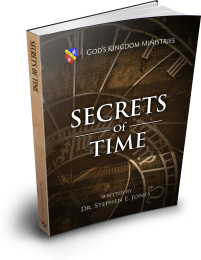
Read a variety of tracts that condense a topic into a short, single page format. These tracts can be read for free online, or physical copies can be purchased in bundles. If you are subscribed to the FFI Newsletter, you will receive new tracts when they are released.
View Full Tract ListEuropean leaders gathered at the Berlin Conference from November 15, 1884 to February 26, 1885 to partition Africa among the European nations. It was one of the most consequential diplomatic meetings of the 19th century, because it formalized the European partition of Africa and institutionalized the colonial mindset during the so-called “Scramble for Africa.”
The consequences were enormous. Europeans drew borders with almost no regard for tribal borders, languages, or even existing kingdoms. Before 1880, most of Africa remained under African political control. By the early 1900’s, nearly all Africa was colonized by European powers under the assumption of European superiority, yet necessitated by geopolitical competition for African natural resources.
This essentially put Africa into slavery for the enrichment of European corporations. It also provided the background for the divine backlash through the feast of Pentecost.
As the potential end of 2,520 years of tribulation approached in 1917, God poured out His Spirit, reigniting the feast of Pentecost. Maria Woodworth-Etter was one of the forerunners of Pentecost in the 1890’s. Then came Charles Parham in 1900 and William Seymour in 1906.
Seymour was a one-eyed black man who asked to attend Parham’s meetings in Texas. He was allowed to sit just outside the room with the door open. He later moved to California, where, on April 9, 1906, the Spirit began to be poured out at his meetings, first at 216 North Bonnie Brae Street in Los Angeles and later at 312 Azusa Street. It is as if the Holy Spirit pushed open the door to make Pentecost a universal movement that crossed racial lines.
“People from a diversity of backgrounds came together to worship: men, women, children, Black, White, Asian, Native American, immigrants, rich, poor, illiterate, and educated. People of all ages flocked to Los Angeles with both skepticism and a desire to participate. The intermingling of races and the group’s encouragement of women in leadership was remarkable, as 1906 was the height of the “Jim Crow” era of racial segregation…”
https://en.wikipedia.org/wiki/Azusa_Street_Revival
In the same article we read of a local newspaper in September 1906, which harshly criticized these meetings for their…
“disgraceful intermingling of the races...they cry and make howling noises all day and into the night. They run, jump, shake all over, shout to the top of their voice, spin around in circles, fall out on the sawdust blanketed floor jerking, kicking and rolling all over it. Some of them pass out and do not move for hours as though they were dead. These people appear to be mad, mentally deranged or under a spell. They claim to be filled with the spirit. They have a one eyed, illiterate, Negro as their preacher who stays on his knees much of the time with his head hidden between the wooden milk crates. He doesn't talk very much but at times he can be heard shouting, ‘Repent,’ and he's supposed to be running the thing... They repeatedly sing the same song, ‘The Comforter Has Come’.”
Again, we read,
“Other visitors left the revival to become missionaries in remote areas all over the world. So many missionaries went out from Azusa (some thirty-eight left in October 1906) that within two years the movement had spread to over fifty nations, including Britain, Scandinavia, Germany, Holland, Egypt, Syria, Palestine, South Africa, Hong Kong, China, Ceylon and India. Christian leaders visited from all over the world.”
Pentecost, whenever and wherever it broke out, has always had the strength of Samson (an Old Testament Pentecostal type). It has always stood head and shoulders above most people, as did Saul (1 Samuel 10:23). Yet in both cases, the Pentecostal types also showed weakness and/or rebellion, revealing the feast’s leavened features (Leviticus 23:17) as the holy fire began to diminish.
The Azusa Street revival finally began to dim in 1913, though individual preachers continued to spread the Pentecostal message around the world. Pentecostal groups began to reorganize and separate themselves into denominations, including the Assemblies of God in 1914. No one seemed to connect Pentecost with King Saul, who had been crowned king on the feast of Weeks (Pentecost), also called the day of “wheat harvest” (Exodus 34:22; 1 Samuel 12:17). Saul’s coronation took place because the people had rejected God’s direct rule in favor of submitting to men (1 Samuel 8:7).
To understand the mind of God, one must understand the prophetic meaning of the biblical feast days. Pentecost is one of those important feast days, and we must acknowledge its strengths and its weaknesses equally in order to have the mind of God. In my view of prophecy, the Pentecostal outpouring in the early 1900’s was not so much about healing people, nor was it about speaking in tongues. It was about hearing the revelatory word of the Lord, as demonstrated at Israel’s first Pentecost at Mount Sinai (Exodus 20:19; Acts 2:6).
The word of God must be heard by the Spirit in order to interpret and apply it by the mind of God. The law must be viewed through New Covenant eyes. But in the early 1900’s, few (if any) even knew the difference between the two covenants. No doubt they thought they did, but most of them missed the basic difference: The Old Covenant is man’s vow to God (Exodus 19:8); the New Covenant is God’s vow (promise, oath) to man (Deuteronomy 29:12, 13).
Old Covenant salvation depends on one’s ability to keep one’s promise to God; New Covenant salvation depends on God’s ability to keep His promise to man. Those who believe that God is able to fulfill His promise are justified by faith even as Abraham was (Romans 4:20-22). The revelation of the Spirit in the early 1900’s took many believers to a new level of faith, but it was not enough to prevent divine judgment upon the nation and the world.
The Azusa Street outpouring began on April 9, 1906. Just nine days later, on April 18, the great 7.9 Richter earthquake all but destroyed San Francisco about 400 miles north of Los Angeles, just as the Azusa Street revival was getting started. This event appeared to be a forecast of greater judgment yet to come. The Federal Reserve Act of December 23, 1913 subjected the world to economic slavery, which few understood at the time. In 1914 the First World War broke out, devastating Europe. Germany ultimately lost its African colonies and the income that had come from them.
If the revelation of Pentecost had been complete in those days, I believe that the wars of the 20th century could have been greatly reduced or even avoided altogether. Prayer would have changed history. Prophecy would have been fulfilled in other ways. Unfortunately, this did not happen.
Recall that if the Israelites under Moses had been able to hear the word of God at Sinai, they would have been given a New Covenant sword as defined in Ephesians 6:17. Their conquest of Canaan would have been accomplished by the demonstration of the Spirit. The Canaanites would have been converted and released from Noah’s curse on Canaan (Genesis 9:25).
The 32 kings of Canaan were Old Testament types of the modern nations today. I believe it is God’s intention to pour out His Spirit in such a way that the nations will want Jesus Christ to be their King. He will not force Himself upon the nations. His purpose is not to promote slavery but “that the creation itself also will be set free from its slavery to corruption into the freedom of the glory of the children of God” (Romans 8:21).
Those who think that Christ is going to destroy the nations (as was done to Canaan under Joshua by the physical sword) are still looking at prophecy through Old Covenant eyes. As overcomers, we have been healed of that blindness by the grace of God. We function out of the spirit of the Jubilee. We seek the welfare of the world, knowing that Christ is “the desire of all nations” (Haggai 2:7 KJV)—if only they could hear the good news of the gospel.
The Pentecostal outpouring of the early 1900’s failed to hear that Jubilee word or to see the New Covenant vision of the Kingdom. It remains for us today to carry that vision in our hearts, so that we may qualify to “be priests of God and of Christ and will reign with Him for a thousand years” (Revelation 20:6).
The age to come was forecasted by the rabbis thousands of years ago. They called it the Great Sabbath, that is, the seventh millennium. This Sabbath “year” is a time of rest from slave labor under the oppressive dominion of beast empires.

Dr. Stephen Jones has been writing blog posts since 2005 on a variety of topics from Bible Studies to World News, and he has been writing books since 1992. Dr. Jones' most important writings came after God brought him back into the full-time ministry in 1991. It is here that all his earlier years of searching the Scriptures began to come into clear focus. He combines a knowledge of the Old and New Testaments with a personal revelation of God that began and developed during the "wilderness" period of his life, which he often refers to as God's True Bible College... Read More
We are only able to do what we do because of your support. If you feel led to support this ministry, we deeply appreciate it