Latest Posts
View the latest posts in an easy-to-read list format, with filtering options.
View the latest posts in an easy-to-read list format, with filtering options.
Multi-part posts on a particular topic, grouped together in "series" pages.
Look through our blog archive by year / month, or in a massive title list.
10/22/2026 - When a watchman gives warning, he/she should keep in mind the principle in Ephesians 4:15, 15 But... Read More

10/21/2026 - I received this email from our ministry representative in Nepal today. Dear Respected Sir and pray... Read More
10/21/2026 - Ezekiel’s call as a watchman is described beginning in Ezekiel 3:18, 19, 18 When I say to th... Read More
Read over 100 books written by Dr. Jones, available to read for free online. Several of the books have also been translated into different languages, and are also available to read for free. The only time you pay is when you purchase a physical version of a book.
View Full Book List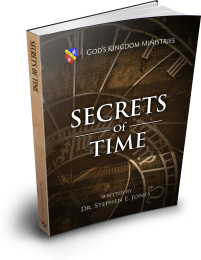
Read a variety of tracts that condense a topic into a short, single page format. These tracts can be read for free online, or physical copies can be purchased in bundles. If you are subscribed to the FFI Newsletter, you will receive new tracts when they are released.
View Full Tract ListThe earliest Chinese were monotheistic, referring to the Creator God as Shang Ti, “Heavenly Emperor.” Today it is more commonly spelled Shangdi. Literally:
上 (shàng) = above, upper, supreme, highest. The ancient form depicts something above a reference line, meaning “above, upward, highest, supreme.” It conveys exaltation and transcendence.
帝 (dì) = emperor, sovereign, ruler, lord. In modern Chinese it means “emperor, sovereign.” But in ancient texts di referred to a supreme ruler or divine sovereign.
In ancient Chinese thought, Shangdi was regarded as the supreme heavenly authority above all lesser spirits and ancestral powers. The title appears very early in Chinese history, especially in the oracle bone inscriptions of the Shang Dynasty (c. 1600–1046 B.C.). The Shang kings offered sacrifices to Shangdi and viewed him as Ruler of heaven, Controller of weather, Giver of victory, and Judge of nations.
Unlike many pagan deities, Shangdi was often portrayed as singular and supreme rather than merely one god among many. This is one reason Christian missionaries such as James Legge and Matteo Ricci debated whether Shangdi could be used as the Chinese equivalent of “God.”
The title Shangdi (上帝), Supreme Sovereign is conceptually similar to Old Testament expressions such as El Elyon (“Most High God”) in Genesis 14:18, as well as Yahweh Sabaoth (“LORD of Hosts”), and Melekh ha-olam (“King of the Universe,” in modern usage).
From an etymological standpoint, it actually is closer to “King of Hidden Duration,” or the Concealed King, or perhaps even like the Unknown God referenced in Acts 17:23). He is King of that which extends beyond human sight. He is the King of the age whose beginning and end are hidden from men. So Isaiah 45:15 says,
15 Truly, You are a God who hides Himself, O God of Israel, Savior!
All of these Hebrew titles emphasize God's supreme authority over heaven and earth.
According to tradition, Cangjie invented writing under the Yellow Emperor, traditionally dated around the third millennium B.C. Some traditional chronologies would place the invention of writing before 2000 B.C. However, these accounts are legendary and cannot presently be verified archaeologically. The earliest unquestionably Chinese writing currently known comes from the Shang Dynasty, dated roughly 1250–1050 B.C., or during the time of the biblical Judges into the reign of Solomon.
The remarkable thing is that the script is already highly developed. This strongly suggests a much earlier period of development. Writing systems do not normally appear fully mature overnight.
After China was unified in 221 B.C., the Chancellor of the Qin Empire, Li Si (c. 280–208 B.C.) sought to standardize writing, weights, measures, and coinage to better unify the diverse parts of the empire. Variant character forms and different regional spellings had become a serious administrative problem. Writing, then, was standardized in 213 B.C. His Cangjie Pian (“Chapters of Cangjie”) was an official primer used to teach the newly standardized script. The work itself is now lost, though fragments survive.
Li Si was also tasked with compiling a list of then-known characters. Chinese writing does not use letters of an alphabet, as seen in many other languages. They use what they call radicals (also called keys, roots, or primitives). A radical (bùshǒu) is a graphical component used to classify Chinese characters in dictionaries.
Traditionally there are 214 Kangxi radicals, established in the Qing Dynasty dictionary, although modern dictionaries often use fewer. These are the building blocks for thousands of Chinese words that are constructed using these 214 radicals. An example is 水 (shuǐ), “water.”
Each radical is a pictograph, or word picture, much like the Hebrew letters themselves, such as א (alef), “ox.” The original paleo-Hebrew letters looked like an ox head with two horns. (Modern Hebrew letters are actually Aramaic letters borrowed from Babylon during Judah’s captivity.)
Chinese numbers are also written with radicals. One is 一 (one horizontal stroke). Two is 二 (two horizontal strokes). Three is 三 (three horizontal strokes). The simplicity of 一, 二, and 三 reflects their great antiquity; they are among the oldest and most recognizable Chinese characters still in use today.
Each character consists of two parts: the radical itself, which gives its meaning and the phonetic portion suggesting its pronunciation.
Since we were discussing Shangdi (上帝), notice that the character 上 (shàng, “above”) contains a horizontal line (above the reference line below). It suggests one God.
A man is 人, picturing two legs in a walking position. The word for a working man is 男, a combination of 人 (man) and 田 (field). A great man is 大 . A husband is 夫, a combination of 人 (man) and 二 (two), showing that husband and wife are together as one flesh (Genesis 2:24).
The word for “to lose, to miss” 失 is a husband with a detached or misplaced hand or body part. It seems to depict a widower, one who has lost his wife.
It is important to note that Chinese writing was not given to them by Christian missionaries. One of the earliest records of Christians in China dates back to 781 A.D., inscribed on a monument in Sianfu, the capital of the T’ang Empire (618-906 A.D.). These Christians were Nestorians from Syria. They presented the emperor with a copy of the Scriptures, and he put these in the royal library, where they were translated into the local language. The Nestorians flourished until 845, when they were persecuted almost to extinction.
Also, in 1908 other Christian documents were discovered a thousand miles west of Sianfu in a rock cavern. Sir Aurel Stein, a British archeologist, purchased them and found that one of them dated as early as 641 A.D. But the Chinese system of writing was far older than that, and it clearly reflected a knowledge of the Genesis account.
We will show more of this in the next blog.

Dr. Stephen Jones has been writing blog posts since 2005 on a variety of topics from Bible Studies to World News, and he has been writing books since 1992. Dr. Jones' most important writings came after God brought him back into the full-time ministry in 1991. It is here that all his earlier years of searching the Scriptures began to come into clear focus. He combines a knowledge of the Old and New Testaments with a personal revelation of God that began and developed during the "wilderness" period of his life, which he often refers to as God's True Bible College... Read More
We are only able to do what we do because of your support. If you feel led to support this ministry, we deeply appreciate it