Latest Posts
View the latest posts in an easy-to-read list format, with filtering options.

View the latest posts in an easy-to-read list format, with filtering options.
Multi-part posts on a particular topic, grouped together in "series" pages.
Look through our blog archive by year / month, or in a massive title list.
10/09/2026 - Israel encampment in the wilderness mirrored Ezekiel’s vision of the four living creatures.... Read More
10/08/2026 - Ezekiel 1:1-3 begins, 1 Now it came about in the thirtieth year, on the fifth day of the fourth mo... Read More
10/07/2026 - Ezekiel is a book of judgment, restoration, and the glory of God. It explains why Jerusalem was be... Read More
Read over 100 books written by Dr. Jones, available to read for free online. Several of the books have also been translated into different languages, and are also available to read for free. The only time you pay is when you purchase a physical version of a book.
View Full Book List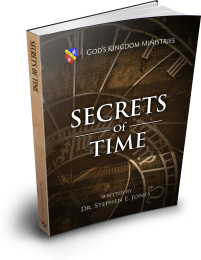
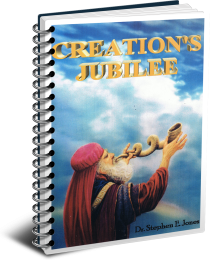
Read a variety of tracts that condense a topic into a short, single page format. These tracts can be read for free online, or physical copies can be purchased in bundles. If you are subscribed to the FFI Newsletter, you will receive new tracts when they are released.
View Full Tract ListMost Christians picture the Great White Throne (Rev. 20:11-15) as the final sentencing of mankind. The scene is usually viewed through the lens of systematic theology rather than biblical law. Yet John does not describe a throne of arbitrary power but a court of law.
Rather than treating the Great White Throne as merely a scene of punishment, we must examine it as the Supreme Court of the Kingdom of God, where every action conforms to divine law. The emphasis must shift from eschatology alone to biblical jurisprudence.
Everything in Revelation 20 is judicial. There is a Judge, defendants, books of evidence and law, a Book of Life, testimony, legal examination, a verdict, and a sentence. The question, then, is not merely who is judged, but what law governs the court?
The answer must be the law of God, for Scripture never portrays God as judging apart from His own revealed standard.
Revelation 20:11-13 says,
11 Then I saw a great White Throne and Him who sat upon it; from whose presence earth and heaven fled away, and no place was found for them. 12 And I saw the dead, the great and the small, standing before the throne, and books were opened, and another book was opened, which is the book of life; and the dead were judged from the things which were written in the books, according to their deeds 13 … and they were judged, every one of them according to their deeds.
Although the Judge is not named, it is Christ Himself, because Father God has delegated this authority to the Son. So we read in John 5:22, 23,
22 For not even the Father judges anyone, but He has given all judgment to the Son, 23 so that all will honor the Son even as they honor the Father. He who does not honor the Son does not honor the Father who sent Him.
Paul says in Acts 17:31,
31 because He has fixed a day in which He will judge the world in righteousness through a Man whom He has appointed, having furnished proof to all men by raising Him from the dead.
Again, Paul affirms this in 2 Corinthians 5:10,
10 For we must all appear before the judgment seat of Christ, so that each one may be recompensed for his deeds in the body, according to what he has done, whether good or bad.
Earlier, Revelation 17:14 has already presented Him as “King of kings.” He is the obvious Judge.
“Standing before the throne” is courtroom language. Throughout Scripture, men “stand before” a judge. Examples: Deuteronomy 19:17, 1 Kings 3:16, and Daniel 7:10. Daniel already saw: “The court sat, and the books were opened.” John is deliberately building upon Daniel's courtroom vision.
Throughout Scripture, guilty men instinctively flee from the face of God. In Genesis 3:8, Adam and Eve hide among the trees. In Genesis 4:14, Cain says he will be hidden from God’s face. In Psalms 139:7–12, there is ultimately nowhere to flee from God's presence. The issue is not merely geography but accountability.
One of the recurring themes of Scripture is that sinners seek places of concealment. Jesus says in Luke 8:17,
17 For nothing is hidden that will not become evident, nor anything secret that will not be known and come to light.
Paul says in 1 Corinthians 4:5,
5 He will both bring to light the things hidden in the darkness and disclose the motives of men’s hearts.
Hebrews 4:13 says,
13 There is no creature hidden from His sight, but all things are open and laid bare…
Earlier in Revelation 6:15, 16, we find a striking parallel.
15 Then the kings of the earth... hid themselves in the caves and among the rocks of the mountains; 16 and they said to the mountains and to the rocks, “Fall on us and hide us from the presence of Him who sits on the throne...”
Here people explicitly seek a hiding place from God's presence. But by Revelation 20, that possibility has vanished. “No place was found for them.” John does not explicitly say "no place was found to hide,” but the narrative invites the comparison. The earlier attempt to hide from the throne has failed.
When Jesus cleansed the temple, He quoted Jeremiah 7:11:
11 Has this house... become a den of robbers in your sight?
In Jeremiah, the people thought the Temple functioned as a refuge after they had violated God's law. They committed injustice and then returned to the Temple, assuming they were safe because they occupied sacred space. The point of the “den” is often misunderstood. A den is not where thieves commit robberies; it is where they retreat for safety afterward. That makes it a compelling image for false security.
The Great White Throne eliminates every refuge from accountability. Every hiding place—physical, religious, psychological, or legal—is removed. Nothing remains between the sinner and the face of the Judge. At the final judgment, there is no remaining refuge in which lawbreakers can conceal themselves from the presence of Christ or escape the disclosure of truth.
The Great White Throne is not merely the place where sentences are pronounced. It is the final session of the Supreme Court of heaven, where every person is summoned to answer for his life before the Judge of all the earth.
The legal process actually begins with the Feast of Trumpets. Under the law, trumpets were not merely musical instruments. They were legal instruments that summoned the congregation into the presence of God. When the silver trumpets were blown, the people assembled before the Lord (Numbers 10:1-10). The trumpet called the congregation to present themselves before God, whether for worship, for war, or for instruction.
Likewise, the Feast of Trumpets announced the approach of the Day of Atonement, Israel’s great day of judgment.
Because Revelation 20:12 shows a universal resurrection, it is clear that it fulfills Numbers 10:3, where two trumpets are blown to summon all the people.
3 When both are blown, all the congregation shall gather themselves to you at the doorway of the tent of meeting.
The earlier, limited resurrection prophesied in Revelation 20:7, tells us that “the rest of the dead did not come to life until the thousand years were completed. This is the first resurrection.” Hence, this limited resurrection is limited to those who are “blessed and holy” (Revelation 20:6), and fulfill the law in Numbers 10: 4,
4 Yet if only one is blown, then the leaders, the heads of the divisions of Israel, shall assemble before you.
The first resurrection, then, being limited, includes only the overcomers, those called to “reign with Him for a thousand years” (Revelation 20:6). So Paul writes in 1 Corinthians 15:52,
52 … For the trumpet [singular] will sound, and the dead will be raised imperishable, and we will be changed.
Again, Paul says in 1 Thessalonians 4:16,
16 For the Lord Himself will descend from heaven with a shout, with the voice of the archangel and with the trumpet [singular] of God, and the dead in Christ will rise first.
When “the trumpet” sounds at the time of the first resurrection, only “the dead in Christ” will be summoned. But in Revelation 20:12, though there is no mention of the trumpets sounding, it is clear from the law that both trumpets will sound at that time, because all the dead are raised and summoned to the throne.
Notice the legal equality. The dead are “the great and the small” (rulers and servants), rich and poor, and both believers and unbelievers (John 5:28, 29; Acts 24:15). In other words, not all believers will be raised in the first resurrection. This is only for those who are called to reign with Christ as “leaders” (Numbers 10:4). The universal resurrection in Revelation 20:12 will include believers along with unbelievers.
No social distinction survives resurrection. No office grants immunity. No wealth purchases exemption. No one can stay silent but must confess everything that he has done according to the law (Leviticus 5:1). No earthly court has jurisdiction any longer. Every man stands as an individual before the divine Judge. This fulfills one of the oldest principles of biblical law: every man is accountable to God.
The law condemned judges who showed partiality. Leviticus 19:15 says,
15 … You shall not be partial to the poor nor defer to the great, but you are to judge your neighbor fairly.
Earthly courts often fail to attain this standard. The Great White Throne does not. There every person stands upon equal legal footing. No one hires an attorney. No one pleads political privilege or diplomatic immunity. The resurrection itself demonstrates that accountability is universal.
Death does not terminate liability. Many suppose that death cancels all obligations. Scripture teaches the opposite. Death—even when the death penalty is justly imposed for capital crimes—merely postpones the hearing until the appointed day.
The trumpet therefore functions much like the ancient summons issued by an earthly court. No defendant may ignore the summons. No one may remain absent. Every person must appear. Hebrews 4:13 says that “all things are open and laid bare.” The court does not merely require attendance; it requires disclosure.
Thus the Feast of Trumpets initiates the final legal process. The trumpet is God's universal subpoena, commanding every man, woman, and child of every age to leave the grave and stand before the Judge. From that moment onward, there are no absent defendants, no missing witnesses, no forgotten cases, and no expired statutes of limitation. The entire human race is gathered into one courtroom because the jurisdiction of the King extends over every person He has created.

Dr. Stephen Jones has been writing blog posts since 2005 on a variety of topics from Bible Studies to World News, and he has been writing books since 1992. Dr. Jones' most important writings came after God brought him back into the full-time ministry in 1991. It is here that all his earlier years of searching the Scriptures began to come into clear focus. He combines a knowledge of the Old and New Testaments with a personal revelation of God that began and developed during the "wilderness" period of his life, which he often refers to as God's True Bible College... Read More
We are only able to do what we do because of your support. If you feel led to support this ministry, we deeply appreciate it