Latest Posts
View the latest posts in an easy-to-read list format, with filtering options.
View the latest posts in an easy-to-read list format, with filtering options.
Multi-part posts on a particular topic, grouped together in "series" pages.
Look through our blog archive by year / month, or in a massive title list.
10/05/2026 - When the Israelites wanted flesh to eat, God gave them their desire but it made them sick. Psalm 1... Read More

10/02/2026 - Estonia, one of Europe’s tiny Baltic nations, is being applauded for banning all grain shipm... Read More
10/02/2026 - The Kingdom of God has undergone many stages of development over the millennia. It started with a... Read More
Read over 100 books written by Dr. Jones, available to read for free online. Several of the books have also been translated into different languages, and are also available to read for free. The only time you pay is when you purchase a physical version of a book.
View Full Book List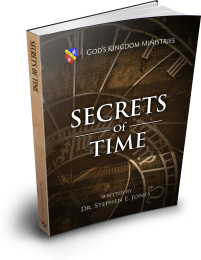
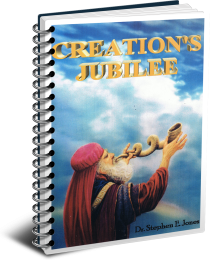

Read a variety of tracts that condense a topic into a short, single page format. These tracts can be read for free online, or physical copies can be purchased in bundles. If you are subscribed to the FFI Newsletter, you will receive new tracts when they are released.
View Full Tract List2 Peter 1:1 begins,
1 Simon Peter, a bond-servant and apostle of Jesus Christ, to those who have received a faith of the same kind as ours, by the righteousness of our God and Savior, Jesus Christ.
Peter begins with the double name “Simon Peter” (Συμεὼν Πέτρος). Simon means “hearing,” and Peter means “rock.” When the names are used together, they suggest that Peter is a “hearing rock,” pointing to the rock that Moses struck in the wilderness. The rock “heard” and obeyed, bringing forth the water of life to the people (Exodus 17:6). Peter’s epistle, then, represents this water as the revelation of God that brings life or shows the path to life.
Peter identifies himself in two ways: first, as a bond-servant, second as an apostle. The order is important. Before Peter speaks as an apostle with authority, he first presents himself as Christ’s servant. Apostolic authority is grounded in submission to Christ. It echoes Paul’s words in Romans 13:1, “there is no authority except [ei mē, “if not, unless”] from God.” When authority is exercised as if sovereignty had been granted, it is a misuse of authority or a usurpation. Authority is always authorized by a higher power and functions under its guidelines and limitations.
This will be important when we come to Peter’s second chapter, dealing with the rise of false prophets. False prophets often use their prophetic gift in ways that serve themselves rather than Christ. Balaam, for instance, had a genuine prophetic gift, and God spoke to him directly, but he attempted to use that gift to make money for himself, rather than to promote God’s Kingdom.
The recipients are described as “those who have received a faith of the same kind as ours.” The word translated “received” (λαχοῦσιν) conveys the idea of obtaining by divine allotment or providence. Faith is not merely self-generated positive thinking; it is something granted by God’s grace, that is, God’s sovereign decision.
The phrase “of the same kind as ours” emphasizes equality among believers. Gentile believers did not possess a second-class faith compared to Jewish apostles. All stand equally justified before God.
Peter roots this faith “by the righteousness of our God and Savior, Jesus Christ.” This is one of the clearest affirmations of Christ’s deity in the New Testament. Grammatically, “God and Savior” refers to one Person—Jesus Christ. Thus, Peter explicitly calls Jesus “God.” This is modified somewhat in John 1:18, where the apostle calls Christ “the only-begotten God.”
2 Peter 1:2 continues,
2 Grace and peace be multiplied to you in the knowledge of God and of Jesus our Lord;
Rather than merely wishing grace and peace, Peter desires that these be “multiplied.” The means of this multiplication is “the knowledge” (ἐπίγνωσις, epignōsis). This phrase implies more than intellectual awareness which the world’s educational system imparts. It denotes full knowledge, experiential knowledge, and relational knowledge.
In 2 Peter, true knowledge is contrasted with the counterfeit claims of false teachers. Peter repeatedly emphasizes genuine knowledge rooted in Christ rather than speculative philosophy or lawless freedom. Grace and peace increase as God grants favor by His own will, causing believers to grow in intimate knowledge of God.
2 Peter 1:3 says,
3 seeing that His divine power has granted to us everything pertaining to life and godliness, through the true knowledge of Him who called us by His own glory and excellence.
Notice the past tense: “has granted.” God has already provided what believers need. Note also that men did not obtain this grace by the power of their own will. This provision comes through “His divine power.”
And what has been granted? “everything pertaining to life and godliness.” Nothing essential is lacking. The believer has been furnished with all necessary spiritual resources for eternal life, transformation, and godly living.
Again, Peter stresses: “through the true knowledge of Him,” knowledge obtained by divine revelation of His nature (law), how He thinks, what His plans are for us personally and for the creation as a whole. Christ Himself is the source of life and godliness.
The phrase “who called us by His own glory and excellence” shows that salvation originates in God’s own will and character. The word “excellence” (ἀρετή, aretē) refers to moral virtue or excellence. God calls men by revealing His glory and moral perfection. Here Peter is leading up to verses 16-19, where he reminds his readers that he was an eyewitness of Christ’s glory when He was transfigured on the Mount.
2 Peter 1: 4 says,
4 For by these He has granted to us His precious and magnificent promises, so that by them you may become partakers of the divine nature, having escaped the corruption that is in the world by lust.
This verse is among the most profound statements in the New Testament. God has granted “precious and magnificent promises,” including (as we know) resurrection, immortality, sonship, the indwelling Spirit, participation in Christ’s kingdom, and conformity to Christ’s image. Through these promises believers become “partakers of the divine nature.”
The divine nature was lost when Adam sinned, for then men became mortal and corruptible, being born of earthly parents who suffered the effects of Adam’s sin. So Paul also affirms in 1 Corinthians 15:48, 49,
48 As is the earthy, so also are those who are earthy; and as is the heavenly, so also are those who are heavenly. 49 Just as we have borne the image of the earthy, we will also bear the image of the heavenly.
Furthermore, just as Adam’s sin was imputed to us by the will (judgment) of God, apart from our own will, so also Christ’s righteousness is imputed to us by the will of God (Romans 5:18). In both cases, the will of man is subservient to the will of God, for “God has granted” according to His will.
Peter does not teach that believers become God in essence. Rather, believers share in God’s nature morally and spiritually, receiving His life, reflecting His character, and participating in immortality and incorruption. In other words, the divine plan is to transform believers so that they become sons of God reflecting the glory of God in the earth. Ultimately, this glory will extend to the entire creation, which, Paul says, “is the anxious longing of creation” (Romans 8:19-21).
The purpose of God’s grace being granted to believers is to make them forerunners of creation. God uses the few to bless the many, according to the principle of the Abrahamic promise.
Verse 1 speaks of equality of faith, where all believers share the same precious faith in Christ, regardless of background or status. Verse 2 explicitly identifies Jesus as “our God and Savior.” Verse 3 emphasizes the source of grace and maturity in terms of our experiential knowledge of God. Men being helpless in mortality and corruption, verse 4 says that only God could overcome the problem of corruption and decay, transforming them into the heavenly image seen in Christ Himself (Hebrews 1:3).
These opening verses establish the foundation for the whole letter. Later in the epistle Peter warns against false teachers who deny moral restraint, corrupt grace, and entice believers through lust (desires of the flesh). Against this backdrop, Peter begins by emphasizing true knowledge, holiness, divine promises, and transformation into God’s likeness.
The opening therefore serves as both encouragement to the faithful and preparation for the apostle’s warning against corruption that follows in chapter 2.

Dr. Stephen Jones has been writing blog posts since 2005 on a variety of topics from Bible Studies to World News, and he has been writing books since 1992. Dr. Jones' most important writings came after God brought him back into the full-time ministry in 1991. It is here that all his earlier years of searching the Scriptures began to come into clear focus. He combines a knowledge of the Old and New Testaments with a personal revelation of God that began and developed during the "wilderness" period of his life, which he often refers to as God's True Bible College... Read More
We are only able to do what we do because of your support. If you feel led to support this ministry, we deeply appreciate it