Latest Posts
View the latest posts in an easy-to-read list format, with filtering options.
View the latest posts in an easy-to-read list format, with filtering options.
Multi-part posts on a particular topic, grouped together in "series" pages.
Look through our blog archive by year / month, or in a massive title list.

10/19/2026 - https://www.youtube.com/watch?v=ToksxXw0e_Q... Read More

10/19/2026 - When God told the prophet to eat the scroll (the word of God) in Ezekiel 3:1-3, its sweetness does... Read More

10/16/2026 - I received this email from Pastor Fiaz recently: Dear Dr. Stephen E. Jones, May the Lord richly bl... Read More
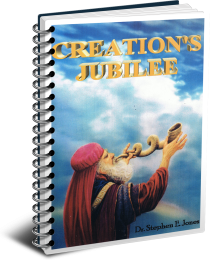
Read over 100 books written by Dr. Jones, available to read for free online. Several of the books have also been translated into different languages, and are also available to read for free. The only time you pay is when you purchase a physical version of a book.
View Full Book List

Read a variety of tracts that condense a topic into a short, single page format. These tracts can be read for free online, or physical copies can be purchased in bundles. If you are subscribed to the FFI Newsletter, you will receive new tracts when they are released.
View Full Tract ListSome of the most fundamental laws of the Kingdom are financial in nature. Restitution is a financial law, because theft itself is a financial sin. The Sixth Commandment proclaims that it is a God-given right to own one’s labor. Ownership confers authority over the use of one’s labor. Theft of another person’s labor violates that right and is therefore a sin.
When a nation taxes its people beyond the laws of the tithe and first fruits, it commits national sin by appropriating labor that is not authorized in Scripture. Such national sin negatively affects the financial condition of all the people.
All sin is reckoned as a debt, as St. Anselm of Canterbury (1033–1109) wrote in his famous work, Why God Became Man. The debt metaphor is biblical and appears throughout earlier Christian literature. But Anselm seems to be the first major theologian to make debt/satisfaction the controlling principle of his entire doctrine of sin and atonement. He argued that sin is the withholding of what is due to God; therefore, sin creates a debt. God's honor requires satisfaction; man cannot pay the debt, so Christ pays the debt on behalf of humanity. This became the foundation of the medieval “satisfaction” theory of atonement and heavily influenced later Protestant theology.
His idea of restoring God’s honor by payment of debt is true, but the biblical concept of debt is better tied to the practical Hebrew idea of restitution, where sin creates an obligation that must be repaid according to God's law. That legal-restorative framework differs in important ways from Anselm's feudal concept of satisfying God's honor.
In fact, one of the most significant features of Anselm of Canterbury's theology in Why God Became Man is that it largely shifted the discussion away from the biblical law's concern for debts between people and concentrated almost entirely on man's debt to God.
In the Torah, most debt language is horizontal: Theft creates a debt owed to the victim (Exodus 22:1-4). Property damage creates a debt owed to the injured party (Exodus 22:5-15). Fraud creates a debt requiring restitution (Leviticus 6:1-5). False witness can incur the very penalty sought against another (Deuteronomy 19:16-19).
The divine law generally seeks restoration of relationships. The sinner incurs a debt, but the debt is owed primarily to the person who suffered loss. Justice is accomplished through restitution. The divine law is therefore practical as well as theological, because it not only restores man’s relationship with God but also between men themselves. This is vital when we contemplate the practical manifestation of God’s Kingdom on earth in dealing with the nations of men.
The second coming of Christ will not result in the abolition of nations in the earth. Rather, Isaiah 2:3 prophesies of the nations sending representatives to the center of Kingdom government in order to study and learn the righteous laws of God. This is reaffirmed in Revelation 15:4 and 21:24-27. The nations will not be destroyed but healed and restored by the leaves of the Tree of Life (Revelation 22:2).
Unfortunately, the theology of excessive punishment, along with the prophetic view of mayhem and destruction taught in many Christian circles, largely disqualify most Christians from ruling in the Kingdom. In fact, how can they study the laws of God to the nations when they believe that God has abolished His laws? How can they teach laws that they have not studied ahead of time? And if they study the law with an Old Covenant mindset, how can they teach correctly by applying the law in a New Covenant manner—as Jesus did?
A redeemer is one who pays the debt of another. The debt obligation is not cancelled but transferred to a new owner. The laws of redemption in Leviticus 25:23-55 tell us that if a debtor is (by law) sold as a slave, a near kinsman ought to redeem him (Leviticus 25:25). The kinsman, of course, must have the resources to pay the debt that is owed. He cannot simply steal the slave from his owner.
The redeemed slave is then obligated by law to serve his kinsman-redeemer until his labor has paid the debt in full. Leviticus 25:53 says,
53 Like a man hired year by year he shall be with him [the redeemer]; he shall not rule over him with severity in your sight.
It is assumed that the near kinsman would treat the slave with love, because of his connection to the family. Yet the time of redemption ends with the year of Jubilee, when all debts are cancelled and everyone returns to his family. Leviticus 25:54 says,
54 Even if he is not redeemed by these means, he shall still go out in the year of Jubilee, he and his sons with him.
The Jubilee year is described earlier in the same chapter. Leviticus 25:10 says,
10 You shall thus consecrate the fiftieth year and proclaim a release through the land to all its inhabitants. It shall be a Jubilee for you, and each of you shall return to his own property, and each of you shall return to his family.
This does not refer to the fiftieth year of a man’s slavery but to the fiftieth year on the national calendar. In ancient times, this began with the Jordan crossing under Joshua, for Moses wrote in Leviticus 25:2, 8, 9,
2 Speak to the sons of Israel and say to them, “When you come into the land which I shall give you, then the land shall have a sabbath to the Lord… 8 You are also to count off seven sabbaths of years for yourself, seven times seven years, so that you have the time of the seven sabbaths of years, namely, forty-nine years. 9 You shall then sound a ram’s horn abroad on the tenth day of the seven month; on the day of atonement you shall sound a horn all throughout your land.”
This ram’s horn signals to the entire nation that all remaining debts are cancelled, and that everyone is set free from the law that had bound them as slaves to their masters. Hence, the time of redemption is the time prior to the year of Jubilee. The Jubilee then takes over, and there are no more debts to redeem.
Unfortunately, the Israelites never implemented the law of Jubilee—nor did they even keep a sabbath year. Their failure was a national sin which ultimately resulted in their captivity. This is stated in 2 Chronicles 36:20, 21,
20 Those who had escaped from the sword he carried away to Babylon; and they were servants to him and to his sons until the rule of the kingdom of Persia, 21 to fulfill the words of the Lord by the mouth of Jeremiah, until the land had enjoyed its sabbaths. All the days of its desolation it kept sabbath until seventy years were complete.
They remained in captivity for 70 years, because they owed God seventy sabbath years (and Jubilees) which they had failed to keep. The Law of Tribulation had warned them of this in Leviticus 26:43,
43 For the land will be abandoned by them, and will make up for its sabbaths while it is made desolate without them…
Judah and Jerusalem incurred a time-debt by not keeping their sabbath years and Jubilees. This captivity did not fully end after 70 years, for the dominion mandate was passed down to Persia, then Greece, Rome, and the “little horn” extension of Rome. This captivity is now ending and will mark the start of the Great Sabbath, the seventh millennium, which will be kept.
It also marks the end of 70 Jubilees since the Jordan crossing. On one level, we have been in a 70-Jubilee captivity to fleshly governments, prior to the establishment of Kingdom government under Jesus Christ. Whether we view this as the start of a Great Sabbath or as a long-term Jubilee, either way, God Himself is redeeming the nations and the world as a whole in order to set them free from the bondage of Mystery Babylon.
Meanwhile, we are in the time of redemption, where our near-kinsman, Jesus Christ, may redeem us (Hebrews 2:11-15). He paid the debt of sin for the whole world (John 3:16; 1 John 2:2), but not all have recognized their obligation to serve their Redeemer, as the law commands. As rebellious slaves who presumptuously demand freedom in violation of the law, they will remain in slavery (to Christ) until they are worthy of a Jubilee.

Dr. Stephen Jones has been writing blog posts since 2005 on a variety of topics from Bible Studies to World News, and he has been writing books since 1992. Dr. Jones' most important writings came after God brought him back into the full-time ministry in 1991. It is here that all his earlier years of searching the Scriptures began to come into clear focus. He combines a knowledge of the Old and New Testaments with a personal revelation of God that began and developed during the "wilderness" period of his life, which he often refers to as God's True Bible College... Read More
We are only able to do what we do because of your support. If you feel led to support this ministry, we deeply appreciate it