Latest Posts
View the latest posts in an easy-to-read list format, with filtering options.

View the latest posts in an easy-to-read list format, with filtering options.
Multi-part posts on a particular topic, grouped together in "series" pages.
Look through our blog archive by year / month, or in a massive title list.

10/21/2026 - I received this email from our ministry representative in Nepal today. Dear Respected Sir and pray... Read More
10/21/2026 - Ezekiel’s call as a watchman is described beginning in Ezekiel 3:18, 19, 18 When I say to th... Read More
10/20/2026 - Ezekiel 3:12-15 says, 12 Then the Spirit lifted me up, and I heard a great rumbling sound behind m... Read More
Read over 100 books written by Dr. Jones, available to read for free online. Several of the books have also been translated into different languages, and are also available to read for free. The only time you pay is when you purchase a physical version of a book.
View Full Book List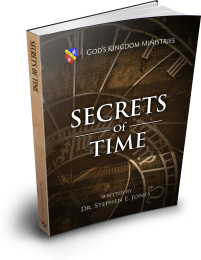
Read a variety of tracts that condense a topic into a short, single page format. These tracts can be read for free online, or physical copies can be purchased in bundles. If you are subscribed to the FFI Newsletter, you will receive new tracts when they are released.
View Full Tract ListHaving completed our study of Kingdom Jurisprudence at the great White Throne judgment, we will now move to the next logical study regarding Kingdom Administration.
The administration of the Kingdom is an extension of the Divine Council into history. What is decreed in heaven is carried out through faithful stewards on earth. This perspective also gives fresh depth to Jesus’ instruction in Matthew 6:10,
10 Your kingdom come. Your will be done, on earth as it is in heaven.
That prayer is not merely asking for God's blessing on the earth. It is asking that the righteous jurisprudence of the heavenly court be faithfully administered in the earthly realm until “the kingdom of the world has become the kingdom of our Lord and of His Christ” (Revelation 11:15). In that sense, the Kingdom is the earthly administration of the government whose legal foundation is established in the Divine Council.
The “thrones” that are established in conjunction with the great White Throne (mentioned in Daniel 7:9 and Revelation 20:4) are not functional only during the flow of the river of fire that sentences sinners. They are also needed during the entire Age of Judgment that follows. Why? Because sin will continue to exist as long as there are imperfect people in the earth—even though they will be learning righteousness during that time.
Justice is not merely one activity of the King; it is the very basis of His government. Jurisprudence is the way in which justice is administered. Jesus said in Matthew 5:17, 18,
17 Do not think that I came to abolish the Law or the Prophets; I did not come to abolish but to fulfill. 18 For truly I say to you, until heaven and earth pass away, not the smallest letter or stroke shall pass from the Law until all is accomplished.
Hence, the Age of Judgment depends entirely on the continuity of the Law of God, and the lake of fire involves the administration of this “fiery law” (Deuteronomy 33:2 KJV). The goal of this administration (as it is even today) is to transfer the external law, first written on stone, now on paper, to the hearts of sinners.
To do this, the flesh must be overcome and replaced by the divine nature, as revealed and expressed in His law. Normally, this involves a two-step process. First, one must learn the law to know about His nature. Secondly, that law must be written on the heart by Holy Spirit revelation. In so doing, sinners first learn how far they fall short of the glory of God (Romans 3:23). They see how their own nature differs and how it causes them to disagree with God’s standard. This knowledge creates the need and a desire to be conformed to the image of Christ, setting the stage for the Holy Spirit to do His work.
Hence, the sinner moves from faith (Passover) to obedience (Pentecost) to agreement (Tabernacles). Each feast works consecutively in bringing us to full spiritual maturity. This is the progression that we observe in our own lives today, and there is no reason to believe that it will be different in the Age of Judgment. After all, by submitting to the disciplines of God today, and by studying His law, and by receiving the revelation of the Spirit, we confess that we are in our own Age of Judgment even now.
The rest of humanity, who have not walked through the door of faith in Christ, will have to go through the same discipline in the future Age of Judgment.
God rarely acts alone. From Genesis onward He delegates authority. Adam received dominion (Genesis 1:26). Noah received judicial authority after the Flood (Genesis 9:1-7). Moses appointed judges (Exodus 18:25, 26). David ruled under divine covenant (Psalm 89:3, 4).
In Matthew 19:28 Jesus told His disciples,
28 … Truly I say to you, that you who have followed Me, in the regeneration when the Son of Man will sit on His glorious throne, you also shall sit upon twelve thrones, judging the twelve tribes of Israel.
Jesus repeated this at The Last Supper in Luke 22:30. That, of course, is a future event, speaking of the great White Throne. Meanwhile, the apostles became ambassadors (2 Corinthians 5:20). More broadly, the saints are promised authority to judge the world (1 Corinthians 6:2).
Delegated authority is one of the principal characteristics of biblical government. God is sovereign by right of creation, but He has also delegated authority to men. This does not give man the right to use that authority independently from God or in violation of God’s nature. To do so would inevitably bring judgment, because all authority is accountable to God (Romans 13:1).
Revelation 20:6 says of the overcomers, “they will be priests of God and of Christ and will reign with Him for a thousand years.” So what is the function of a priest?
Every office is representative. Priests and prophets represent the people before God and God before the people. They are mediators whom God chooses in order to resolve the problem of men’s inability to hear God for themselves.
The Law explicitly assigns judicial responsibility to the priesthood (Deuteronomy 17:8-13). This is perhaps the clearest passage. When local judges cannot resolve a difficult case: “You shall come to the Levitical priest and the judge who is in office in those days...” Notice both offices appear together.
The priests participate in the highest court. Verse 9 continues: “You shall inquire of them, and they will declare to you the verdict.” Failure to submit to that court incurred severe penalties.
Deuteronomy 21:5 defines the priestly judicial office:
5 Then the priests, the sons of Levi, shall come near, for the LORD your God has chosen them to serve Him and to bless in the name of the LORD; and every dispute and every assault shall be settled by them.
This is one of the strongest statements in the Torah that priests possessed judicial authority. The future priesthood receives the same responsibility. God says in Ezekiel 44:23, 24,
23 Moreover, they shall teach My people the difference between the holy and the profane... 24 In a dispute they shall take their stand to judge; they shall judge it according to My ordinances.
Notice the sequence: teach the law, discern holiness, and judge disputes. Judicial authority depends upon knowledge of God’s law. These passages reveal a profound constitutional principle: judicial authority belongs to God but is delegated to qualified human representatives. In every case, the priest was required to judge impartially according to the laws of God.
God said to Moses in Exodus 7:1,
1 See, I make you as God [Elohim] to Pharaoh, and your brother Aaron shall be your prophet.
Insofar as Pharaoh was concerned, Moses stood in God’s place. As a prophet, Aaron represented Moses and was his spokesman. Israel’s judges were often called Elohim, because they represented God in their judgments. Psalm 82:1 says,
1 God [Elohim] takes His stand in His own congregation; He judges in the midst of the rulers [elohim].
Exodus 22:9 says,
9 For every breach of trust... the case of both parties shall come before God [ha-Elohim, “the gods, or judges”]; whom God [Elohim] condemns shall pay double to his neighbor.
A godly judge was required to render his verdict as God’s spokesman. Hence, it is said, “You are gods” (Psalm 82:6; John 10:34). This does not mean that we are God himself; it means that we are judges and rulers under God and representing God in the restoration of all things.
Speaking of the coming Messiah in Deuteronomy 18:18, God promises:
18 I will raise up a prophet from among their countrymen like you, and I will put My words in his mouth, and he shall speak to them all that I command him.
The prophet does not originate his own message. He delivers God’s words. But prophets also can represent the people to God—which is also a priestly ministry. The prophetic office “from Samuel and his successors onward” (Acts 3:24) was established because the priests (Eli and his sons) had been irresponsible and lawless. God then “cut off” Eli’s arm, figuratively speaking, by removing the prophetic office from the priesthood and making it independent. 1 Samuel 2:31 reads,
31 Behold, the days are coming when I will break [wegādaʿtî,“I will cut off”] your strength [zeroa, “arm”] and the strength of your father's house so that there will not be an old man in your house.
Prior to that time, the high priesthood included the prophetic office. But God stripped the priesthood of the prophetic office and raised up Samuel to function as the prophet. Biblical history shows how priests and prophets did not usually get along very well. The same is often true today.
Samuel the prophet judged the people the rest of his life (1 Samuel 7:15-17).
Likewise, priests and prophets also represented the people to God. Ezekiel was required to lie on his left side for 390 days and then on his right side for 40 days looking at a frying pan that represented Jerusalem’s fiery judgment (Ezekiel 4:3-6). As an intercessor, the prophet identified with the people in order to bring mercy and delay divine judgment.
Isaiah was required to go “naked and barefoot” (Isaiah 20:2) to represent the Israelites who were soon to go into captivity.
Jesus Himself identified with mankind by being born of a woman and ultimately dying on the cross for the sin of the world. He, of course, is the foremost model of an intercessor. For a fuller study, see my book, Principles of Intercession.
https://godskingdom.org/studies/books/principles-of-intercession/

Dr. Stephen Jones has been writing blog posts since 2005 on a variety of topics from Bible Studies to World News, and he has been writing books since 1992. Dr. Jones' most important writings came after God brought him back into the full-time ministry in 1991. It is here that all his earlier years of searching the Scriptures began to come into clear focus. He combines a knowledge of the Old and New Testaments with a personal revelation of God that began and developed during the "wilderness" period of his life, which he often refers to as God's True Bible College... Read More
We are only able to do what we do because of your support. If you feel led to support this ministry, we deeply appreciate it