Latest Posts
View the latest posts in an easy-to-read list format, with filtering options.
View the latest posts in an easy-to-read list format, with filtering options.
Multi-part posts on a particular topic, grouped together in "series" pages.
Look through our blog archive by year / month, or in a massive title list.
10/23/2026 - Ezekiel 4:1–8 presents the coming siege of Jerusalem through a prophetic sign. Having appoin... Read More
10/22/2026 - When a watchman gives warning, he/she should keep in mind the principle in Ephesians 4:15, 15 But... Read More

10/21/2026 - I received this email from our ministry representative in Nepal today. Dear Respected Sir and pray... Read More
Read over 100 books written by Dr. Jones, available to read for free online. Several of the books have also been translated into different languages, and are also available to read for free. The only time you pay is when you purchase a physical version of a book.
View Full Book List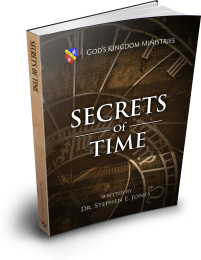
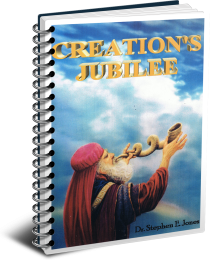
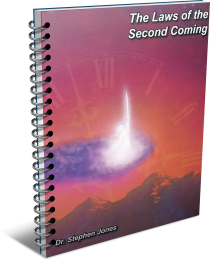
Read a variety of tracts that condense a topic into a short, single page format. These tracts can be read for free online, or physical copies can be purchased in bundles. If you are subscribed to the FFI Newsletter, you will receive new tracts when they are released.
View Full Tract List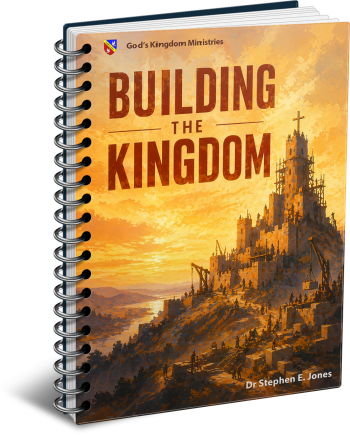
This 128-page book outlines the four main features necessary to have a Kingdom, finishing with a lengthy section on adopting a Kingdom worldview.
Category - General

The Israel kingdom, with its territory in the land of Canaan, ultimately failed in its calling to bring the world into subjection to Jesus Christ. In fact, they even failed to bring their own land into subjection to Christ, for most of the time, they worshiped foreign gods. So that kingdom was destroyed and dispersed in order to rebuild the Kingdom of God under a better covenant—one that would succeed.
That first kingdom was described in terms of God’s vineyard which was planted in the land of Canaan. Isaiah 5:1, 2 describes it in a song:
1 Let me sing now for my well-beloved a song of my beloved concerning His vineyard…
What follows is the song itself:
1 … My well-beloved had a vineyard on a fertile hill.
2 He dug it all around, removed its stones,
and planted it with the choicest vine.
And He built a tower in the middle of it
and also hewed out a wine vat in it;
then He expected it to produce good grapes,
but it produced only worthless ones.
The interpretation is given in Isaiah 5:7,
7 For the vineyard of the Lord of hosts is the house of Israel and the men of Judah His delightful plant. Thus, He looked for justice, but behold, bloodshed; for righteousness, but behold, a cry of distress.
Judah was one of the tribes of Israel representing “His delightful plant,” but the house of Israel as a whole was pictured as the vineyard. This song portrays the fact that God is a Husbandman, a farmer who plants seed in the ground, hoping to bring forth a harvest of fruit. But that first kingdom brought forth only “worthless” grapes. The Hebrew word is beushim—literally, “stinkberries.”
For this reason, the prophet says, God decided to plow it under, saying, “I will lay it waste …briars and thorns will come up.” (Isaiah 5:6). In the next chapter, Isaiah has a vision of “the Lord sitting on a throne, lofty and exalted, with the train of His robe filling the temple” (Isaiah 6:1). The revelation is that the word of God—the gospel of the Kingdom—was to be preached “until cities are devastated and without inhabitant” (Isaiah 6:11).
The land of Judah in the time of Christ’s ministry on earth was under the dominion of Rome, the fourth beast empire that had been foretold in Dan. 7:7. Judah was also the remaining portion of God’s vineyard. Hence, Jesus told a parable in Matt. 21:33-45, drawing His metaphors from the song in Isaiah 5 with some alterations. There we find that instead of producing stinkberries, the vineyard was usurped by the husbandmen—the trustees of the Kingdom.
When the time of harvest arrived, the Owner of the vineyard sent servants (the prophets) to receive the fruit, but the trustees “beat one, and killed another, and stoned a third” (Matt. 21:35). This is how they had treated all the prophets (Matt. 23:31).
Finally, He sent His Son, but when the trustees recognized Him, they plotted to “kill Him and seize His inheritance” (Matt. 21:38). In other words, they crucified Jesus, not because they failed to recognize Him, but because they wanted to usurp the vineyard (kingdom) for their own use. They killed Him because they recognized who He was.
Jesus then asked the chief priests and Pharisees what they thought the Owner of the vineyard ought to do about this. This allowed them to judge themselves. Matthew 21:41 says,
41 They said to Him, “He will bring those wretches to a wretched end and will rent out the vineyard to other vine-growers who will pay him the proceeds at the proper seasons.”
Indeed, their “wretched end” came 40 years later when the Romans came and “set their city on fire” (Matt. 22:7). The destruction of Jerusalem and the temple was another fulfillment of Isaiah 5:5, where God destroyed His unfruitful vineyard.
God vowed to save “a tenth portion” (Isaiah 6:13), God’s tithe people. These righteous ones are the choicest seeds for the next vineyard under the New Covenant. Later, these are called “a remnant” that would “return” to God (Isaiah 10:21, 22). This does not prophesy of a remnant of Jews returning to the old land through the belief in Zionism. Immigration from one place to another may change one’s lifestyle, but relocation can neither change the heart nor bring forth the fruit of the Spirit.
What Isaiah saw in his vision of the Lord in His temple was Christ Himself in His exalted state filling the temple that Paul described in Eph. 2:20-22. Likewise, we as individual temples of God, are to be filled with the Spirit, and Jesus Christ must rule all aspects of our lives. These individual temples are the equivalent of the seeds of His new vineyard.
There is no vineyard and no kingdom of God apart from King Jesus, for “there is no other name under heaven that has been given among men by which we must be saved” (Acts 4:12). Strangely enough, the Dispensationalist teachers of the late 19th century, led by Darby and Scofield, taught that Jews were saved by following the law, while Gentiles could be saved only by faith in Christ. This idea of two methods of salvation led to Dual Covenant theology that has surfaced in recent decades.
Prior to 1948 most Bible teachers believed that the Jews would not be able to establish their Israeli state without first repenting and turning to Christ. When the Israeli state was formed without seeing a mass conversion of Jews, a new belief replaced this, resulting in full-blown Dual Covenant Theology. This view said that a Jew’s salvation did not depend upon accepting Jesus as the Messiah. Those holding this view have betrayed Christ in the time of His second coming.
In the beginning, God gave man authority over the earth (Gen. 1:26). For this reason, spirits cannot exercise dominion in the earth apart from man. Evil spirits gain man’s consent or inhabit bodies in order to exercise authority, and the Holy Spirit too needs to inhabit bodies by the same law of authority. Hence, we read in Heb. 10:5, “a body You have prepared for Me.” Christ needed a body in order to be the Heir of the authority on earth that had been given to Adam.
Though Yahweh rules creation, He had to take upon Himself human flesh in order to fulfill His own will in this matter. So John 1:14 says of Him, “and the word became flesh and dwelt among us.” Christ originated in heaven, but He was manifested in the earth. In John 8:23 Jesus told His opponents,
23 … “You are from below; I am from above; you are of this world, I am not of this world.”
Jesus was “from above,” because He was begotten by the seed of God (Matt. 1:18), rather than by the seed of man.
We ourselves must also be begotten by God in order to be called the sons of God. However, for us this is a two-step process, for we were all begotten first by our earthly fathers as children of men (Adam). It requires a second begetting, followed by a second birth in order to become children of God.
When we are begotten by God, the result is a new creation man which exists alongside of the old creation man. We are then supposed to transfer our identity to this new creation man within. Unfortunately, most believers focus their attention on trying to reform the old creation man to make him eligible for sonship.
The old Adamic man must be crucified, not saved. The old man has already been sentenced to death from the beginning, and so we must agree with God’s sentence and crucify him (Rom. 6:6).
The new creation man, then, is the real you. Having God as your Father, you are as perfect as Jesus Christ. Hence, 1 John 3:9 says (quoting The Emphatic Diaglott),
9 No one who has been begotten by God practices sin; because His seed abides in him; and he cannot sin, because he has been begotten by God.
John was not speaking of the old man (self, identity) but the new creation man. The old man continues to sin, because he was begotten with corruptible seed from an earthly father (Rom. 7:18). The new creation man cannot sin, because the seed (i.e., the word) of God is incorruptible and immortal.
Paul tells us in 1 Corinthians 15:42-44,
42 So also is the resurrection of the dead. It is sown a perishable body; it is raised an imperishable body; 43 it is sown in dishonor, it is raised in glory; it is sown in weakness, it is raised in power; 44 it is sown a natural body, it is raised a spiritual body. If there is a natural body, there is also a spiritual body.
This new body is no longer “natural,” that is, no longer from Adamic seed. It is not soulish but spiritual, because “the first man, Adam, became a living soul; the last Adam became a life-giving spirit” (1 Cor. 15:45).
At the resurrection, this spiritual body will be given human flesh, just as Jesus Himself had “flesh and bones” (Luke 24:39) after his resurrection. Christ’s own resurrected body gives us the revelation of what our own bodies will be like. They will be as spiritual as Jesus’ body, but this does not mean they will be devoid of flesh and bone. It will be made of glorified flesh and bone.
Paul tells us in 1 Cor. 15:46, 47,
46 However, the spiritual is not first, but the natural; then the spiritual. 47 The first man is from the earth, earthy; the second man is from heaven.
Adam was “formed” from the dust of the ground; Christ was “begotten” by God. We ourselves first originated from the earth, but our new creation man is from heaven because it is begotten by God. If we understand this properly, then we will not make the mistake—as many have—of thinking that our spiritual body will no longer have flesh and bone. The contrast is not between spirit and flesh but rather Adamic flesh and spiritual flesh.
This is our personal inheritance in the Kingdom. As for the Kingdom itself, it too is “from heaven,” for it is the Kingdom of heaven. Even so, it is also located here on earth. When the Kingdom is fully implemented, the earth itself will be transformed to reflect the will of heaven. The earth is called to be in the image of God as much as we are, and we know that God will not fail to fulfill His original purpose.
This is the territory of the Kingdom that we, as believers, are building, so that God will receive the fruits of His labor that He desires.
We are only able to do what we do because of your support. If you feel led to support this ministry, we deeply appreciate it